

Picture this: you’re on a pool lounger, sunscreen on your hands, phone in one hand, iced drink in the other. Or you’re stepping off a boat and that “one extra wave” splashes higher than planned. Most modern phones can handle a little splash. But saltwater, sand, and full dunking are a different kind of trouble, the kind that shows up on day one and follows you all week.
This guide keeps it simple. You’ll get the best waterproof phone accessories for 2026 travel, plus guidance on choosing the right setup for your trip (beach day, rainy city, kayaking, snorkeling). IP ratings matter, yes, but so does the boring part: a quick 30-second test at home. It can save your phone, your photos, and your mood.
If you’re building your beach bag, this pairs well with the article: Top beach gadgets to protect your phone and gear.
Start here, what “waterproof” really means for your phone gear
“Waterproof” gets tossed around like it’s a promise. It’s more like a set of test conditions.
Most accessories use an IP rating. Think of it as two checks: dust and water. IP68 means it’s tested for dust and for water. IPX8 means water only (the X is “not rated for dust”). That dust part matters more than people expect because beach sand is basically tiny sabotage.
Here’s the catch that ruins trips: many tests happen in fresh water, under controlled conditions. Saltwater, sunscreen oils, heat, and grit are messy. They stress seals, cloud clear windows, and make locks more likely to fail if you rush them.
Also, “waterproof” accessories split into two camps:
- A waterproof pouch: a soft sleeve with a clear window, usually universal fit. Great for travel because you can swap phones and toss in an ID card.
- A sealed waterproof case: a rigid shell made for a specific phone, better for drops and daily carry, but bulkier and less shareable.
IP68, IPX8, and why depth numbers can be confusing
IP68 often implies “dust-tight + water protection,” usually around 1 to 2 meters for a set time, depending on the maker. IPX8 means it passed a deeper water test, but the depth and time vary by brand, so you have to read the fine print.
Bigger depth numbers aren’t always “better” for your trip. A beach traveler mostly needs protection from sand in ports, wet hands, and surprise waves. A snorkeler cares about pressure and reliable shutter control.
And the unglamorous truth: seals fail from tiny things. A single grain of sand, a hair, a corner not fully locked. It’s never dramatic in the moment. Then you open it and… yeah.
Pouch vs sealed case, choose based on your day, not hype
A pouch is the easy win for most trips. It’s light, cheap compared to replacing a phone, and it fits in a carry-on side pocket. Touch response can be a bit “meh” when wet, and underwater photos can look softer because the window flexes.
A rigid sealed case is better for everyday carry and drops. It’s also the usual winner for underwater photos, because the lens area stays flatter and clearer. The tradeoff is bulk, plus compatibility headaches if your phone has a big camera bump.
Rule of thumb I use: if you really want underwater video you’ll keep, a rigid dive case is worth the space.
Best waterproof phone accessories for travel in 2026, picked by how you actually use them
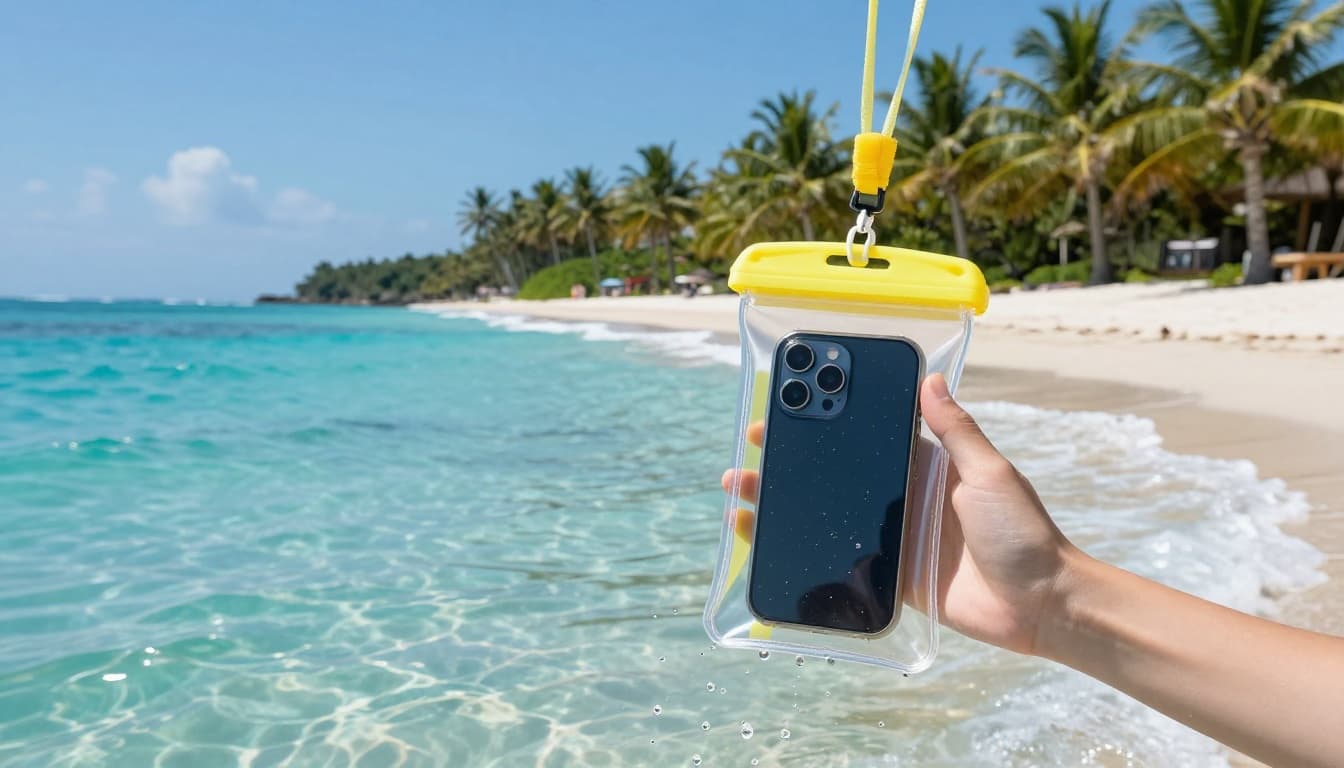
Travel gear sounds exciting until it’s not. The “best” waterproof accessory is the one you’ll actually use without babying it. Here are the categories that make sense for real trips: floating pouches for water days, dive cases for snorkeling and deeper shots, and a few add-ons that stop the classic mistakes (phone sinking, foggy photos, lost IDs).
Affiliate Disclosure
Some links on PreTravelCheck are affiliate links. If you buy through them, we may earn a small commission at no extra cost to you. As an Amazon Associate, we earn from qualifying purchases. Thanks for supporting PreTravelCheck.
Best floating pouch for beaches, cruises, and water parks: Pelican Marine IP68 phone pouch (2-pack)
If you want one easy solution for pools, beaches, kayaking, fishing, surfing, sailing, snorkeling, rafting, even the shower or sauna, this one is a strong pick. The Pelican Marine IP68 phone pouch is rated to 3.3 feet (1 meter), it floats, and it’s built for the kind of watery chaos that happens on vacation.
It fits screens up to 6.1 inches, uses soft TPU with a clear window, and gives decent access to side buttons. The lock feels secure (still, don’t rush it). You also get a detachable lanyard you can wear on your neck or wrist, plus it stores ID and cards, which is oddly useful on cruise days.
It comes as a 2-pack with high-visibility yellow lanyards and a 1-year warranty. Check it out here at this Link: Pelican Marine IP68 phone pouch
Watch out: do an empty seal test before the trip, and rinse after saltwater. Salt dries crusty, and crust ruins seals.
Best for snorkeling and deeper water photos: IP68 diving case rated to 50 ft for many iPhone and Samsung models
When you want underwater photos that don’t look like a blurry guess, a dive case is the move. This IP68 diving case is tested to 50 ft (15 m) for about 1 hour, and it’s also dustproof, dropproof, and snowproof. It’s fully sealed with six security snaps, plus a vent hole meant to help touch response.
Setup matters here. Remove your regular phone case before installing it, and expect a tight fit. Some phones may need a bit of foam adjustment to sit correctly. For shooting, it’s usually easier to take photos with the volume buttons and the side shutter design. Also, start your camera or video before going underwater, because touch screens can get stubborn once wet.
Compatibility limits: it’s not for Google 6/7/8 Pro, and not for foldables. You can check this one out here at this Link: IP68 diving case
How to pick the right waterproof setup for your trip (quick checklist)
Most people pick based on the highest rating on the label. I get it. But trip planning works better when you match gear to risk.
First, check phone size and camera bump. Some cases fit “most phones” until they don’t. Next, decide what you care about more: quick access (pouch) or photo quality and drop protection (sealed case). Then think about where you’ll carry it. If it’s going in the ocean, floating matters. If it’s going in a day bag during rain, a pouch is often enough.
If you like having a repeatable routine before any trip, keep this in your prep flow with All‑in‑one pre‑travel checklist for packing and planning. It’s the kind of boring structure that saves you later.
Match your gear to the activity, pool day, beach day, kayak day, snorkel day
Pool and beach days usually call for a floating pouch. It handles wet hands, splash zones, and quick dips without drama.
Boating and kayaking are where people get cocky, then lose a phone to the deep. Go floating, add a wrist strap, and keep it attached.
Snorkeling is different. You’re underwater longer, you want stable photos, and pressure is real. Use a dive case.
Rainy city travel is simpler: a sealed case if you want daily protection, or a pouch kept in your day bag for sudden downpours. Sand and saltwater are still the true enemies, not just water.
Fit and usability checks before you buy (and before you leave)
Confirm phone dimensions, screen size, and camera clearance. Check how you’ll unlock it, Face ID and fingerprint can be unpredictable through plastic. Make sure you can press buttons without wrestling.
Do a fast home test: put a paper towel inside, seal it, submerge it in a sink or bowl for a few minutes, then check for moisture. If it stays dry, you’re in much better shape.
Use it safely, simple habits that prevent leaks and bad photos
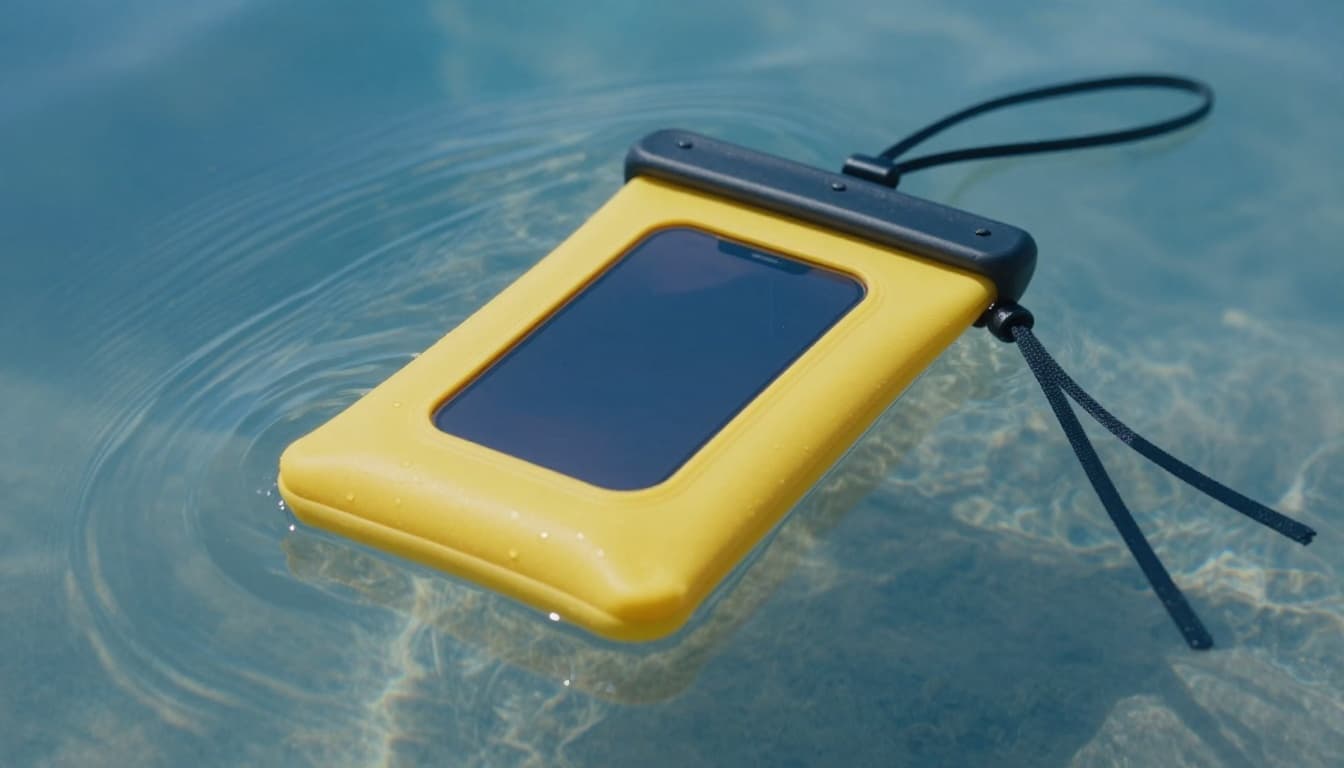
Most “leaks” start before the water. They start with rushing, sunscreen on fingers, or opening the pouch on a rocking boat. Keep it boring and slow.
Clean sand off seals before closing. Rinse gear after saltwater, then let it dry fully. Try not to smear sunscreen oils across the clear window, it turns photos hazy fast. If a case fogs, open it somewhere dry and shaded, wipe it, and give it a minute. Humidity is sneaky.
The 60 second seal routine I do every time (yes, every time)
Inspect the gasket, zip, or lock area. Wipe it clean. Close slowly. Double-check locks are fully engaged.
If you can, do a quick dunk test before the “real” swim. Keep it on a lanyard so it can’t slip away. And don’t open it with wet hands near waves or on a boat. That’s when people lose phones and pretend it was “bad luck.”
Keep photos sharp underwater, and keep your phone from sinking
Wipe the clear window often. Avoid air bubbles sitting over the lens area. If touch gets weird, start video before you submerge, or use volume buttons when available. In open water, floating beats sinking, every time.
A little patience beats tapping the screen 50 times.
Conclusion
For most travelers, a floating waterproof pouch is the sweet spot: easy, packable, and good enough for beach chaos. If snorkeling and underwater photos are the point of the trip, a rigid dive case makes life easier and the footage better. Either way, the quiet hero is the at-home seal test. Do it before you leave, not after your phone takes its first “oops” swim.
Pick based on your plans, not the biggest number on the label, and protect your phone and your memories in one move.