

The first time most travelers notice a nazar boncuğu, it’s not in a museum. It’s on a taxi mirror, pinned to a baby’s sweater, or hanging by the register in a corner shop. The blue “eye” keeps staring back.
In English, people call it an evil eye bead, an evil eye amulet, or just nazar. In Turkey, it’s a small object with a big job: pushing back the harm that can ride in on envy, or on a look that lingers too long. It sounds old because it is. It also feels weirdly modern.
Nazar boncuğu basics: the name, the look, and the idea behind it
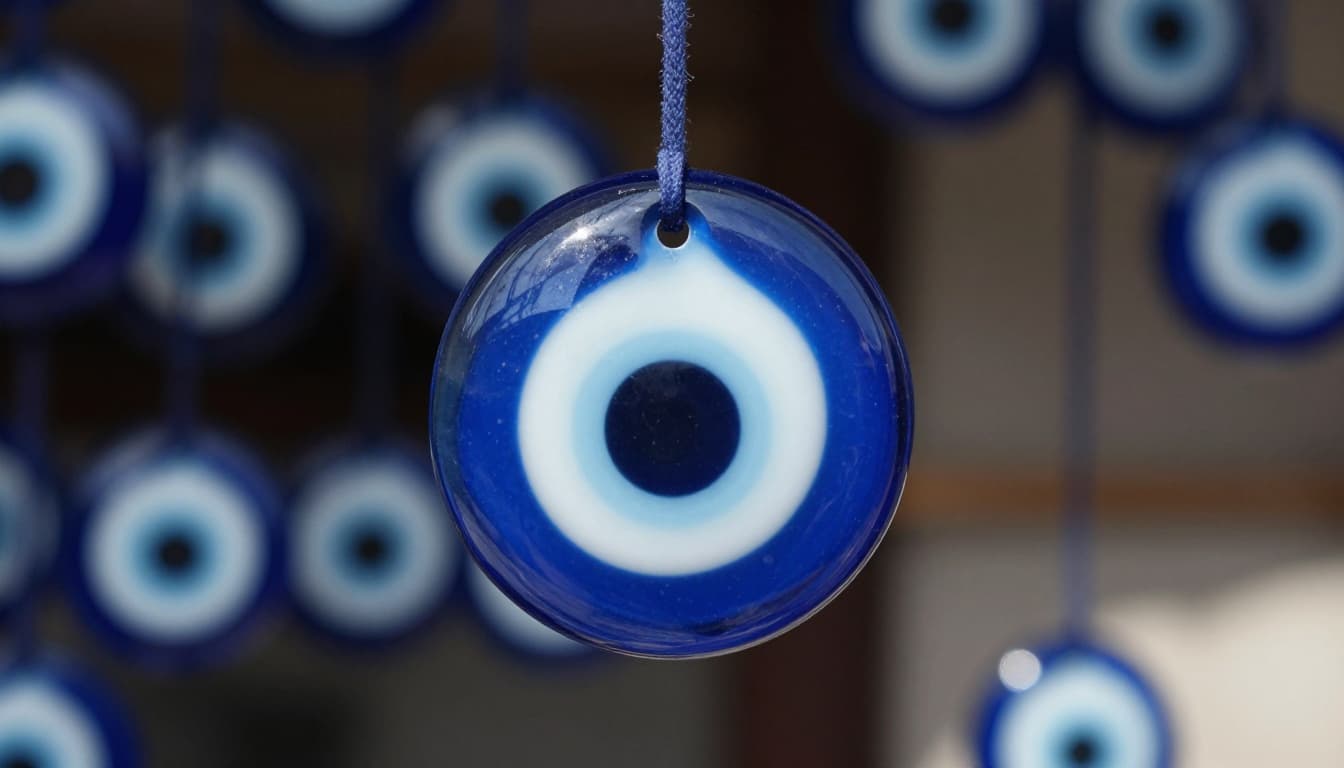
Start with the words. Nazar traces back through Arabic and carries the sense of sight, attention, the gaze that lands on you. Boncuk (or boncuğu in common use) means bead. Put together, it’s a bead built to stare back.
The belief is simple and tough. Jealousy happens, even from people who don’t mean it. That feeling can “stick” to a person, a home, a new car, a new job. The evil eye bead acts like a decoy and a shield at once.
The classic nazar boncuğu is eye-shaped and blunt about it: concentric rings of dark blue, light blue, and white, sometimes with a touch of yellow. Across the Aegean, Greeks often call a similar symbol máti (the eye). Different name, same warning.
Why is it usually blue?
A common explanation is tradition. In many Mediterranean cultures, blue signals protection. Some people also point to history, rare blue eyes once drew attention, and attention had weight. Then there’s the calmer side: blue like water, blue like sky, blue like a steady mind. None of this is a lab result. It’s folk logic, and it’s lasted.
Where the evil eye bead comes from, and why it spread so widely
The evil eye idea didn’t start in one country. It ran through the ancient Mediterranean and beyond, with early references and protective objects reaching back to around the second millennium BCE as a broad marker.
Beads made travel easier. As glassmaking improved and trade routes tightened between places such as Mesopotamia, Egypt, and Greece, eye motifs moved with merchants, sailors, and families trying to stay lucky. Over time, modern Turkey became one of the strongest homes for the symbol. Traditional glass bead work is often tied to western Turkey, including areas near Izmir, where craft shops still treat it like serious business.
Affiliate Disclosure
Some links on PreTravelCheck are affiliate links. If you buy through them, we may earn a small commission at no extra cost to you. As an Amazon Associate, we earn from qualifying purchases. Thanks for supporting PreTravelCheck.
How people use nazar boncuğu today (and what it means when it breaks)

In early 2026, nazar boncuğu pieces still sat near the top of Turkey’s souvenir pile, especially in Istanbul markets. They’re cheap enough to grab, bright enough to spot, and loaded with story. Vendors sell them as style, yes, but also as a quiet kind of insurance.
You’ll see them as:
- Jewelry (bracelets, necklaces, earrings)
- Keychains and bag charms
- Home and office hangings
- Car decorations, often on the mirror
- Gifts for new homes, new babies, new jobs
And if yours cracks or breaks? Many people take it as a sign it did its job, it absorbed the bad energy, it took the hit, and you replace it.
No one has to “believe” to enjoy it. Buy it because it feels right, and because it’s part of the street-level culture. If you can, ask for handmade glass and where it was made. Also, don’t sell it as a safety guarantee. It’s a symbol, not body armor. If you’re the type who likes routines, pair the charm with a real prep habit like this step-by-step travel checklist 2026.
If you cannot make it to Turkey to grab your own, here are two options available on Amazon.
Turkish Silver Horse Shoe Blue Evil Eye Wall Hanging Ornament with Elephant
OR
Blue Evil Eye Hanging Ornament Set of 5
Conclusion
Nazar boncuğu is a small blue eye with a long memory. It grew out of the evil eye tradition, crossed borders, picked up new names like máti, and stayed in daily life because people kept finding reasons to hang it up. Notice where it shows up on your trip, and choose one that actually means something to you. If it breaks, treat it as part of the story, replace it, or keep the broken bead as a memento.
Hi Michael, I was in Turkey last year. Never see any of these although I suspect if I did go back I probably would now I know what they are. I do kind of want one now so I will keep this in mind. Do want to go back to Turkey to see Derinkuyu and Gobekle Tepe. I’m a bit put off with what I was paying for taxis here last time but I wander if this will be different if Im staying in somewhere like Antalya City or Istanbul. Probably just the tourist areas but anyways quite Interested in all the supernatural stuff. I guess this is like the all seeing eye or something – thanks for sharing
Alex
These are so common there, i am unsure how you missed them. They are in almost every home, business and even Taxi. You must have been wowed by the surroundings and missed them. I assure you, now that you know more about them, when you do return, you will be able to spot them like a pro!
Travelin Mike
Hey Michael, as a Greek from Cyprus, we use these particular ‘eye stones’ to protect us from evil. Especially when a baby is born or due to be Christened we have tiny ‘eye stones’ we pin on the baby’s clothes or on it’s crib, for protection. It’s thought that if someone looks at the baby and makes a comment like….’Oh how beautiful she/he is!’….. the stone would protect and ward off any evil or malice against them, like a ‘stare back eye’. We can also put these in our car, to protect from danger, to wear like on a bracket, or worry beads for men. The evil eye stone, is used for protection against anything, like travel, journeys, or people with bad intent. So the idea is the same as with Turkish people, and they are seen everywhere in Cyprus too, as a symbol of protection, although I’d say do you believe in it or not do kids these days simply laugh it off?….Well it’s still around…..
I still have a few dotted within my house with a cross, for my kids protection.
Great post, enjoyed reading it, reminds me of Cyprus funnily enough!
Julia.😊
The Blue eyes was one of the first things I noticed when I visited Izmir, Turkey. I asked about them and was quickly educated by the taxi driver. I have several of them!
Thanks for leaving behind your experience.
Michael