

It always starts the same way. You turn the key, nothing happens, and suddenly a quick errand turns into a long wait. Or you feel that soft wobble of a tire that’s losing air, right when the nearest exit looks far away. I’ve also had that moment where the weather shifts fast, and the drive you planned in daylight becomes a cold, dark shoulder situation.
A well-packed safety and emergency car kit is basically your backup plan in a box. Not a “survival fantasy” kit, just a practical setup that covers breakdowns, bad weather, and small accidents. And since roadside help can take longer than people expect, especially during storms or peak travel times, packing for a few hours matters.
Start with the basics, the items that fix the most common roadside problems
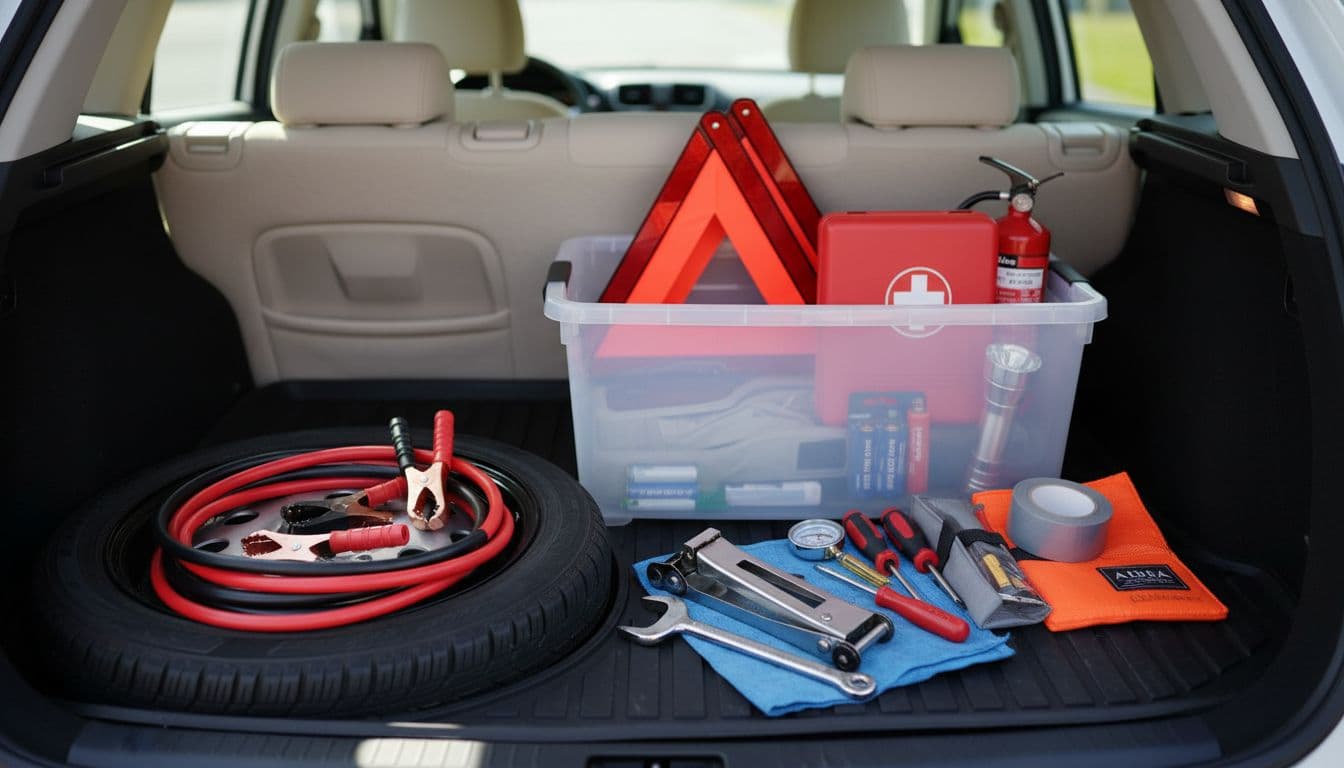
An example of a year-round car emergency kit packed in a simple trunk bin, created with AI.
If you only build one kit, make it a year-round “core kit” that handles the everyday problems: dead batteries, low tires, and minor roadside fixes. The trick is to pick items you’ll actually use, and store them so you can reach them fast. I like a sturdy bin with a lid so things don’t roll around, plus a smaller grab bag on top for the stuff you might need first.
Also, avoid buying the tiniest versions of everything just to save space. You want tools that feel normal in your hands, not toy-sized gadgets that break when you’re stressed and cold. You have heard the saying, “You are what you eat.” The same goes for your toolkit; it is only as good as the quality of items you invest in for your safety.
Vehicle and repair gear that gets you moving again
Dead batteries are common, and they don’t ask for your permission before they happen. Pack jumper cables (many safety guides suggest longer cables, around 12 to 16 feet, with a solid gauge), or go with a portable jump starter if you’d rather not rely on another car. Jump starters are nice because they also work in lonely parking lots, but they need to be kept charged.
If you are leaning towards a portable jump starter (or Jumpbox), I would recommend the NOCO Boost GB70. It can charge your electronics if needed, but it will also jumpstart engines better than the cheaper models (its 2000-amp output will handle 8.0L Gas and 6.0L Diesel Engines).
Flat tires are the other classic. Your kit should match your car:
- A spare tire that’s actually inflated (it’s amazing how often spares are flat).
- A working jack and lug wrench that fit your lugs.
- A tire pressure gauge, because guessing pressure doesn’t work.
- A small inflator that plugs into the car, or a sealant for minor punctures (sealant won’t fix sidewall damage, but it can help you limp to a safer spot)
Then add a basic tool kit: screwdrivers, pliers, and an adjustable wrench. Toss in duct tape because it solves weird problems, like securing a loose splash guard that’s dragging on the road. I also like a tow strap or rope if you ever drive in mud or snow. You might never use it, but when you do, you’ll be glad it’s there.
If you want my advice on a toolkit, you can buy a ready-made kit on Amazon, but if it were me, I’d give it a hard pass. You can throw one together many times using items from your home garage that you already own. Remember, I said quality: you want things that are made to use, not some (and forgive me here) cheaply made in China plastic or pressed metal that will fail when you need it.
If you’ve got space, keep small top-off fluids: a little motor oil, coolant, and washer fluid. Not everyone needs this, but on long drives, it can save you from having to turn around over something small.
Affiliate Disclosure
Some links on PreTravelCheck are affiliate links. If you buy through them, we may earn a small commission at no extra cost to you. As an Amazon Associate, we earn from qualifying purchases. Thanks for supporting PreTravelCheck.
Safety and visibility gear that keeps you from getting hit
Roadside danger isn’t only the broken car. It’s the other drivers. If you’re stuck on the shoulder at night, your job is to be seen early and clearly. The side of the road is a very dangerous place, and it pays to be seen. Here is a horrid statistic I need to share with you to prove my point. Every six days, a professional Tow Truck operator is struck and killed working on the side of the road, usually by an impaired or distracted driver.
Start with reflective triangles or road flares. Triangles are simple and reusable, but flares are bright and pose their own handling risks. Add a reflective vest that you can reach without digging. I’d keep it in a door pocket or under a seat, not buried under luggage.
Invest in a quality vest; skip Velcro vests and opt for a zipper. You also want to get a Class 3 vest. The extra visibility from the sleeves improves your chances of being seen in the dark over the class 2 version sleeveless vest. You can get a high-quality one (with a zipper) like the JKSafety Safety Vest for under $20 on Amazon. Why do I worry about a zipper? In the wind and passing vehicles, Velcro often fails, but the zipper keeps your vest on and secure.
A flashlight matters more than people think. An LED light with extra batteries is a safe bet, or choose a hand-crank model if you don’t want to worry about batteries. Keep the flashlight and batteries together, because separating them always turns into a scavenger hunt.
Your first-aid kit should be practical, not fancy. Look for basics like bandages, gauze, antiseptic wipes, medical gloves, and a simple pain reliever. If you want to level it up, add scissors and tweezers. Small cuts and burns happen when you’re changing a tire in a hurry.
Two small add-ons I’d still make room for:
- A multi-tool or pocket knife, handy for quick fixes and cutting stubborn packaging
- An ABC-rated fire extinguisher for small vehicle fires (read the label ahead of time so you’re not learning under stress)
Pack for waiting, because help can take longer than you think
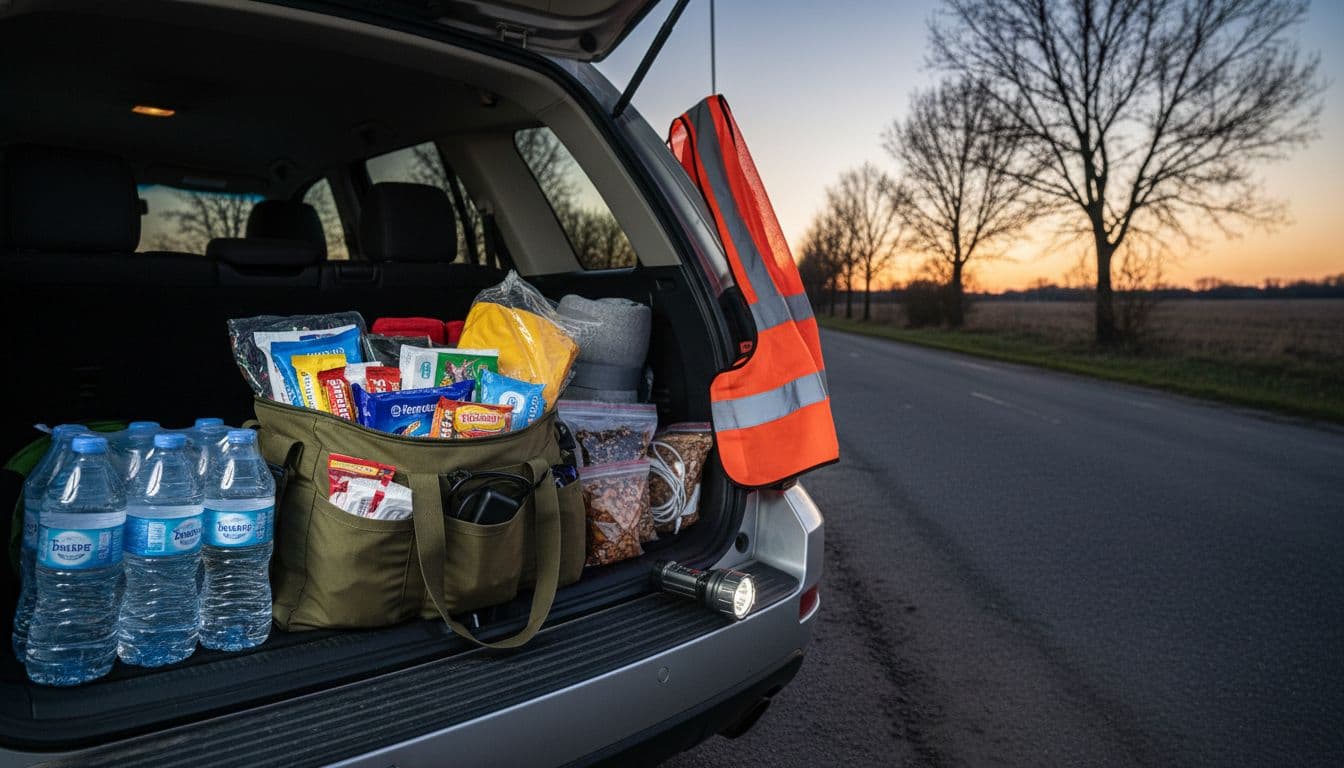
A “waiting kit” setup for staying comfortable and calm while you sit tight, created with AI.
Many emergency kit lists focus on fixing the car. That’s fair, but sometimes you can’t fix it. You might have a blowout, a mechanical issue, or weather that makes it unsafe to get out. And even when you call for help, it can take hours, especially in snow or heavy-demand periods. I haven’t seen solid 2026 public averages for wait times, but the advice from major safety groups is consistent: plan as if you’ll be waiting longer than you want.
So pack for the wait. Comfort is a safety tool, honestly.
Water, food, warmth, and staying dry without overpacking
Keep drinking water in the car. Many guides suggest at least a gallon as a simple baseline, but the right amount depends on your passengers and your climate. Replace it regularly, and don’t forget extra if you travel in the heat.
Add non-perishable snacks you’ll actually eat: energy bars, nuts, dried fruit. Skip stuff that melts into a sticky mess. For warmth, pack a blanket, plus warm layers, gloves, and hand warmers. Even a mild cold feels rough when you’re sitting still.
Staying dry is underrated. A poncho or rain gear can be the difference between “annoying” and “miserable,” especially if you have to step outside to set triangles or check damage. Invest in a FROGG TOGGS Ultra-lite2 Waterproof pancho; they are very cheap, lightweight, and take up little space.
A few small comfort items do a lot:
- Wet wipes and hand sanitizer for quick cleanup
- An emergency whistle for signaling if you’re stuck out of sight
Pack these in a grab bag, not loose in the trunk. When you need them, you need them fast.
Power and communication, so you can actually call for help
A phone with a dead battery is a kind of bad quiet. Carry a portable power bank and the right charging cable for your phone. Also, keep a car charger as backup, because cables fail and ports get finicky. Earlier in this article, I suggested a jumpbox. It has USB charging ports, not just for jump-starting your vehicle.
If you want one extra that feels old-school but is still useful, consider a basic emergency radio for weather updates. It’s not mandatory, but I like the idea of getting info when cell service is spotty. To save space, some emergency radios are multitools and have a flashlight and a flasher.
One caution: extreme heat and deep cold can be hard on electronics, batteries, and even some packaged supplies. Check the kit regularly (like when you change your oil), and don’t treat it like “pack once, forget forever.”
Seasonal swaps and a simple maintenance routine that keeps your kit ready
You don’t need to rebuild your kit every trip. A seasonal refresh is easier, and it keeps you honest. I’d do a quick check twice a year, around the start of summer and winter.
Here’s a simple routine that takes maybe 10 minutes:
- Test flashlights and replace dead or corroded batteries.
- Review first-aid and food expiration dates.
- Rotate water every 6 months if it’s been through heat swings (some guides say yearly, but I’m cautious)
- Repack anything you used, even “just one bandage.”
Also, think about access. If the trunk is blocked by luggage after a road trip, can you still reach the vest, flashlight, and triangles? I try to keep those within the cabin.
Winter add-ons for snow, ice, and getting unstuck
Winter is where kits earn their keep. Add an ice scraper and a snow brush, plus a small shovel if you drive in areas where snow piles up. For traction, pack sand or cat litter. It sounds odd, but it can help tires grip when you’re spinning on ice.
If you travel in areas where chains are common, carry tire chains and make sure they fit your tires. And keep winter items accessible, not buried under suitcases. That mistake is easy to make and annoying to fix.
Hot-weather extras and quick checkups that prevent nasty surprises
In warm months, heat problems show up fast. Pack sunscreen and insect repellent, and carry extra water if you drive long distances in hot weather.
I also like a few low-tech backups: paper towels, a pen and paper, some emergency cash, and a basic paper map (because tech can fail when you have no signal). You probably won’t need them. Still, the one time your phone dies and service drops, you’ll feel smarter than you planned to be.
My Final Thoughts
A good safety and emergency car kit does three things: it helps you fix the car, stay visible and safe, and stay comfortable while you wait. That’s it. Build it in one shopping trip, or add pieces over a week if that’s easier.
Then set a reminder to refresh it twice a year. Replace what expired, recharge what drained, restock what you used. Pack it before the next road trip, not after the first scare. Happy motoring!