

Picture a boat day: wet ladder, sunscreen on your palms, a kid calling your name, and your phone or action cam is suddenly doing that slow, awful slide. A Floating Wrist Strap is a small buoyant wrist loop that helps your device pop back up if it slips into the water. It’s not fancy, and that’s kind of the point. It costs a lot less than replacing gear, and it packs so small you’ll forget it’s in your bag until you really need it.
What a floating wrist strap does (and what it can’t do)
A floating wrist strap works because it has foam with trapped air, so it wants to rise instead of sink. Think of it like a tiny life jacket for whatever you’ve attached. When you drop a waterproof camera or an action cam, the strap helps keep it on the surface where you can spot it and grab it fast.
There are limits, though. A strap doesn’t make a non-waterproof phone safe. It’s meant for waterproof devices or a phone sealed in a proper waterproof pouch. Also, not every strap floats every phone. Weight matters, and some straps are only rated for lighter gear (many are aimed at small cameras, around the 200-gram range). Before you trust it in open water, test it where you can still reach the bottom.
Buoyancy basics, device weight, and a quick at-home float test
Do this in a sink, tub, or shallow pool:
- Attach the strap exactly how you’ll use it, no “temporary” knot.
- Close the buckle, then tug hard and check for wobble.
- Lower it into water, let go, and watch if it floats high enough to grab.
- Repeat with the waterproof case or pouch you’ll actually bring.
If it barely floats, it’s a warning, not a maybe.
Features that matter when you buy one
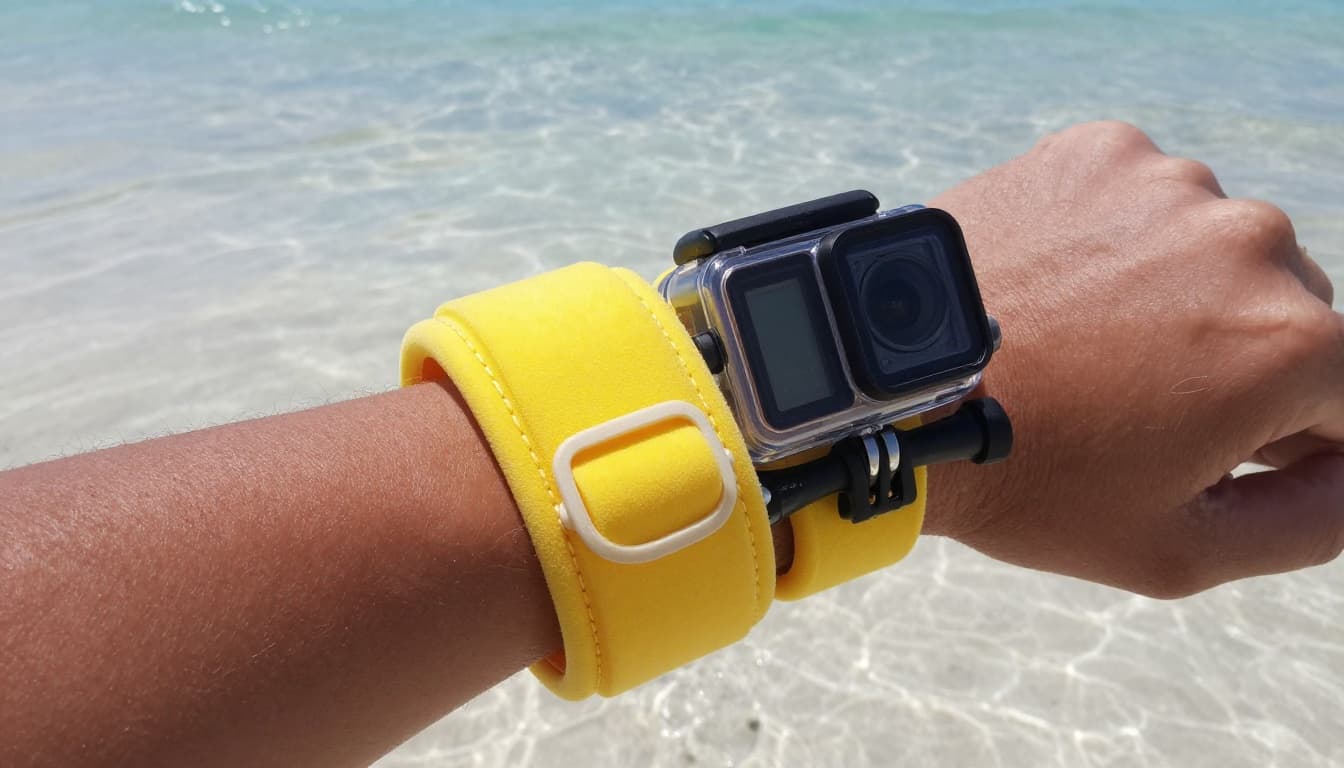
Start with the float itself. Foam-filled neoprene is common for a reason: it’s light, it dries pretty fast, and it doesn’t feel like a plastic cable tie on your wrist. I also like straps labeled “anti-sinking” or similar, not because of marketing, but because they usually mean more buoyant material.
Then look at visibility. Bright orange or bright yellow is easier to spot in choppy water, shadowy pools, and sandy shallows. Black straps disappear fast. Hardware matters too: a detachable buckle makes it easier to hand a camera to someone, or to clip in and out without wrestling a tight loop.
My quick 5-second check in a store is simple: squeeze the float (it should feel springy, not hollow and flimsy), scan the stitching, then try the buckle with slightly wet hands.
Affiliate Disclosure
Some links on PreTravelCheck are affiliate links. If you buy through them, we may earn a small commission at no extra cost to you. As an Amazon Associate, we earn from qualifying purchases. Thanks for supporting PreTravelCheck.
Material and comfort: neoprene and soft foam that won’t rub your wrist raw
A wider strap usually feels better than a thin cord, especially on longer swims. It should slide on without fuss, but not slip off when you’re wet and moving.
Check Out the Floating Wrist Strap on Amazon now.
Visibility and hardware: bright color plus a buckle you can trust
Pick a high-visibility color, then check the snap. It should close cleanly, sit snug, and resist corrosion (saltwater finds weak metal fast).
How to use it on real trips (snorkeling, kayaking, and pool days)
Put it on before you leave the hotel, not on the dock while everyone’s bouncing around. Attach it, double-check the loop, then keep it on during transfers like boat ladders, rocky entries, and getting in and out of kayaks. That’s when most “oops” moments happen.
For phones, pair the strap with a waterproof pouch, and keep it clear of fins, paddle shafts, and camera mounts. It’s a small thing, but tangles are real.
The “drop zones” where people lose devices most often
- Stepping off a boat or dock
- Adjusting a mask with one hand
- A small wave hitting your shoulder
- Handing a camera to a friend
- Climbing a ladder with tired arms
Care and packing, keep it clean so it lasts
Most floating wrist straps can be machine washed, but I still rinse mine after saltwater and let it air dry. Don’t bake it on a hot dashboard, the foam and stitching can get weird over time. It’s lightweight (often imported, if you’re the type who checks labels) and packs flat in a snorkel bag or side pocket. Before each trip, check the buckle and seams. It’s boring, but it works.
Conclusion
A Floating Wrist Strap is simple, cheap insurance for water days, especially when your hands are slippery and you’re distracted. Match it to your device weight, choose a bright color you can spot fast, and test it in shallow water before your first swim. You’ll probably never “need” it, right up until the moment you do. For a broader routine, keep a repeatable prep list like this all-in-one pre-travel checklist to avoid forgotten items.