

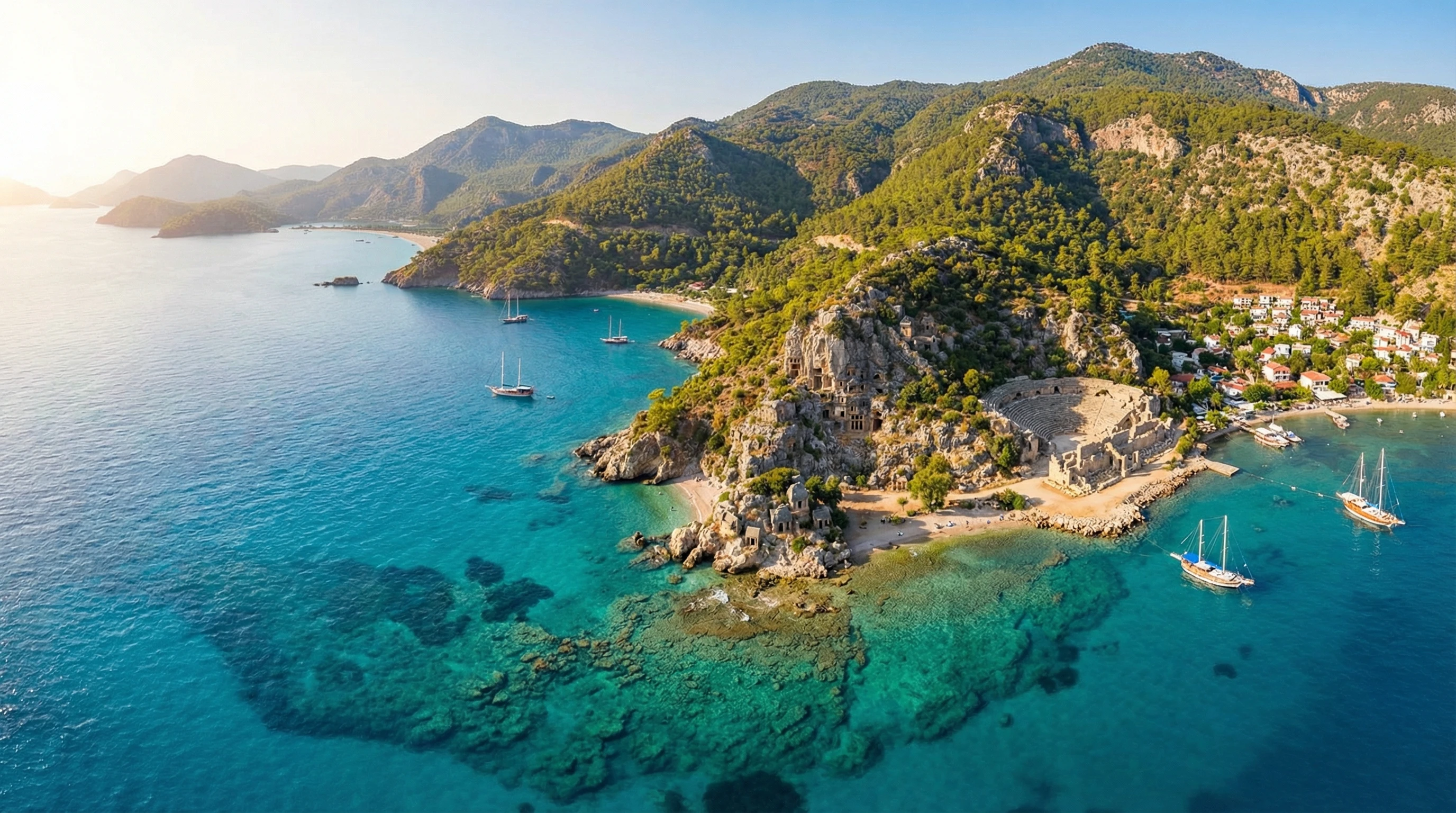
The Turkish Riviera, often referred to as the Turquoise Coast, has long attracted visitors thanks to its mix of bright blue seas, ancient ruins, and lively resorts. Before heading off to this corner of southwestern Turkey, I set out to track down what sets the region apart and whether it really matches up to all the hype. Here’s what I found out about why the Turkish Riviera deserves a spot on your travel list, as well as a few things to keep in mind when deciding if it matches your style.
Turkish Riviera: Quick Facts
The Turkish Riviera stretches across southwestern Turkey, where the Mediterranean and Aegean Seas meet. Travelers recognize it for its long shoreline, warm summers, and a coast full of both sleek marinas and the ruins of ancient civilizations. The nickname, Turquoise Coast, comes from the eye-catching hue of the water you notice as you make your way along cliffs and sandy stretches. It starts around the province of Antalya and spans west toward Bodrum.
- Location: Southwestern Turkey
- Main hubs: Antalya, Bodrum, Fethiye, Marmaris, Kaş, Kalkan
- Coastline: Over 1,000 kilometers
- Main draws: Clear blue water, historic ruins, yacht-filled marinas, lively resort towns
This coast’s shape has made it a crossroads for centuries. As you travel the region, it’s easy to encounter diverse cultural influences in everything from local food to music and festivals. In fact, you might find traces of Greek, Roman, and even Persian influences in the same small town, creating a unique patchwork of traditions.
History and Culture: More Than Just Sun and Sea
What really surprised me about the Turkish Riviera wasn’t just the beaches. Those are as beautiful as people say—but the deep sense of history was just as striking. This region has seen major civilizations such as the Lycians, Greeks, Romans, and Ottomans leave their mark. Even small towns will wow you with an ancient amphitheater or rock tombs peeking out over turquoise bays.
I walked through ruins such as Ephesus and the theater at Aspendos, and it felt like stepping into a movie set. Many towns preserve their old city centers (such as Kaleiçi in Antalya), allowing you to wander through stone alleys that have stood for centuries. That mix of the old and the new gives the Riviera a vibe that’s both grounded in its history and totally welcoming to visitors—where you can swim in the morning and then check out a 2,000-year-old wonder after lunch.
What Makes the Turkish Riviera Worth Visiting?
I’ve checked out several Mediterranean coastlines, but the Turkish Riviera stands out for a few reasons—whether you’re taking a solo trip, a romantic escape, or a lively family vacation:
- Stunning Blue Waters: The sea here is a striking blue. In spots like Ölüdeniz’s Blue Lagoon or the little coves near Kaş and Kalkan, the water is so clear you can see the sand far below.
- Affordable Luxury: Your travel money goes further here than in the French or Italian Riviera. There’s a broad range of options, from high-end resorts in Bodrum or Antalya to wallet-friendly guesthouses set inside cobblestone towns.
- Cultural Mix: You’ll find history in the architecture, museums, and ancient ruins —and even on your plate: local food brings together Turkish, Mediterranean, and Middle Eastern flavors in delicious ways.
- Active Adventures: You don’t have to stick to the beaches unless you want to. Paragliding off Babadağ Mountain, trekking the ancient Lycian Way, scuba diving, and blue coast cruises are just some things you can put to work here.
Popular Destinations Along the Coast
Most travelers choose a base city or town, then branch out. Each spot has its own feel, and choosing the right one can set the tone for your adventure:
- Antalya: The largest hub, perfect if you want busy resorts, nightlife, and history all in one place. There’s a charming old quarter, plus gorgeous beaches nearby.
- Bodrum: Known for its fortress, upbeat nightlife, and sailboat-filled marinas, Bodrum has a vibe a bit like St. Tropez, but it’s more laidback.
- Fethiye: This is your go-to for launching boat trips and is home to the iconic Blue Lagoon at Ölüdeniz. Nature, history, and good beaches all combine here.
- Marmaris: A popular resort and sailing port with a bustling nightlife and family-friendly beaches. There’s no shortage of things to see or eat.
- Kaş and Kalkan: If a quieter pace is your style, these smaller towns with waterfront views, boutique hotels, and cozy cafés are perfect for relaxing and recharging.
Many people find that the smaller towns are great launchpads for day trips too. For example, from Kaş, you can head into the mountains for hiking or explore sunken ruins by kayak at Kekova. In Fethiye, you have easy access to butterfly valleys and even farther-flung Greek islands for a day.
Experiencing the Turkish Riviera: Activities and Highlights
It’s simple to fill up your travel days in the Turkish Riviera with relaxation, culture, and action. Here are some top picks I’ve come across after scoping out the region:
- Beach time: From bustling beaches like Konyaaltı in Antalya to quiet coves near Kalkan, there’s a sand spot for every sun seeker.
- History walks: Ancient sites like Side, Ephesus, and the Lycians’ tombs at Myra give you lots to explore—and even more to photograph.
- Gulet cruises: Set sail on a traditional wooden gulet for a day or more, with plenty of swimming, stops at tiny islands, and local food on board.
- Adventure sports: Try paragliding at Ölüdeniz, hiking parts of the 500 km Lycian Way (even just a section works!), or scuba diving near Kaş, where underwater caves and wrecks are waiting.
- Food hopping: Don’t miss tasting the variety—from seafood meze and kebabs to sweet treats like baklava. Every town brings its own twist and local flavor, making every meal a new experience.
Getting There and Getting Around
Most travelers fly into Antalya or Dalaman airports based on their plans. Towns are linked by regular buses and the shared minibuses called dolmuşes. Renting a car gives you the freedom to discover off-track beaches or mountain villages at your own pace. Ferries run to some Greek islands, so if you’re game for switching up your trip, that’s an easy option. For the latest travel details, the Turkish Ministry of Culture and Tourism (goturkiye.com) provides up-to-date tips for international visitors.
Train travel is limited along the coast, but if you want a scenic road trip, renting a car and driving the winding cliff roads will take you to hidden viewpoints and untouched beaches. Even the small mountain roads can open up routes to ancient ruins most tourists never see.
Things to Consider Before Visiting
While the region shines, it’s smart to keep a couple of points in mind as you plan:
- Summer crowds: Peak months (July and August) mean popular beaches and old towns can get packed. If you want less bustle and better prices, consider shoulder seasons such as late spring or early fall.
- Heat: Summers can be sweltering, especially inland without the breeze. Stay near the shore, keep hydrated, and bring a sun hat.
- Tourist-focused zones: Larger resort areas often feel international, with menus and shops geared toward visitors. For a more “local” stay, a village pension or family guesthouse can offer authentic Turkish hospitality.
- Transportation: While buses and dolmuşes are frequent, they get crowded during the busiest months. A rental car lets you find hidden coves or ancient ruins beyond the reach of tour buses.
Weather
The Turkish Riviera boasts a Mediterranean climate: hot, dry summers and gentle winters. Swimming season stretches from May to October. Outside high summer, prices drop, and wildflowers bloom in spring, while autumn brings warm seas and fewer crowds. Winter is mild, so off-season visits are still pleasant for exploring ruins or coastal views.
Local Customs and Safety
Turkey is considered safe for most travelers. The Riviera’s locals are accustomed to welcoming international visitors, and English is widely spoken in hotels, tourist areas, and many restaurants. Remember, modest dress is expected in village areas and religious sites, but in beach towns, it is relaxed. The Turkish lira can fluctuate, so a currency app or a bit of euro cash can come in handy.
It’s a good idea to double-check travel advisories from your country, just in case. In general, the biggest risks are sunburn and losing track of time while floating in the sea.
Who Will Enjoy the Turkish Riviera?
If your trip goals include beaches, ancient ruins, tasty dishes, and a little adventure without emptying your wallet, the Turkish Riviera is right up your alley. Couples, families, and solo globetrotters all find their fit on this stretch of coast. Nightlife fans lean toward Bodrum or Marmaris, while those after calm might favor the smaller towns like Kaş, Kalkan, or laidback spots like Cirali, where you can bunk in a treehouse or hike to remote ruins.
Frequently Asked Questions
Is the Turkish Riviera safe for tourists?
Overall, yes. Keeping an eye on your belongings is always smart, but the region is welcoming and very experienced with international travelers. Local hospitality is a cornerstone of the culture.
What’s the best time to visit?
Late spring (May and June) and early fall (September and October) are fantastic for warm weather and fewer crowds. Seas stay swimmable, but you skip the hottest days and busiest stretches.
Is it family-friendly?
Definitely. Resorts cater to kids, and small towns have gentle beaches and welcoming hosts. Most beach towns have playgrounds or activities, and local food is great for even picky eaters.
Do I need a visa for Turkey?
Many travelers do, but e-visas are pretty quick through evisa.gov.tr. It’s easy to sort online before you fly.
Why the Turkish Riviera Is Worth Exploring
I left the Turkish Riviera with more than a tan and a full camera roll. It’s an amazing blend of turquoise waters, mountain backdrops, welcoming towns, and history that you bump into everywhere you turn. What makes it different is how easily you can switch things up—one day relaxing on the shore, the next climbing through ruins or eating dinner by a castle. Whether you want a splashy beach holiday or want to dig into local culture and history, this region is full of standout moments. Better yet, you can do it at a price that’s hard to beat when you compare it to other Mediterranean hotspots.
I really like your overview of the Turkish Riviera—you really capture how it’s much more than beautiful beaches. As a history buff I love how you added the history, scenery, and practical travel tips, especially how each town offers something. Out of all the places you visited, which one stood out to you the most?
Thanks for taking the time to leave your remarks. If I had to choose on it would probably be Marmaris. All have their pluses but Marmaris was the launching point for my Greek adventure by boat and the most memorable.
Travelin Mike