

Soaking in the thermal pools of Pamukkale in Turkey isn’t just a bucket-list activity for travel lovers. It’s a chance to experience nature and history come together in one of the world’s most surreal landscapes. From the shimmering white terraces to the ancient ruins of Hierapolis nearby, there’s a lot to take in, especially if you want to make the most of your visit. If you’re curious about what a Pamukkale thermal pools experience is actually like or are planning your first trip, here’s everything you’ll want to know before you go.
What Makes Pamukkale Thermal Pools Special?
Pamukkale, which literally means “Cotton Castle” in Turkish, looks like something from a daydream. White, calcium-rich mineral deposits form a staircase of soft terraces filled with warm, sky-blue water. It’s probably the closest you can get to feeling like you’re walking on clouds, especially at sunset when everything glows in pastel colors.
The pools are rich in minerals and have attracted visitors for centuries, drawn by relaxation and rumored healing properties. UNESCO named both the terraces and the ancient city of Hierapolis a World Heritage Site, so you’re not just stepping into a scenic spot. You’re walking through a piece of living history.
Getting to Pamukkale and Entry Details
Pamukkale is located in southwestern Turkey, near the city of Denizli. Most people reach it by flying into Denizli Cardak Airport or by taking a bus or train from major cities like Izmir, Antalya, or Istanbul. Public transportation to Pamukkale town is super convenient. Many tour packages include direct transportation to the site.
The pools are part of a protected park, so you’ll need to pay a small entrance fee, which usually includes access to Hierapolis. The ticket booth is right at the main entrance. If you’re planning to visit in summer, arriving early in the morning or late in the afternoon makes for a more comfortable walk and less crowded pools. Also consider visiting during the shoulder seasons, such as late spring or early autumn, when the weather is favorable, and the crowds are thinner.
What to Expect When You Arrive
Once you step inside, you’ll see the eye-catching white formations that make Pamukkale famous. Shoes aren’t allowed on the terraces, both for visitor safety and to help preserve the travertine. You’ll need to carry your shoes or stash them in your bag. The walk down can be a bit slippery, so go slowly, but it feels refreshing on a hot day because the terraces naturally stay slightly chilly on the feet even as warm water flows over them.
The lower terraces have shallow pools where you can sit, splash, or dip your feet. Further up, you’ll find deeper pools where the water gets warmer, and you can soak while enjoying views of the valley below. Even when it gets crowded, you can usually find a comfortable spot if you keep walking up the hillside. If you’re traveling with kids, keep an eye on them as some areas are deeper or slicker than they appear.
Key Tips for Visiting Pamukkale’s Thermal Pools
- Pack Light: Bring a swimsuit or something you don’t mind getting wet, along with a small towel. Quick-drying fabrics are a lifesaver, and wearing flip-flops outside of the terraces helps protect your feet between pools.
- Protect Your Feet: While you may need to walk barefoot on the terraces, the surface is more textured than it looks and can catch you off guard, so go slowly.
- Don’t Skip Sunscreen: The reflection off the white terraces can catch you off guard. Extra SPF and sunglasses make a huge difference, even on cloudy days.
- Stay Hydrated: The pools may be cool, but the air gets hot, especially in the summer months.
- Photography: Early morning or late afternoon gives the best lighting and fewer crowds if you’re looking to snap the perfect photo. Some platforms at the top provide wide views of the terraces and the valley, ideal for panoramic shots.
What’s the Water Really Like?
The mineral water in Pamukkale is silky and just the right temperature, typically between 35°C and 100°C (95°F and 212°F), depending on the location. The water is slightly cloudy from the minerals, but perfectly safe for soaking. Some visitors notice a very mild sulfur smell, but nothing overpowering or unpleasant.
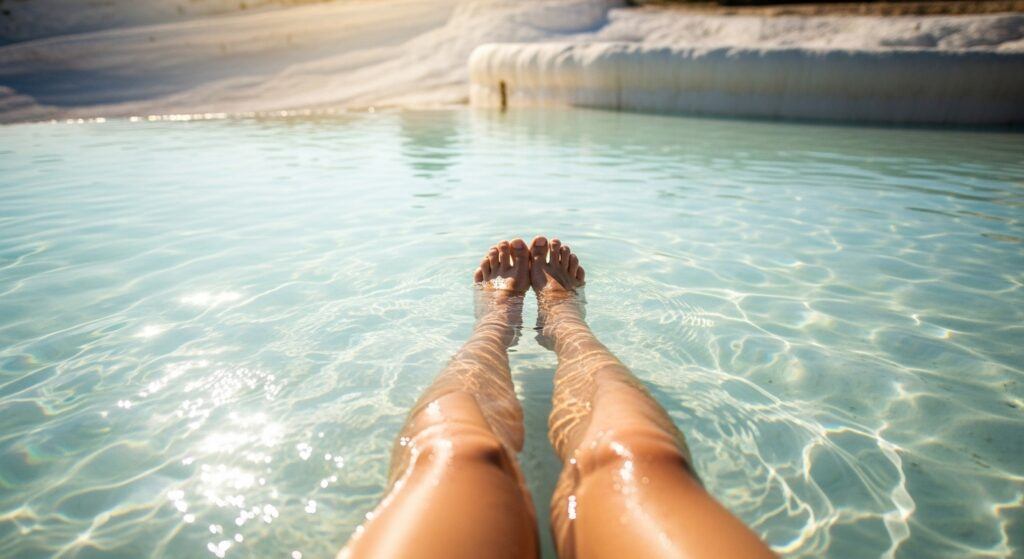
Locals believe that the mineral-rich pools can help with skin conditions and joint pain. While it’s not a miracle cure, soaking here for even fifteen minutes leaves your skin feeling soft and refreshed. Just remember to rinse off after your soak, especially before you change back into dry clothes. Some people also bring a change of clothes or an extra towel for comfort after soaking.
Hierapolis: The Ancient City Above the Clouds
Just above the main pools lies the ancient Greco-Roman city of Hierapolis. Walking among the ruins, you’ll see bathhouses, churches, and a massive amphitheater that’s still in amazing condition. The city was built around these hot springs, with kings, holy men, and everyday travelers flocking here for centuries.
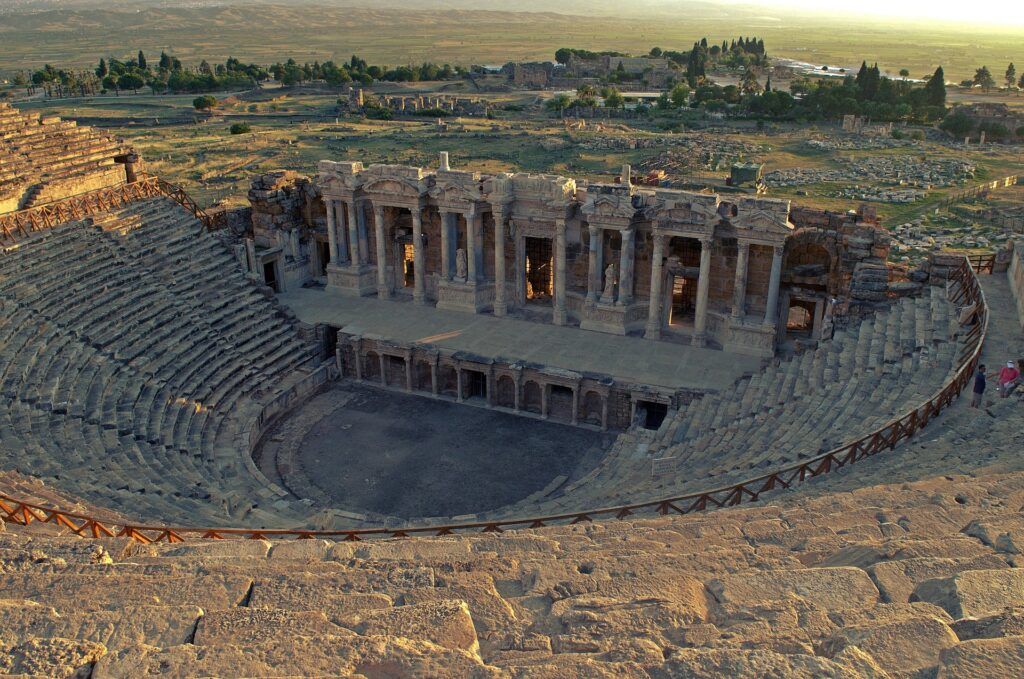
Make sure to give yourself time to follow the main path through Hierapolis. The theater has epic valley views, and the ruins are a great way to take a break between soaks. Signs in English share a bit of history, and there are shaded areas perfect for a picnic with views over Pamukkale. Wandering through Hierapolis can take anywhere from an hour to several if you like to linger and imagine life centuries ago.
Cleopatra’s Pool: Swimming in Ancient Style
For something extra memorable, I recommend checking out Cleopatra’s Pool. It’s a spring-fed pool in the same area where you can actually swim above fallen Roman columns from centuries ago. Entry to Cleopatra’s Pool costs a bit extra, but you get warmer water and the quirky chance to literally swim through history.
Lockers and changing rooms make it easy to take a proper dip here, so bring a swimsuit. The thermal water feels even smoother, and some say it’s the softest anywhere in Pamukkale. The vibe is lively, and you can grab a fresh juice or ice cream poolside after you’re done swimming. The unique setting, with ancient columns beneath the surface, is great for both relaxation and photos.
A Few Common Challenges (and How to Handle Them)
- Crowds: Pamukkale is a major draw, especially during peak season. Visiting early, late, or during the shoulder months, such as April and October, helps avoid the busiest times.
- Slippery Surfaces: Walk slowly, especially if you’re carrying a camera or phone. Most falls happen when people rush for a photo spot. Flip-flops are helpful outside the pool, but store them in your bag to avoid slipping on wet stone.
- Preservation Rules: It’s tempting to take a souvenir rock, but removing anything from the site or using soaps or shampoos in the baths is not allowed. These rules help keep Pamukkale beautiful for everyone.
- Accessibility: The terraces have stairs and uneven ground. Visitors with limited mobility may find some sections more challenging, but viewing platforms near the entrance offer good views. Consider bringing a walking stick for extra stability if needed.
Keeping the Pools Pristine
While Pamukkale appears pristine, the pools require protection from overuse and pollution. In the past, hotels and roads caused some damage, but efforts to restrict access and restore the natural flow of water have significantly helped. Staying on marked paths and respecting the site go a long way toward keeping Pamukkale stunning for future travelers. Guided tours are available for those seeking more information about ongoing preservation efforts and the site’s natural history.
Post-Soak: What’s Nearby?
The town of Pamukkale has plenty of cozy hotels, local restaurants, and small shops. Most places serve Turkish tea, gözleme (savory pancakes), and other yummy regional treats. If you’re staying overnight, sunset from the edge of the terraces offers maybe the best light show Turkey has to offer. Many visitors note that the view changes dramatically at dusk, with the white terraces turning pink and orange as the sun sets low over the valley.
- Red Springs in Karahayit: A few minutes’ drive from Pamukkale, you’ll find natural springs with bright red mineral water, known for different healing benefits and a striking look. The iron-rich waters here are hotter and are said to improve circulation.
- Laodicea: Another ancient city close by, less crowded but packed with history. If you have extra time, it’s worth stopping by to see more Roman ruins and ancient theaters.
Many visitors use Pamukkale as a base to explore Turkey’s southwest, including Ephesus, Fethiye, and the coast. You can easily arrange day trips, shuttle buses, or even hot air balloon rides for a fresh view of the area.
Frequently Asked Questions
Question: Can you swim in all the Pamukkale pools?
Answer: Not all terraces are open for swimming, but several sections at the bottom and middle are open to the public for soaking. Stick to the marked areas for safety and preservation, and always obey the posted signs.
Question: How long should I spend at Pamukkale?
Answer: Most people spend at least half a day exploring the terraces and Hierapolis. A full day, though, lets you fully enjoy the pools, ruins, and Cleopatra’s Pool with time to relax, eat, and take photos.
Question: What should I wear to the pools?
Answer: Wear swimwear or clothes you’re comfortable getting wet, pack a towel, and consider bringing a cover-up for exploring the ruins above the terraces. Comfortable sandals or flip-flops are also handy when you’re not on the travertine.
Question: Is Pamukkale open year-round?
Answer: Yes, Pamukkale is open all year. Each season brings a different vibe; the pools are atmospheric (and sometimes steamy) in winter, and bright and sunny in summer. Winter months tend to be less crowded, making it ideal for peaceful soaking.
Is Pamukkale Worth Visiting?
Absolutely. With its dreamlike terraces, warm waters, and ancient history, the Pamukkale thermal pools offer one of the most unique travel experiences. Even after several trips, I still find myself stunned by the colors and the calming effect of simply sitting in the pools with a mountain view.
If you take the time to explore beyond the main site and wander the ruins at your own pace, your day gets even more special. Pamukkale is the sort of place you’ll remember long after your feet have dried and your camera roll is full of white terraces and blue water. Whether you’re after relaxation, a slice of history, or epic travel photos, there’s a lot to love in this unique corner of Turkey.