
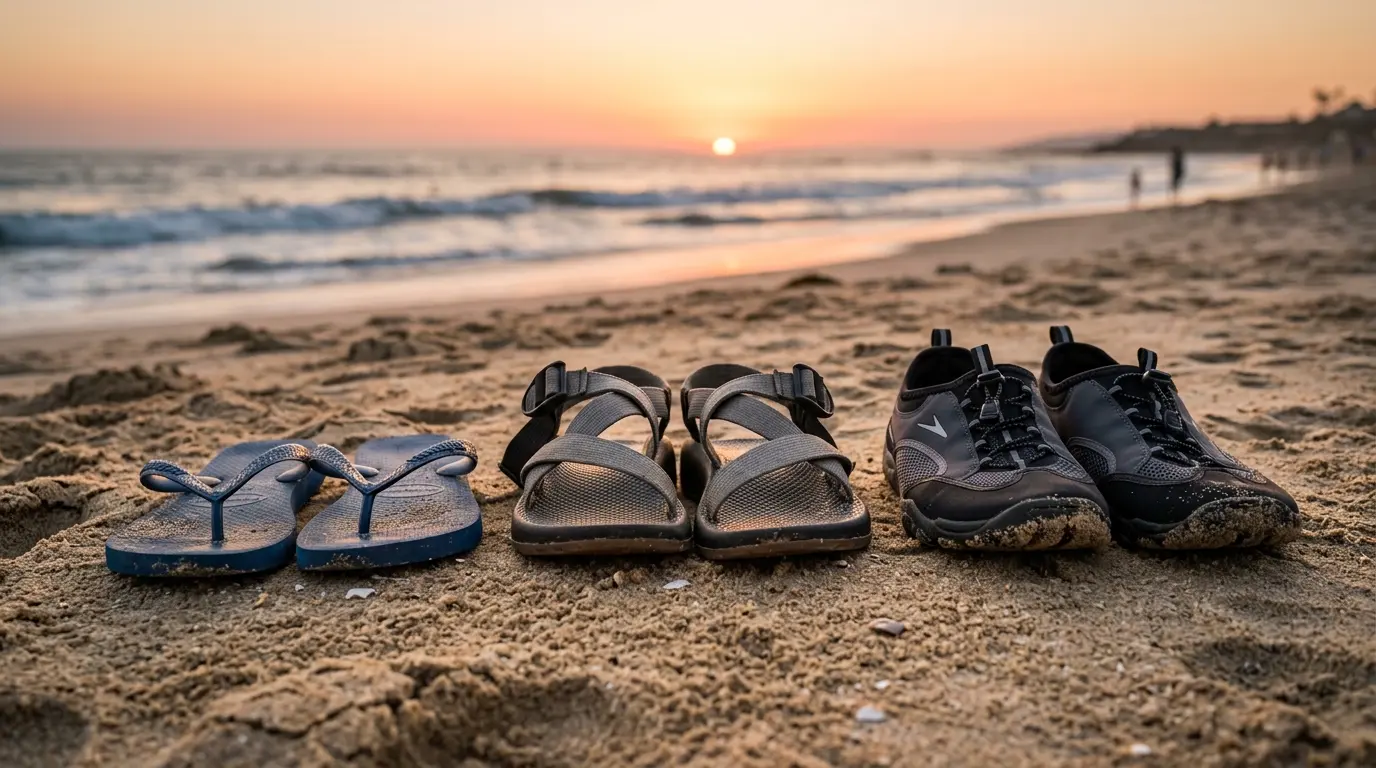
Best Beach Footwear: What Actually Works (Flip-Flops, Sandals, or Water Shoes?)

Most people pick beach footwear out of habit, then deal with the problems later. Choosing the right type upfront changes how long you stay comfortable and how much of the beach you can actually enjoy.

best beach footwear comparison flip flops sandals water shoes

Best Beach Footwear (What I Actually Use and Why It Matters)

Most people don’t plan their beach footwear.

They grab whatever’s by the door and assume it’ll be fine.

It works, until it doesn’t.

Hot sand feels a lot worse when you’re only halfway to the water. Meanwhile, sharp shells can ruin even the most laid-back beach day. And flip-flops always seem to fail you at the worst possible time.

I didn’t really think about any of this either, at least not at first. Then a few bad trips changed that pretty quick.

Here’s the honest breakdown. No filler. Just what works.

Affiliate Disclosure

Some links on PreTravelCheck are affiliate links. If you buy through them, we may earn a small commission at no extra cost to you. As an Amazon Associate, we earn from qualifying purchases. Thanks for supporting PreTravelCheck.

If You Only Bring Flip-Flops… Keep Expectations Low

I still have flip-flops, so I’m not against them.

But I know exactly what they’re good for now… and what they’re not.

They’re fine if you’re:

  • Walking from the car to the sand
  • Sitting most of the time
  • Not dealing with rocks or heat

That’s about it.

Once you go past that point, the issues become hard to miss. There’s no support, no grip, and your foot never feels steady. Instead, it feels like it’s sliding around when it should stay planted.

If you’re going this route anyway, at least upgrade a little:

  • Reef Cushion Phantom Flip Flops – softer, more comfortable, less foot fatigue
  • Havaianas Top Flip Flops – simple, durable, better than the dollar-store versions

Still… I don’t rely on these anymore for full days.
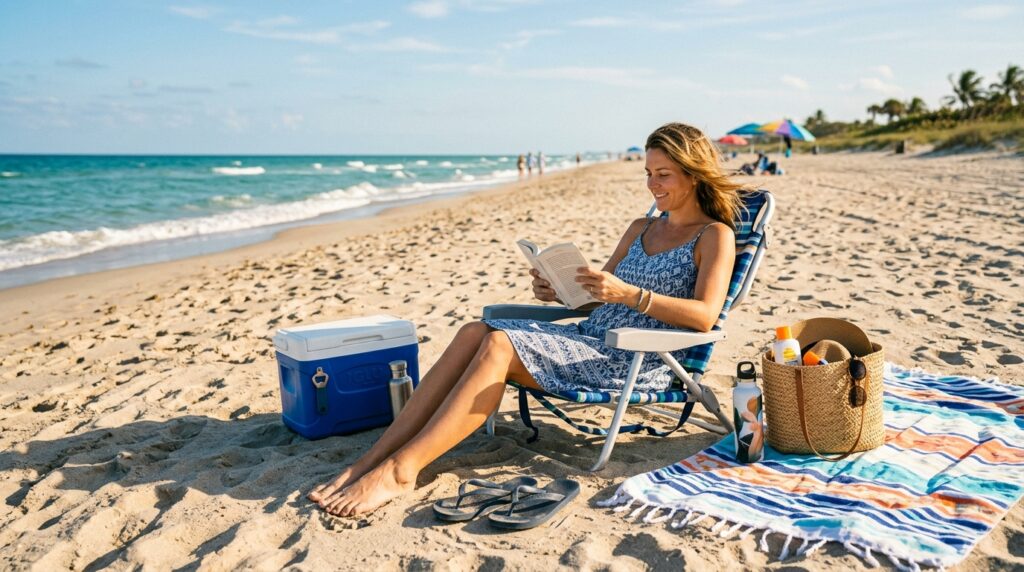
best beach footwear flip flops casual beach setup
Flip-flops still work… just not for everything

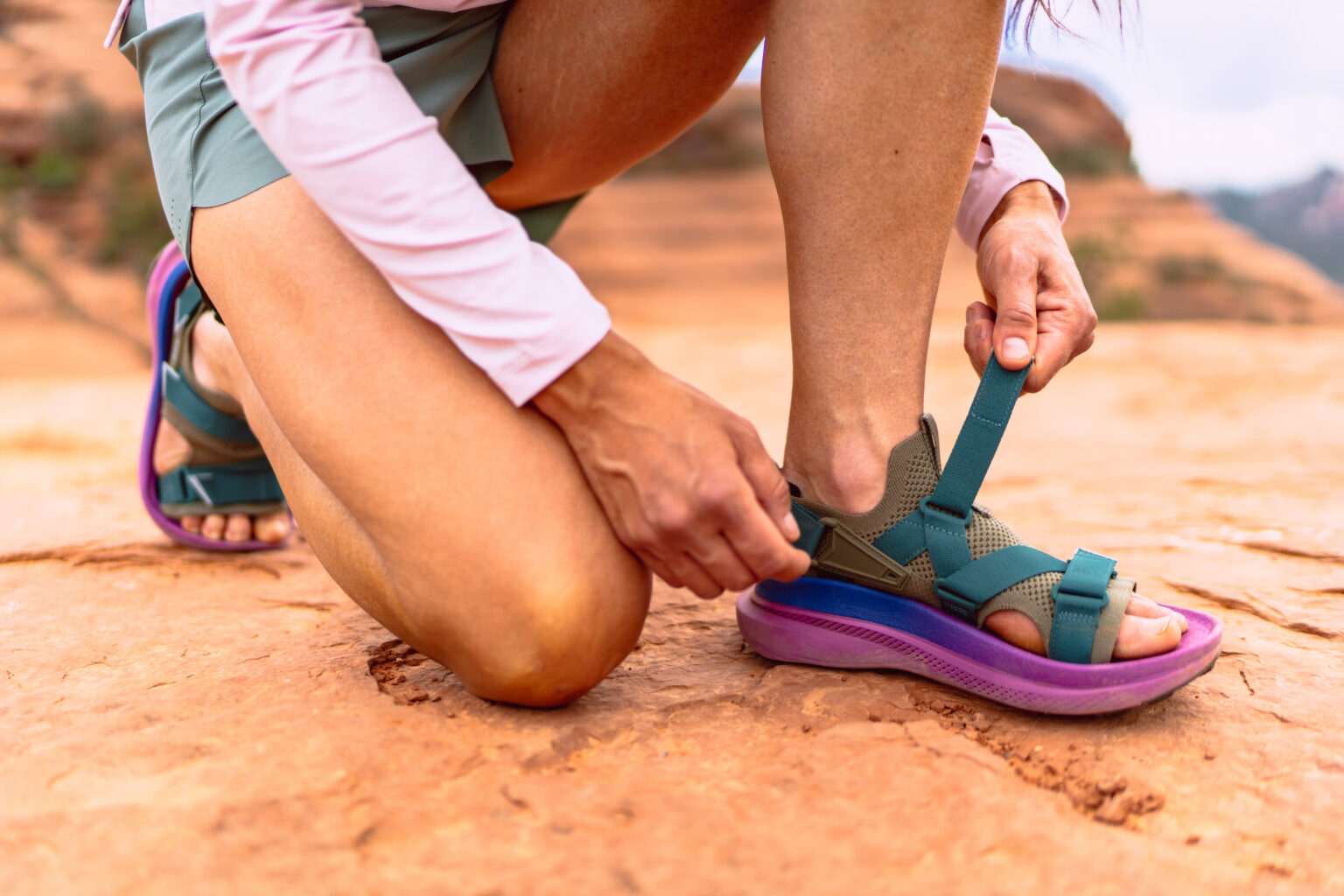
Sport Sandals (This Is Where Things Start Making Sense)
Image

This is often the moment when things change for people.

You go from “this is fine” to “okay, this actually feels solid.”

They stay in place on your feet, so you can walk naturally without thinking about every step. Plus, you won’t have to keep stopping to adjust them.

They’re not perfect, but they’re reliable.

A couple solid options:

  • Teva Hurricane XLT2 Sandals – probably the safest all-around pick
  • KEEN Newport H2 Sandals – more protection up front, better if you’re around rocks

I’ve worn both styles, and the difference becomes clear after about an hour of walking.

When you stop noticing your feet, that’s usually a good sign.

Water Shoes (The Ones People Wish They Bought First)
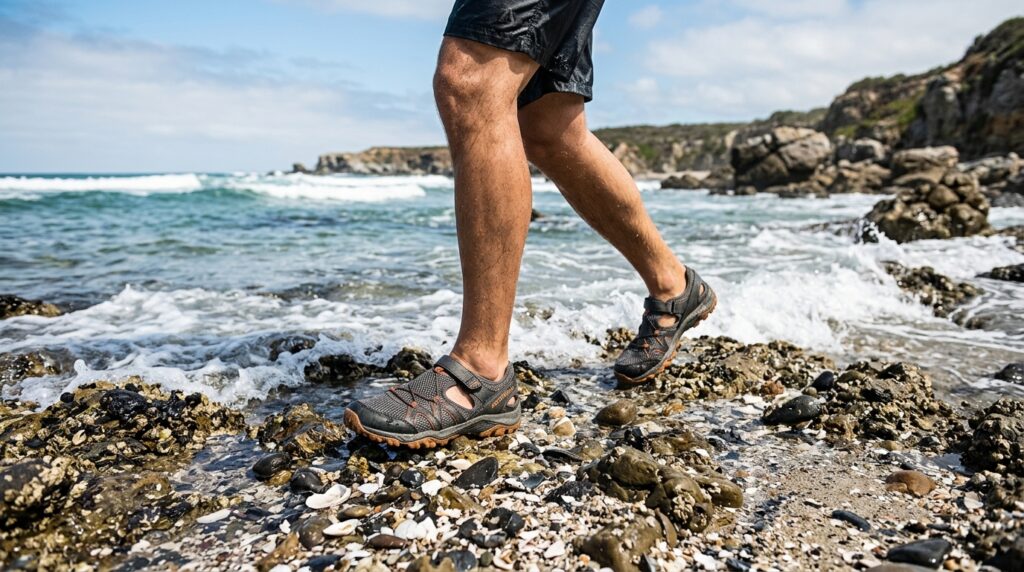
best beach footwear water shoes rocky shoreline protection
Water shoes start to make sense when the beach isn’t soft sand

This is the one I put off for far too long. I used to think water shoes were too much, or only meant for kids.

Then I stepped on something I never should’ve, and yeah, that changed everything.

These handle almost everything the beach throws at you:

  • Wet surfaces
  • Rocks and shells
  • Hot sand
  • Walking in and out of water

And they keep going. Most people don’t realize how much that matters.

What I’d actually recommend:

  • ALEADER Quick Drying Water Shoes – lightweight, affordable, gets the job done
  • Columbia Drainmaker IV Water Shoes – more support, better if you’re on your feet longer

If I’m not sure what the beach will be like, this is what I grab every time. No second thought.

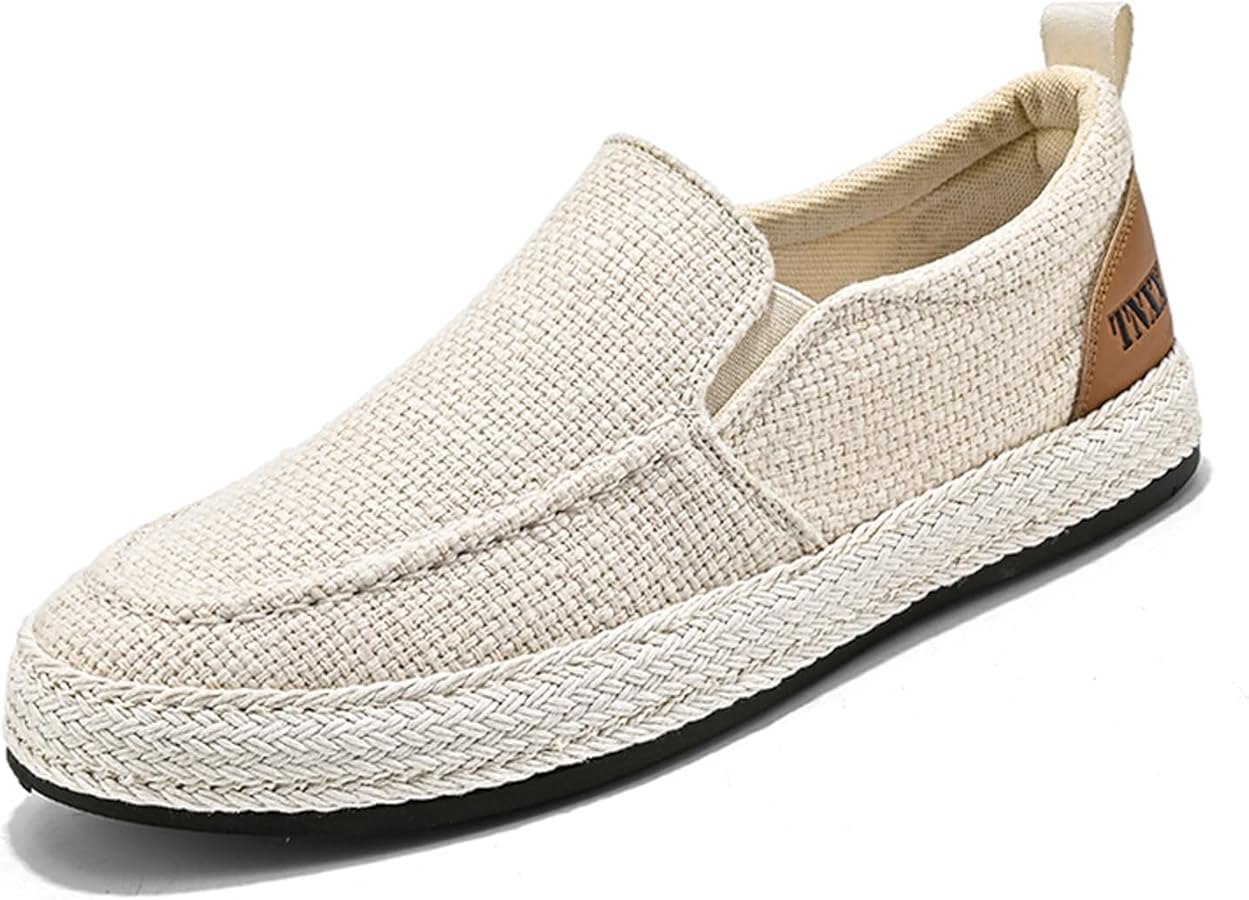
Slip-Ons (Not Really for the Beach… But You’ll Want Them)
Image

These matter once you step off the sand.

The boardwalk, good food, and a stroll through town.

You can wear sandals for that, but sometimes you just don’t feel like it.

Simple picks:

I don’t see these as beach gear. To me, they’re more like the second part of the day.

Product Type Best For What Stands Out Trade-Offs Recommendation
Reef Cushion Phantom 2.0
Easy Beach Pick
Flip-Flop Short walks, soft sand, quick beach trips, poolside use
  • Cushioned footbed
  • Arch support
  • Simple slip-on design
  • Less secure on uneven ground
  • Not ideal for rocky beaches
  • Minimal protection from shells or debris
Best if you want something casual and easy. Good for relaxed beach days, not long walks.
Teva Hurricane XLT2
Best Value
Sport Sandal Walking, beach towns, boardwalks, longer days on your feet
  • Secure strap system
  • Sport sandal stability
  • Better traction than basic sandals
  • Bulkier than flip-flops
  • More sandal than true water shoe
  • Open design leaves toes exposed
Great middle-ground choice if you want more support without going full water shoe.
KEEN Newport H2
Premium Pick
Hybrid Water Sandal Rocky beaches, mixed terrain, water access points, active beach trips
  • Built for water and trail use
  • Closed-toe protection
  • Quick-dry webbing and adjustable fit
  • Heavier look than a simple sandal
  • Not the sleekest casual option
  • Costs more than basic beach footwear
My pick for beaches with rocks, shells, or rough footing where protection matters more than style.
Columbia Drainmaker IV
Most Versatile
Water Shoe In-and-out water use, slippery surfaces, all-around beach versatility
  • Made for water or land
  • Breathability
  • Cushioning and traction
  • Looks more like a shoe than a sandal
  • Can feel warmer than open sandals
  • Not as quick to kick off at the shoreline
Best choice if you want one pair that can handle wet sand, walking, and uneven ground without much fuss.

Stop Guessing and Pick the One That Actually Fits Your Day

If you’re thinking too hard about it, here’s the simplest answer I can give.

If you want the cheapest and easiest option, go with flip-flops. For better comfort while walking, sport sandals are a smarter pick. If you want the simplest all-around choice, water shoes work best. That last one keeps showing up for a reason. It fixes issues before they even start.

Reef Cushion Phantom 2.0
Easy Beach Pick
This is your grab-and-go option. Soft, simple, and comfortable for short beach trips. Not built for long walks or rough ground, but it does exactly what a flip-flop should do without feeling cheap. Reef uses a cushioned footbed and memory foam liner, which is why they feel better than most basic pairs.
Check Price on Amazon
Teva Hurricane XLT2
Best Value
This is where comfort starts to matter. Adjustable straps keep your foot secure, and the sole gives you enough support to actually walk without thinking about every step. It’s a reliable upgrade if you plan to stay on your feet longer than a quick beach visit.
Check Price on Amazon
KEEN Newport H2
Premium Pick
This is built for rougher conditions. Rocks, shells, uneven ground… this handles all of it. The closed-toe design adds protection, and the grip holds steady on wet surfaces. It’s heavier than a basic sandal, but you’ll notice the difference when the terrain isn’t forgiving.
Check Price on Amazon
Columbia Drainmaker IV
Most Versatile
If you want one pair that covers almost everything, this is it. It works in and out of the water, drains quickly, and still feels comfortable for walking. It leans more toward a lightweight shoe than a sandal, which is why it handles more situations without hassle.
Check Price on Amazon

What Most People Realize Too Late

Bad shoes don’t wreck your morning right away. The problem shows up later. You walk less, skip certain places, and head home early without saying why. That’s usually when people decide it’s time for better footwear. Or you can skip all that and start with shoes that feel right from day one.

Beach Footwear FAQ

These are the questions people usually ask once they realize not every pair of beach shoes works the same.

What is the best footwear to wear at the beach?
The best beach footwear depends on what you plan to do. Flip-flops work for short, easy trips. Sport sandals are better for longer walks. Water shoes make the most sense if you expect rocks, shells, slippery areas, or time in the water.
Are flip-flops good for the beach?
Flip-flops are fine for soft sand and short walks, but they have limits. They do not offer much support, grip, or protection. They are easy to wear, though not always the best choice for a full day at the beach.
Are water shoes better than sandals for the beach?
Water shoes are usually better when the beach has rocks, shells, rough ground, or wet surfaces. Sandals feel more open and breathable, but water shoes give you better grip and more protection when conditions get less forgiving.
Do I need water shoes for a sandy beach?
Not always. If the beach is soft, clean, and easy to walk, you may be fine with flip-flops or sandals. Water shoes become more useful when the sand gets hot, the shoreline has debris, or you know you will be in and out of the water.
What beach footwear is best for walking long distances?
Sport sandals and supportive water shoes are usually the better picks for long walks. They hold your foot in place better and give you more support than basic flip-flops, which tend to get uncomfortable faster.
Can you wear regular sneakers to the beach?
You can, but they are rarely the best option. Regular sneakers trap sand, take longer to dry, and can feel heavy once they get wet. They make more sense for the boardwalk or nearby shops than for the beach itself.
What features matter most in beach footwear?
The biggest things to look for are grip, comfort, quick-drying materials, breathability, and enough support for the kind of walking you plan to do. Protection also matters if you expect shells, rocks, or uneven ground.
Are sport sandals good for the beach?
Yes, sport sandals are one of the best all-around options for the beach. They stay on your feet better than flip-flops, give you more support, and handle walking much better, especially during longer beach days.
What beach footwear is best for rocky beaches?
Water shoes or protective hybrid sandals are the better choice for rocky beaches. They help shield your feet from sharp edges and give you better traction on wet or uneven surfaces.
Should beach shoes be tight or loose?
Beach shoes should feel secure without squeezing your feet. If they are too loose, they can slide around and become annoying fast. If they are too tight, they can get uncomfortable once your feet warm up or get wet.
What is the most versatile footwear for the beach?
Water shoes are usually the most versatile option because they can handle sand, water, rough patches, and slippery areas better than most other styles. They are not always the most casual-looking option, but they do the most work.
Is barefoot better than wearing beach shoes?
Going barefoot can feel fine on soft, cool sand, but it is not always the better choice. Hot sand, sharp shells, hidden debris, and slippery spots are usually what make people wish they had worn proper beach footwear in the first place.

Leave a Reply

Your email address will not be published. Required fields are marked *