

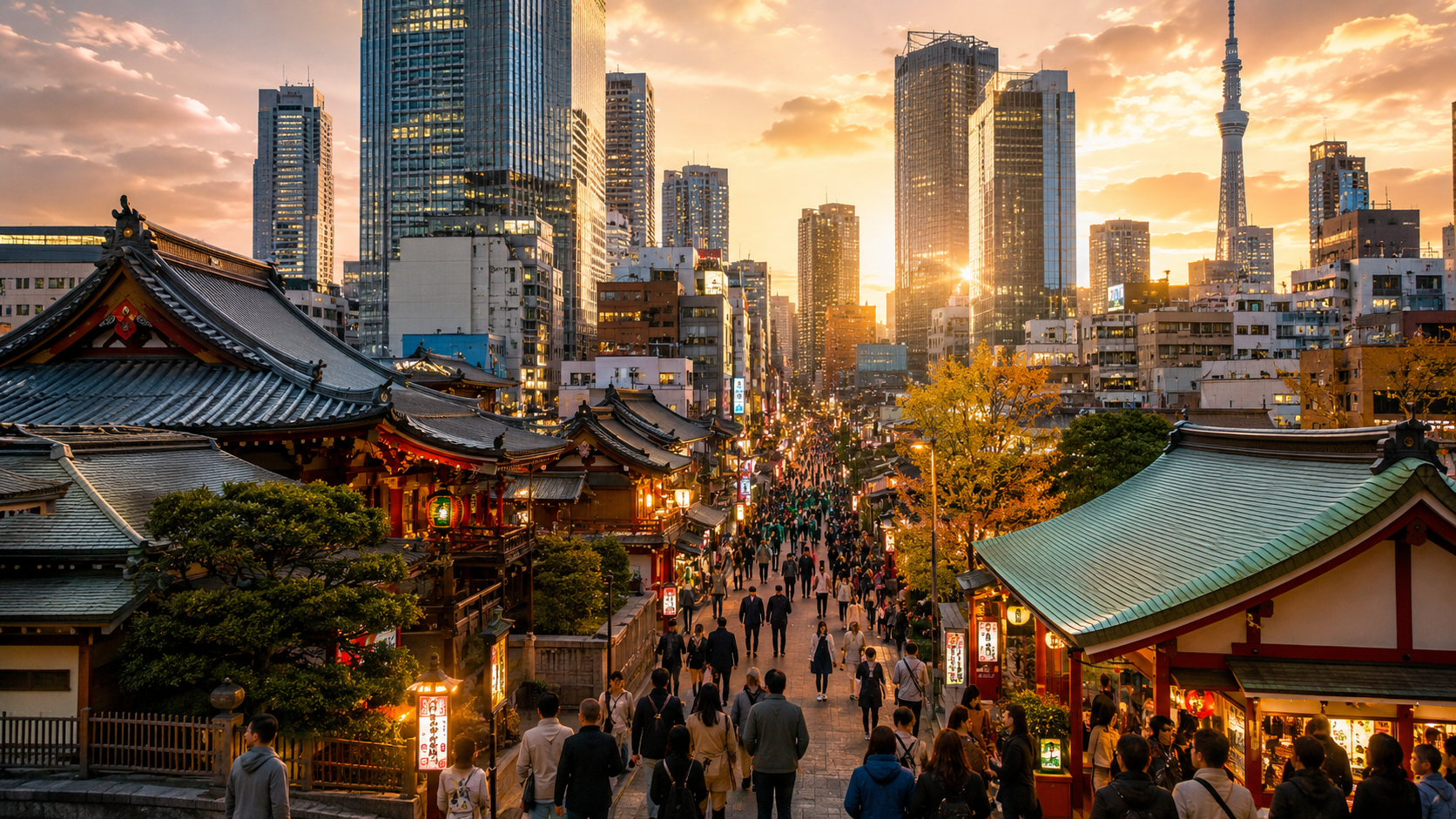
Tokyo has a way of making you feel small.
Not insignificant. Just small.
You step out of the airport, board a train that arrives exactly when it’s supposed to, emerge into a city of nearly 14 million people, and realize very quickly that whatever picture you had in your head probably wasn’t big enough.
People often describe Tokyo as futuristic. That’s true, but it’s also incomplete. Tokyo isn’t just neon lights, robot cafés, and giant video screens. It’s old women tending flowers outside tiny homes. It’s salarymen eating noodles in silence. It’s neighborhood shrines tucked between apartment buildings and vending machines.
It’s a city of contradictions that somehow work together.
Seven days isn’t enough to see everything. Frankly, seven years might not be enough. But a week gives you enough time to move beyond the checklist and start experiencing the city the way travelers should: one neighborhood, one meal, one unexpected turn down an alley at a time.
Before we start, let’s talk about something most travel guides treat as an afterthought.
🇯🇵 Did You Know?
Tokyo is the world’s largest metropolitan area, with more than 37 million people living throughout the greater region. Despite its size, Tokyo consistently ranks among the safest major cities in the world and is famous for its incredibly efficient train network, which carries millions of passengers every day.
Where You Stay Matters More Than You Think
Tokyo is enormous.
On a map, it doesn’t look that intimidating. Then you arrive and discover that crossing the city can easily consume an hour or more, even with one of the most efficient transportation systems on earth.
Choosing the right neighborhood can make your trip easier, cheaper, and a lot more enjoyable.
Stay In Shinjuku If It’s Your First Visit
Shinjuku is organized chaos.
Train stations, department stores, hidden bars, late-night ramen shops, luxury hotels, budget hotels, and enough restaurants to keep you busy for months.
If you’re only visiting Tokyo once, this is probably the safest choice.
You’ll have easy access to nearly everything on this itinerary.
Stay In Shibuya If You Want Energy
Shibuya feels younger.
The streets buzz late into the night. Fashion, music, food, nightlife, and people-watching all collide here.
If you enjoy walking out of your hotel door and immediately feeling like you’re in the center of something exciting, Shibuya delivers.
Stay In Asakusa For Old Tokyo
Not everyone comes to Tokyo looking for neon signs and crowded intersections.
Asakusa offers a slower pace and a stronger connection to traditional Japan.
Morning walks feel different here. The city seems quieter. More reflective.
Stay In Ginza If You’re Traveling In Style
Luxury hotels, upscale dining, immaculate streets, and easy transportation access.
If your budget allows it, Ginza is hard to beat.
Now let’s get into the good stuff.
Day 1: Let Tokyo Introduce Itself
The biggest mistake people make on their first day is trying to accomplish too much.
Don’t.
Tokyo is overwhelming enough without turning your arrival into a marathon.
Drop your bags at the hotel and go for a walk.
No schedule.
No mission.
Just walk.
Head toward Shibuya and spend some time at the famous crossing. Thousands of people moving in every direction, somehow avoiding collisions with almost supernatural efficiency.
At first, it feels chaotic.
Then you realize it’s actually incredibly organized.
That’s Tokyo in a nutshell.
For dinner, avoid chains if you can.
Find a small neighborhood izakaya. The kind with handwritten menus, warm lighting, and a few locals already seated at the counter.
Point at something.
Order it.
Trust the process.
Your first night in Tokyo should be about curiosity, not certainty.
Day 2: Meeting The City’s Past
If Tokyo has a soul, part of it lives in Asakusa.
Get there early.
The crowds arrive later.
The giant lantern hanging at Kaminarimon Gate gets photographed thousands of times every day, but the real magic happens beyond it.
Walk slowly.
Notice the details.
The smell of incense drifting through the air.
The shop owners preparing for the day.
The sound of footsteps on stone pathways.
Sensō-ji Temple has survived wars, earthquakes, modernization, and tourism. Yet somehow it still feels grounded.
After exploring the temple grounds, wander through the surrounding streets.
Eat snacks you can’t identify.
Buy something unnecessary.
Travel should occasionally involve poor financial decisions involving interesting souvenirs.
Later, make your way to Tokyo Skytree.
The view helps put everything into perspective.
Tokyo stretches toward the horizon in every direction. Neighborhood after neighborhood disappearing into the distance until the city finally surrenders to geography.
It’s one thing to know Tokyo is large.
It’s another thing entirely to see it.
Day 3: Follow Your Appetite
Every city tells a story through food.
Tokyo tells hundreds.
Today is dedicated to eating.
Start at the Tsukiji Outer Market.
The famous fish auction moved years ago, but the surrounding food culture remains very much alive.
Fresh sushi for breakfast might sound unusual depending on where you’re from.

In Tokyo, it feels completely normal.
That’s one of the joys of travel.
Normal changes.
Spend the rest of the day exploring through your stomach.
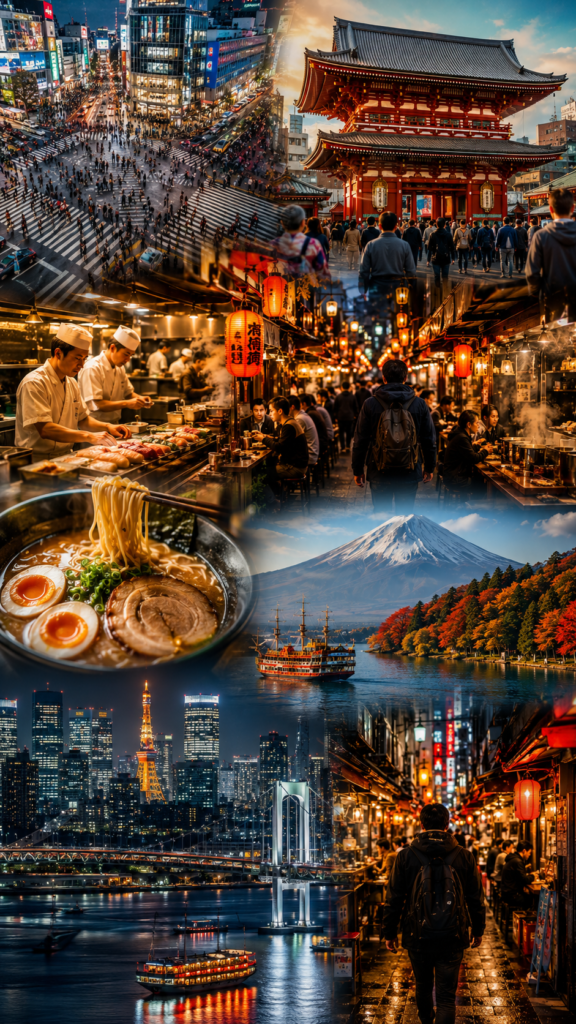
Eat ramen in a shop with ten seats.
Try yakitori cooked over charcoal.
Find a standing sushi counter.
Order gyoza.
Order something you can’t translate.
Some of the best meals you’ll have won’t come from a list.
They’ll happen because you noticed steam rising from a doorway and decided to investigate.
Late in the afternoon, grab a coffee and watch people move through the city.
Tokyo is one of the world’s great spectator sports.
Day 4: Tokyo From The Future
Yesterday was about tradition.
Today feels like science fiction.
Start with teamLab Planets.
Trying to explain it is difficult.
Part art installation.
Part dream.
Part technological experiment.
You walk through water. Rooms transform around you. Light behaves in unexpected ways.
Even people who aren’t particularly interested in art usually leave impressed.
Afterward, head toward Odaiba.
The waterfront provides a completely different perspective on Tokyo.
Wide boulevards replace narrow alleys.
Modern architecture dominates the skyline.
The pace feels different.
Almost relaxed.
Stay through sunset if possible.
As darkness settles in and lights begin reflecting across the water, Tokyo starts showing off.
Day 5: Escape To Hakone
Cities are easier to appreciate when you occasionally leave them.
Hakone provides the perfect excuse.
The journey isn’t difficult, and the reward is substantial.
Mountains replace skyscrapers.
Fresh air replaces crowded sidewalks.
If the weather cooperates, you’ll catch unforgettable views of Mount Fuji.
Some travelers see it immediately.
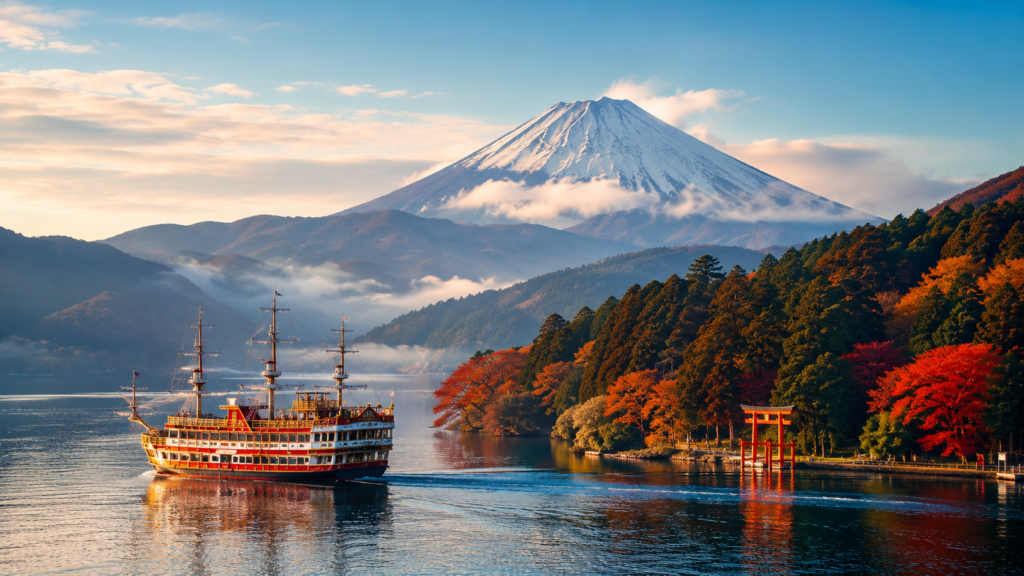
Others wait patiently.
A few get completely clouded out.
That’s travel.
No guarantees.
Take the ropeway.
Cruise across Lake Ashi.
Spend time in an onsen if you’re comfortable with the experience.
For many visitors, this becomes one of the highlights of the entire trip.
Not because it’s flashy.
Because it isn’t.
The silence feels earned after several days in Tokyo.
Day 6: The Best Day Has No Plan
Most itineraries try to account for every hour.
This day does the opposite.
Pick a neighborhood.
Any neighborhood.
Then wander.
Shimokitazawa is excellent for vintage shops, coffee, and creative energy.
Yanaka offers glimpses of old Tokyo that somehow survived modernization.
Kichijoji blends local life, shopping, parks, and restaurants into something wonderfully balanced.
The goal today isn’t sightseeing.
It’s observation.
Sit in cafés.
Watch commuters.
Browse bookstores.
Spend twenty minutes looking at something nobody else notices.
Somewhere along the way you’ll discover that the moments you remember most often aren’t the famous landmarks.
They’re the unexpected conversations, the hidden alleyways, the tiny restaurants, and the feeling of temporarily belonging somewhere unfamiliar.
Those experiences can’t be scheduled.
They have to be stumbled into.
Day 7: One Last Look
By now, Tokyo should feel slightly less intimidating.
Not smaller.
Just more familiar.
Use your final day to revisit whatever surprised you most.
Maybe it’s a favorite ramen shop.
Maybe it’s Asakusa.
Maybe it’s a quiet neighborhood café where nobody speaks your language but somehow everything still makes sense.
Travel has a funny way of doing that.
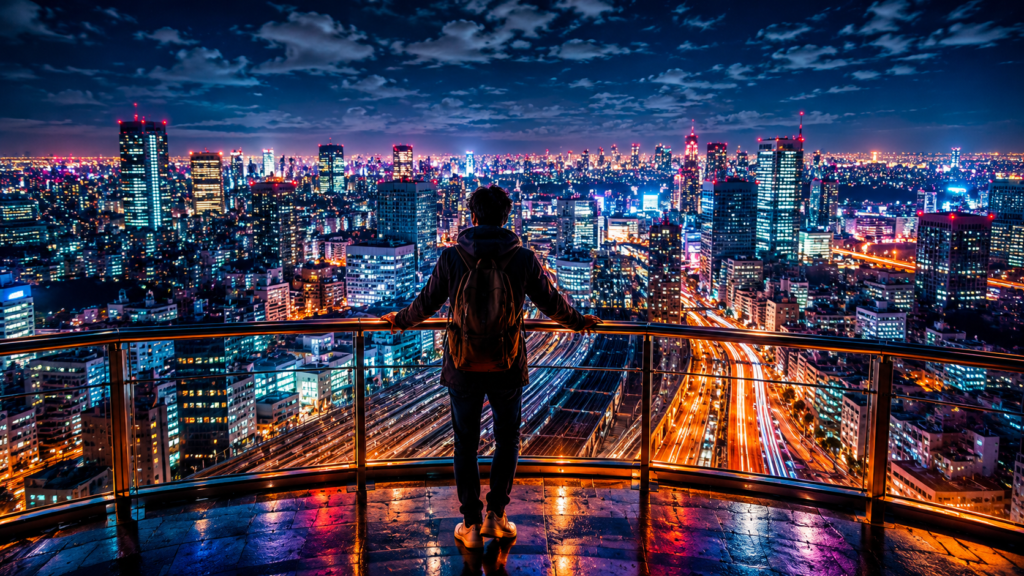
For your last evening, find a high observation deck somewhere in the city.
Bring a camera if you want.
Or don’t.
Stand there and look.
The lights stretch endlessly across the landscape.
Train lines snake through neighborhoods.
Office towers glow.
Tiny apartments illuminate the darkness like stars.
Somewhere below, a chef is preparing noodles for a customer who walked in by accident.
Someone is catching the last train home.
Someone else is beginning their night.
The city keeps moving whether you’re there or not.
That’s part of what makes Tokyo unforgettable.
You never feel like you’ve finished it.
You leave knowing there’s more.
Final Thoughts
A complete 7-day itinerary for exploring Tokyo isn’t really about checking off attractions.
It’s about learning how to move through one of the world’s most fascinating cities.
Yes, visit the temples.
Yes, see the skyline.
Yes, eat the sushi.
But leave room for the unexpected.
Take the side street.
Enter the restaurant without English menus.
Sit in the café that wasn’t on your list.
Because the truth is, the best version of Tokyo isn’t always found in guidebooks.
It’s usually waiting somewhere between the places you planned to visit and the places you discovered by accident.
Frequently Asked Questions About Exploring Tokyo
Is 7 days enough time to explore Tokyo?
Yes. Seven days allows travelers to experience Tokyo’s major attractions, food scene, historic districts, and even take a day trip to destinations like Hakone.
What is the best area to stay in Tokyo for first-time visitors?
Shinjuku is often considered the best area for first-time visitors because of its transportation connections, restaurants, shopping, and nightlife.
What is the best month to visit Tokyo?
March through May and October through November are popular due to comfortable temperatures and seasonal scenery, including cherry blossoms and autumn colors.
How much money should I budget for 7 days in Tokyo?
Budget travelers can often spend $75–$125 per day, while mid-range travelers typically spend $150–$300 per day depending on accommodations and dining choices.
Should I take a day trip from Tokyo?
Absolutely. Hakone is one of the most popular day trips because it offers hot springs, mountain scenery, and views of Mount Fuji.
Do I need to speak Japanese to visit Tokyo?
No. While learning a few basic phrases is appreciated, many transportation signs, tourist attractions, and restaurants provide English support.