

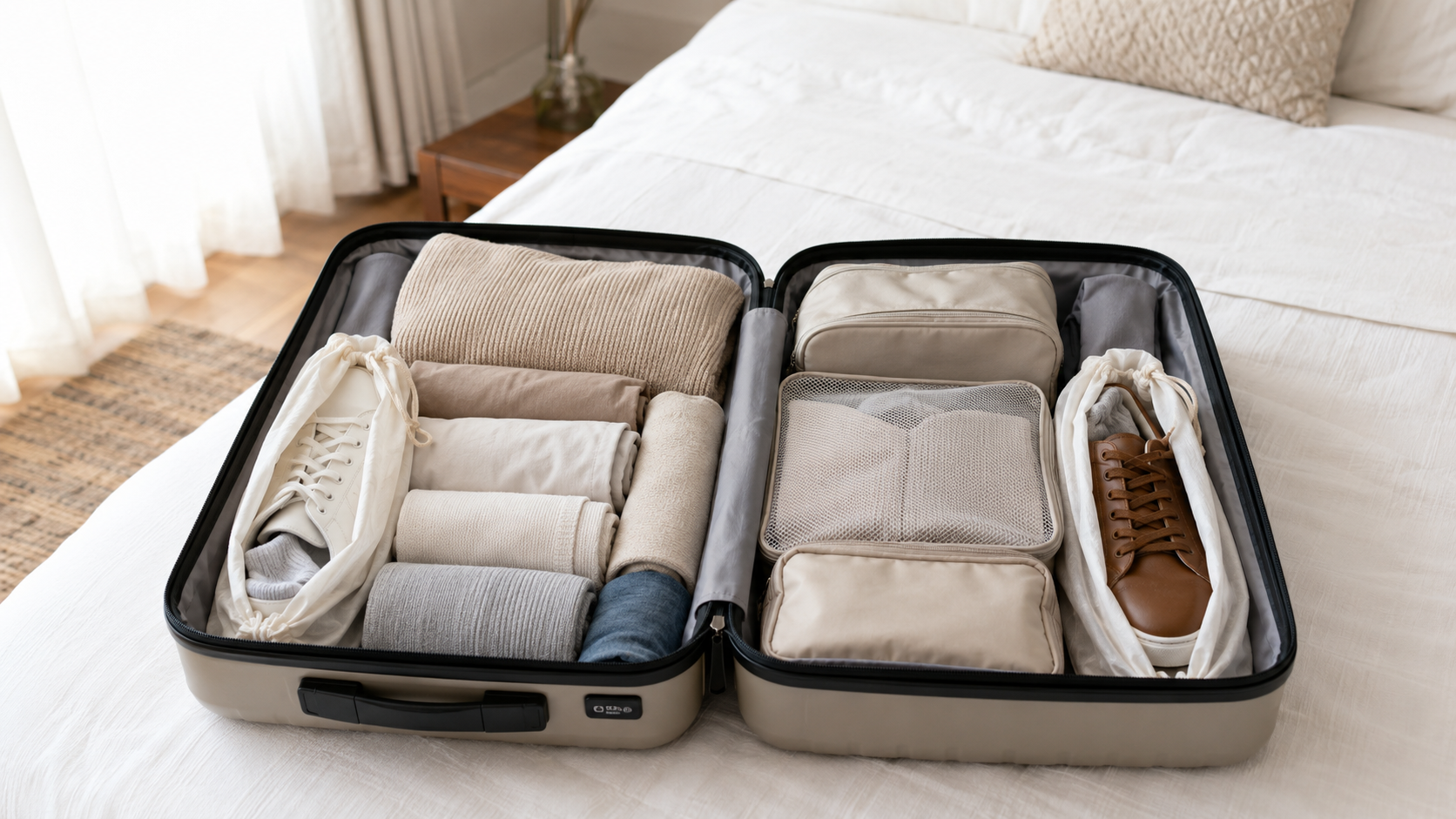
Shoes are usually the most awkward things in my suitcase. They are bulky, rigid, and often dirtier than everything packed around them. Even a clean-looking sole can leave grit, scuff marks, or unpleasant odors on clothing.
Learning how to pack shoes without ruining your clothes comes down to a fairly simple routine. I bring fewer pairs, clean and isolate each one, use the empty space inside them, and position them where they will not crush or stain anything.
What Is the Best Way to Pack Shoes?
Clean and completely dry your shoes before covering each pair with a shoe bag, cloth pouch, or shower cap. Fill the interiors with socks or other soft items, then place heavier footwear near the wheels and around the outer edges of your suitcase. This keeps dirty soles away from clean clothes while helping the case stay balanced.
Key Takeaways
- Clean the soles and allow shoes to dry completely before packing.
- Cover shoes with shoe bags, cloth bags, packing cubes, or shower caps.
- Fill empty shoes with soft items to save space and help them hold their shape.
- Place heavier footwear along the bottom or sides of the suitcase.
- Wear your bulkiest pair during transit whenever practical.
How to Pack Shoes Without Ruining Your Clothes
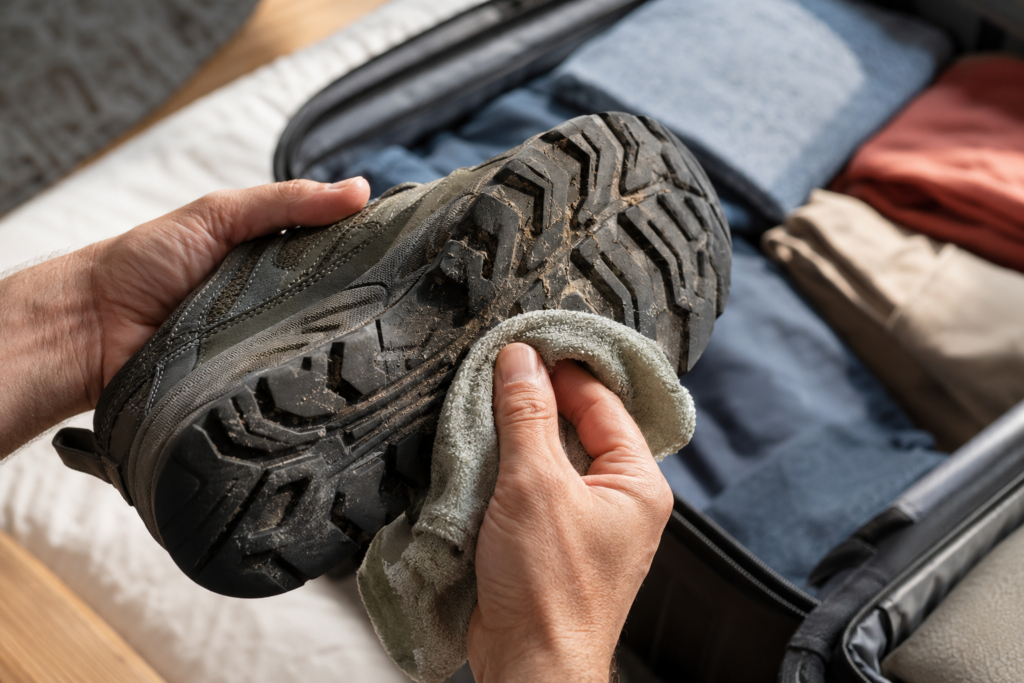
I start by checking the soles for dirt, mud, gravel, or anything else that could end up on my clothes. A travel wipe or damp cloth is usually enough for a quick cleaning. If the shoes are wet, I let them air-dry completely before they go anywhere near the suitcase.
That drying step matters more than it might seem. Damp footwear can trap odors, encourage mildew, and transfer moisture to clothing. Sealing wet shoes inside a plastic bag only makes the problem worse.
Once the shoes are clean and dry, I separate them from everything else. Cloth shoe bags are my first choice because they are reusable and breathable, but several other options work:
- Packing cubes
- Reusable drawstring bags
- Clean grocery bags
- Hotel laundry bags
- Disposable or reusable shower caps
Shower caps are surprisingly useful. The elastic edge fits around the shoe while covering the sole, which is usually the part I am most concerned about. If I use a plastic bag, I press out the extra air before closing it so the bag does not take up unnecessary space.
I normally arrange pairs heel-to-toe or place the soles together, depending on the shape of the shoes. Either way, the dirty surfaces stay covered and face away from my clothes.
Pack Your Shoes in Five Steps
Clean the soles
Remove dirt, grit, and small stones with a damp cloth or travel wipe.
Let them dry
Never seal damp shoes inside your luggage, where moisture and odors can build up.
Cover each pair
Use shoe bags, cloth pouches, packing cubes, or shower caps to isolate the soles.
Fill the empty space
Place socks, underwear, or other soft items inside clean shoes.
Pack around the perimeter
Position shoes near the wheels, corners, or outer walls instead of on top of clothing.
Put Shoes in the Right Part of Your Suitcase
Shoes should usually sit against the suitcase shell rather than on top of a folded shirt, pale dress, or other delicate item.
In a rolling suitcase, I place heavier shoes near the wheel end of the case. This keeps the weight low when the suitcase is standing upright and makes it less likely to tip over. Lighter shoes can fit along the sides or in the corners.
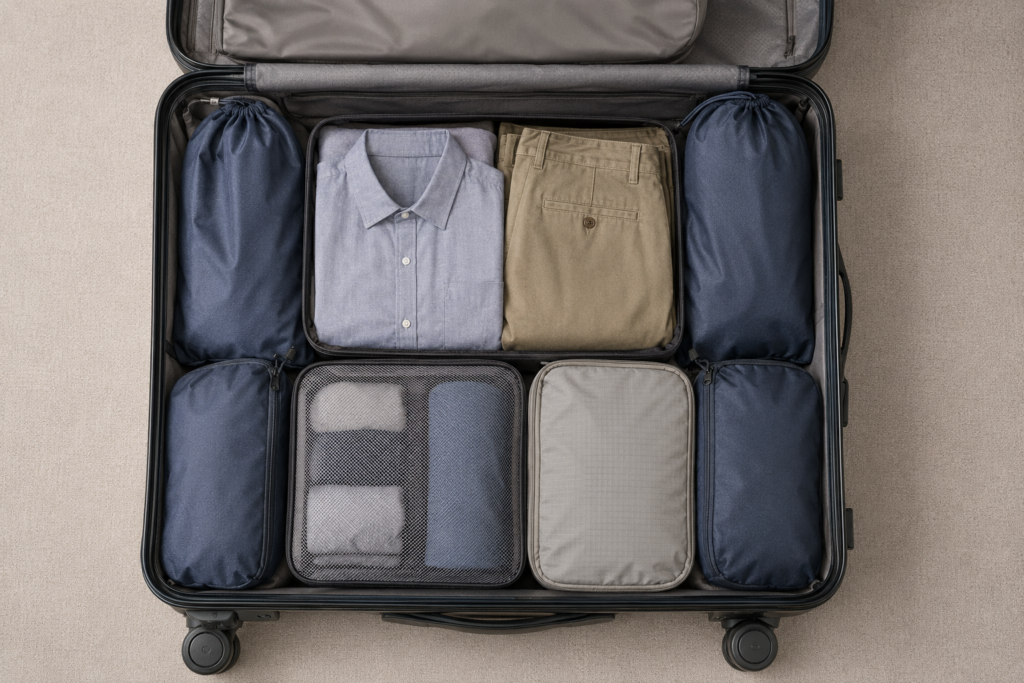
Shoes also work well around the suitcase perimeter because their shape adds structure. Soft clothing can then fill the space between them without being crushed by the hardest items in the case.
If I am using a backpack or duffel bag, I still keep shoes close to the bottom and away from anything fragile. I avoid placing sharp heels near thin fabric, zippers, electronics, or toiletry containers that could leak under pressure.
Fill Each Shoe to Save Space and Protect Its Shape
I rarely leave the inside of a packed shoe empty. That unused space is perfect for small, soft items such as:
- Socks
- Underwear
- Rolled belts
- Gloves
- Small scarves
- Fabric accessories
I only place clean items inside clean shoes. If I am not comfortable putting clothing directly into the footwear, I wrap the items in a small reusable bag first.
Filling shoes does more than create extra packing space. It also helps structured footwear retain its shape when the suitcase is compressed. For leather dress shoes, loafers, or other easily creased styles, tissue paper or lightweight shoe trees may provide better support.
I would not hide jewelry, cash, phones, or other valuables inside shoes, especially in checked luggage. Suitcases shift and get compressed during transit, and hard objects can damage the shoes as easily as the shoes can damage them.
What Can You Use to Cover Packed Shoes?
| Cover | Best Use | Something to Consider |
|---|---|---|
| Cloth shoe bag | Regular travelers and delicate footwear | Reusable and breathable, but takes a little more room |
| Shower cap | Quickly covering dirty soles | Compact and inexpensive, but leaves the upper exposed |
| Packing cube | Keeping an entire pair contained | Provides separation but may use more suitcase space |
| Reusable plastic bag | Wet weather and emergency packing | Blocks moisture but can trap odors if shoes are damp |
| Hotel laundry bag | A convenient last-minute solution | Useful in a pinch, although durability varies |
Choose the Right Shoes Before You Start Packing
The easiest way to pack shoes without ruining your clothes is to pack fewer of them.
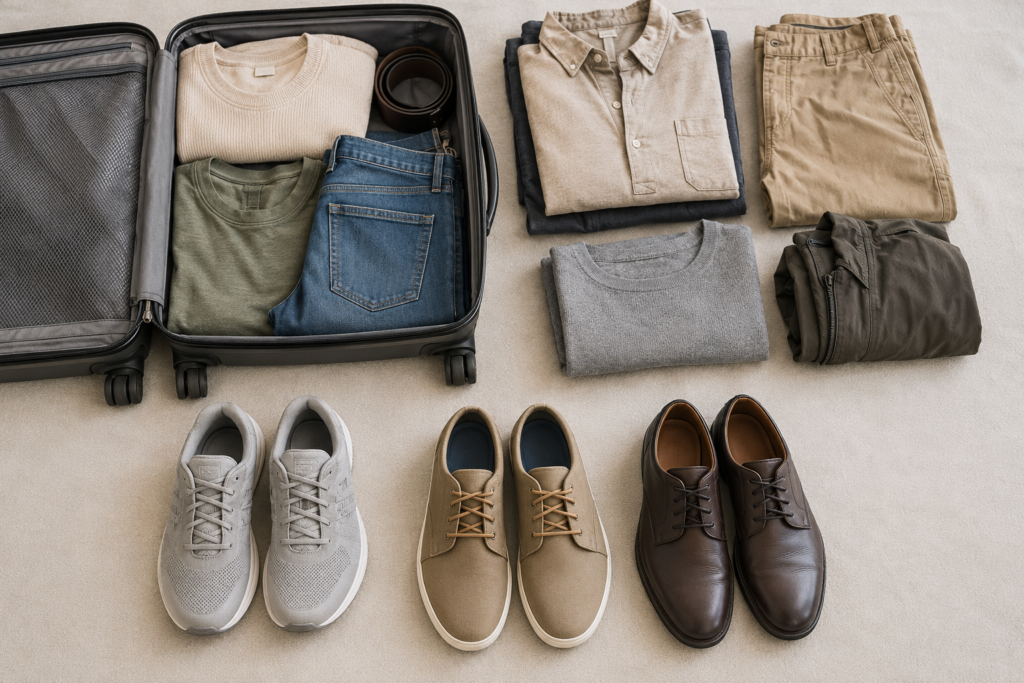
I usually limit myself to two or three versatile pairs, including the shoes I wear during transit. Before choosing them, I consider the weather, how much walking I expect to do, and whether the trip includes restaurants, events, or activities with a dress code.
For many trips, I can manage with:
- One comfortable pair of walking shoes
- One lighter or dressier pair
- One activity-specific pair, if genuinely necessary
Three Pairs Are Usually Enough
For most trips, I choose one comfortable walking shoe, one lightweight casual pair, and one dressier option when the itinerary requires it. I then wear the heaviest or bulkiest pair during transit.
Boots, hiking shoes, and chunky sneakers take up a surprising amount of suitcase space. I usually wear the bulkiest pair on the plane or during the drive instead of packing them.
It may feel a little inconvenient at airport security, but it often frees enough room for an extra outfit or reduces the pressure inside a carry-on. My broader smart travel packing tips can also help prevent a suitcase from filling up with “just in case” items.
Take Extra Care With Delicate Footwear
Not every pair can be packed the same way. High heels, suede shoes, and polished leather footwear need a little more protection.
I place delicate shoes in separate cloth pouches and avoid pressing them against heavy toiletry bags, chargers, or hard-sided containers. Heels should face inward or toward the suitcase shell, where they are less likely to snag clothing.
For suede, I make sure the shoes are especially dry before packing. Moisture and friction can affect the finish, so I avoid wrapping suede tightly in plastic for long periods. A breathable shoe bag is usually the safer choice.
If the shoes have decorations, buckles, or other hardware, I wrap those areas lightly with tissue paper or a soft cloth. It is a small step, but it can prevent scratches on both the shoes and nearby belongings.
Keep Shoes Fresh During the Trip
Packing carefully before departure only solves half the problem. Shoes worn during the trip may be damp, dusty, or noticeably less fresh by the time it is time to come home.
I pack an extra breathable shoe bag specifically for worn footwear. Charcoal inserts, cedar shoe fresheners, or deodorizing pouches can also help control moisture and odor. If the shoes become wet, I let them dry overnight before putting them back in the suitcase.
Stuffing them with dry paper can absorb some moisture, although I avoid using printed newspaper inside pale shoes because the ink may transfer.
Dirty shoe bags should also remain separate from clean clothing. If necessary, I place the covered shoes in an exterior suitcase compartment or create a barrier with less delicate items such as jeans or jackets.
Common Shoe-Packing Mistakes to Avoid
Most problems happen when shoes are packed in a hurry. These are the mistakes I try to avoid:
What Can Ruin Clothes Inside a Suitcase?
- Packing shoes with muddy, gritty, or wet soles
- Sealing damp footwear inside an airtight plastic bag
- Allowing uncovered shoes to touch clean clothing
- Placing heavy shoes on top of folded shirts or dresses
- Resting sharp heels or buckles against delicate fabric
- Overpacking footwear that will probably never be worn
Before closing your suitcase: Check that every sole is covered and that no heel, buckle, or hard edge is pressing against something delicate.
A Simple Routine for Cleaner, Smarter Packing
My routine is straightforward: choose fewer pairs, clean and dry them, cover the soles, fill the empty interiors, and position the shoes around the bottom and sides of the suitcase.
Before closing the case, I check that no heel, buckle, or exposed sole is pressing against something delicate. I also lift the suitcase once to see whether the weight feels balanced. Sometimes a small adjustment is all it takes.
Shoes may never be the easiest items to pack, but they do not have to ruin clean clothing or consume half the suitcase. With the right placement and a little separation, everything arrives in much better condition—and unpacking becomes easier, too.