
The RV Trip Checklist
RV trips sound relaxing, right up until you realize you’re missing one tiny thing that turns into a mess, like the sewer hose cap, leveling blocks, or a key you swear was in the drawer.
A solid RV trip checklist isn’t about being perfect, it’s more about saving yourself from avoidable stress, whether you drive a motorhome or tow a trailer.
I like doing prep in time blocks because to me it makes sense to have a routine plan to get ready for the road: the day before, the night before, and the morning of. Same routine each trip, fewer surprises.
Start with the unglamorous stuff: documents, money, and must-have info
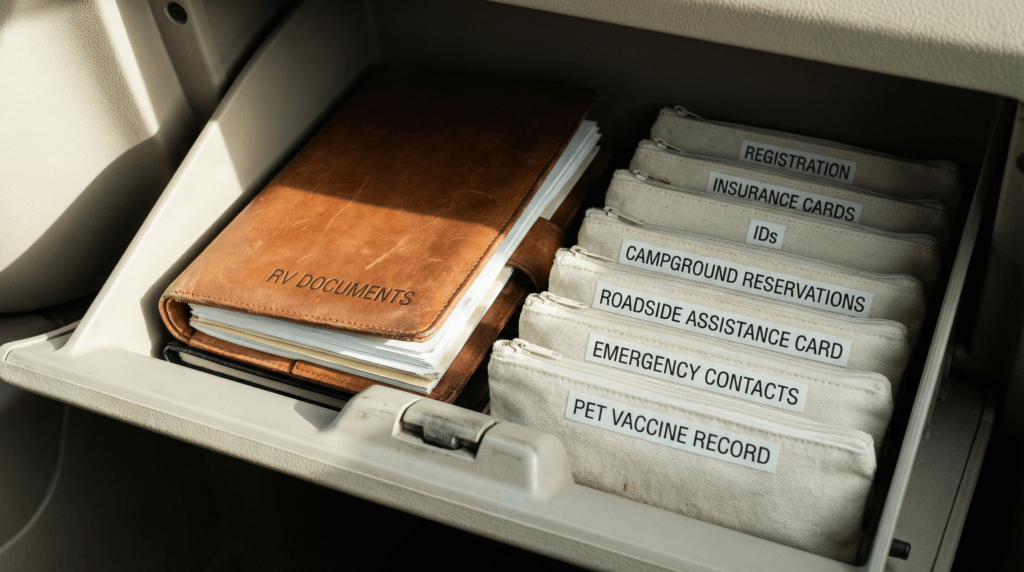
If you lose gear, you can replace it. If you lose documents, your trip can stall fast. Pack IDs, RV registration, insurance, campground reservations, roadside assistance info, emergency contacts, and pet vaccine records (if you travel with animals). Also have a spare key plan, even if it’s just “one hidden, one with a trusted person.”
Keep paper copies in a grab-and-go folder. Store backups in the glove box. Then snap phone photos and save them offline. For a broader travel routine you can reuse, this step-by-step pre-travel preparation guide fits nicely alongside RV planning.
Quick tech prep so you do not get stuck under a low bridge
Set your RV GPS (or app) with your height and weight. Download offline maps for dead zones. Check the wind forecast, high-profile rigs feel it. Save campground directions and gate codes as a screenshot so you’re not scrolling at the entrance.
Campsite setup gear that people forget until it is too late
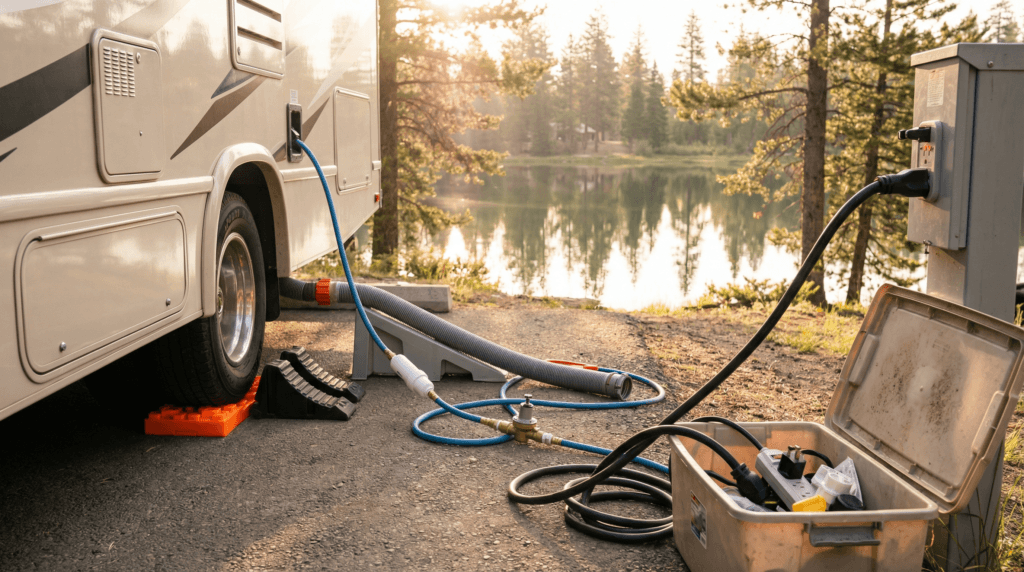
Most “rough arrivals” are just missing hookup basics. Bring leveling blocks and wheel chocks first, because stable beats comfy. For water, pack a drinking-water-safe hose, a pressure regulator, and a filter if you use one. For sewer, bring a sewer hose, gaskets, gloves, and (optionally) a sewer support. Add RV-safe toilet paper. For power, bring your shore power cord, a surge protector, and the adapters you actually need.
A habit that saves sanity: store all hookup gear in one bin. When it’s raining, you’ll thank yourself for taking the time to plan ahead.
Affiliate Disclosure
Some links on PreTravelCheck are affiliate links. If you buy through them, we may earn a small commission at no extra cost to you. As an Amazon Associate, we earn from qualifying purchases. Thanks for supporting PreTravelCheck.
One minute water and sewer sanity check
Confirm you grabbed the right hose (not your rinse hose). Quick-check the gaskets before you connect anything. Keep one dedicated pair of wet-bay gloves. I also stash a tiny hand soap or sanitizer bottle right by the compartment, it’s not fancy, it’s practical.
Safety and emergency kit that covers real roadside problems
Think “what would help if we’re stuck on the shoulder,” not “what looks cool in a kit.” Pack first aid basics plus prescriptions, a flashlight or headlamp with extra batteries, a fire extinguisher, and reflective triangles or flares. Add a tire inflator, tire sealant, jumper cables (or a jump pack large enough for a large vehicle), basic tools, duct tape, bungees, work gloves, a little drinking water, and a battery radio.
Check expiration dates twice a year. Keep the kit where you can reach it without unloading half the RV. That part matters more than brands.
What to double check if you are towing
Hitch locked, pin or coupler secure, safety chains crossed, breakaway cable attached, trailer plug connected. Do a quick light test making sure they are working as they should. Then check mirrors and tire pressure. It’s repetitive, yes, but it’s the good kind.
This may sound obvious, but know your route so if the GPS fails, you know your general direction until you can clarify it later.
Your timed departure walk through (day before, night before, morning of)
Day before: walk around, inspect tires, check fluids (if you have an engine), test lights, charge batteries, and confirm your key gear works. I try to catch “small weird” early, like a soft tire or a dead detector.
Night before: secure the inside, latch cabinets, close vents, lock the fridge, stow loose stuff. Retract awnings, confirm slides and jacks are where they should be.
Morning of: slow final walk-around, clear obstacles, latch doors, antennas down, note tank levels, top off fuel, set tow/haul mode if you use it. Consistency beats perfection. If pulling a fifthwheel trailer, conduct a “Tug” test before you get on the road.
The Departure
Save this RV trip checklist in your phone, and tape a short version near the door. After each trip, tweak it based on what you actually used, and what you forgot (we all do). Most expensive mistakes happen in the last five minutes, so take that final walk-around seriously. Slow down, check twice, and leave with confidence.