

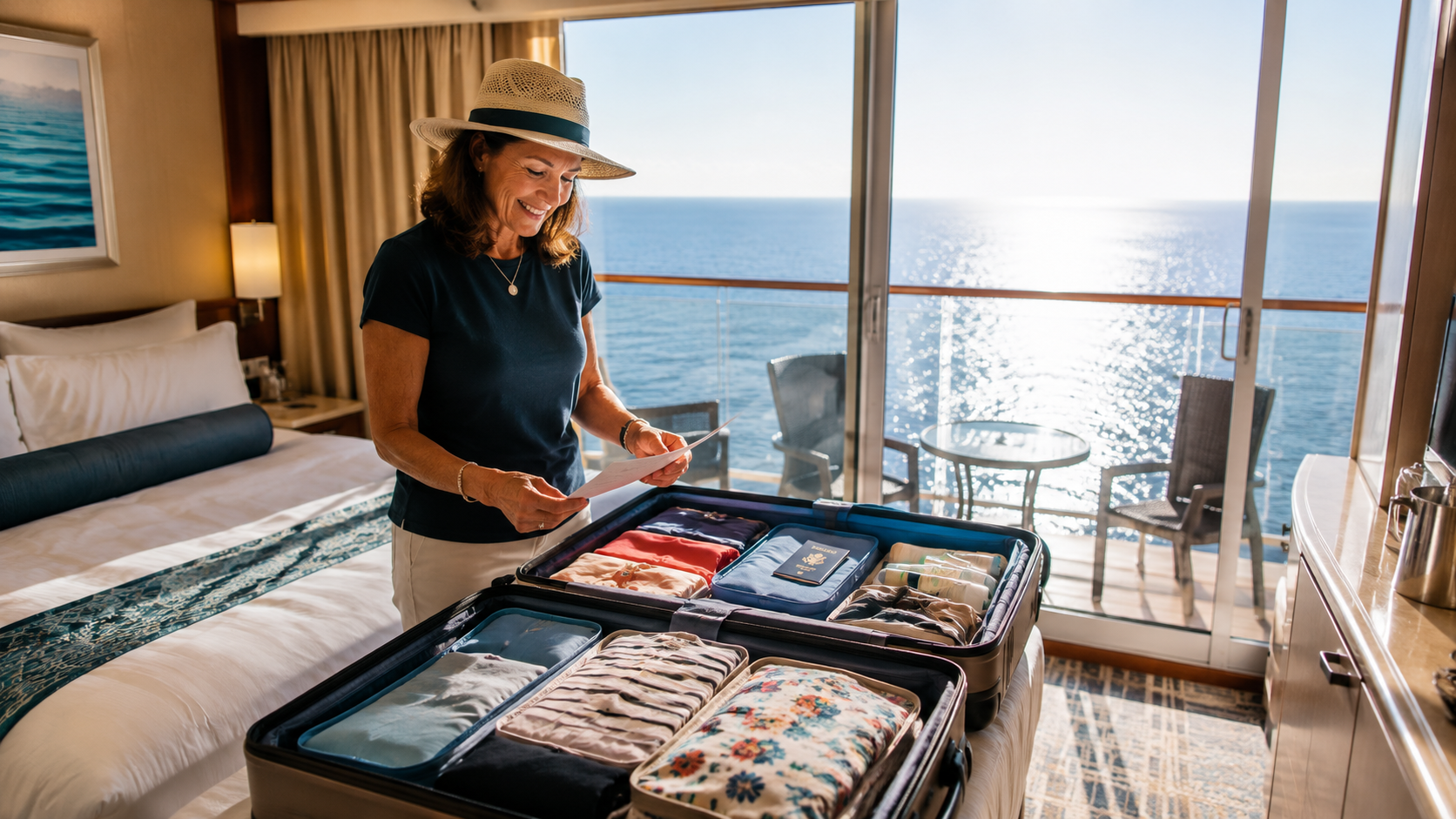
How to Create the Perfect Cruise Packing List for Your Vacation
Packing for a cruise requires balancing compact cabin storage, varying dress codes, and a mix of deck-side lounging and shore excursions. To avoid overpacking, prioritize versatile, mix-and-match staples and keep your essentials organized. This guide provides the tools and packing hacks you need to travel light and enjoy a stress-free voyage.
Key Takeaways
- Tailor your packing list to your specific itinerary, weather, excursions, and dress codes—check forecasts, prohibited items, and ship-provided basics like soap and towels to avoid overpacking.
- Prioritize a carry-on bag with essentials like a passport, medications, documents, phone/charger, and a change of clothes/swimsuit to handle embarkation delays and enjoy the ship right away.
- Focus on versatile, mix-and-match clothes, limit shoes to 3-4 pairs (sandals, sneakers, water shoes, nicer evening pair), and use compression packing cubes plus hanging organizers for small cabins.
- Pack a lightweight day bag for ports and sea days with sunscreen, a water bottle, bug spray, and a waterproof pouch to adapt quickly to changing activities.
- Emphasize organization hacks like magnetic hooks, over-door organizers, and laundry bags to keep clutter to a minimum and make your stateroom feel spacious and stress-free.
Start With a Cruise Packing Plan That Fits Your Trip
A good cruise packing list starts with your actual trip, not a generic checklist. A three-night Caribbean sailing needs a different plan than a seven-night Alaska route. Weather, ship activities, dinner dress codes, theme nights, and shore excursions all change what belongs in your suitcase. By carefully curating your personal cruise packing list, you ensure that you are prepared for every aspect of your voyage without overstuffing your luggage.
Start with the itinerary. Check the forecast for each port, not only the departure city. Then review your excursions closely. A beach stop, a glacier tour, a cathedral visit, and a zip-line outing all require different clothes and shoes. Some port days call for modest clothing. Others need quick-dry gear or closed-toe shoes.
It also helps to check your cruise line’s prohibited items before you pack. Many cruise lines ban irons, steamers, drones, and power strips with surge protection. Those items take up space and can get held back during screening.
Ships also provide more than many first-time cruisers expect. Soap and shampoo are usually available in the cabin, and pool towels are usually provided, too. That means you can skip many bulky bathroom basics unless you strongly prefer your own.
Match your clothes to your destination and daily plans
Warm-weather cruises usually call for breathable clothes, an extra swimsuit, a cover-up, a hat, sunglasses, and reef-safe sunscreen. That matters more because many Caribbean-focused operators and excursions now promote mineral-based sunscreens that are easier on marine life.
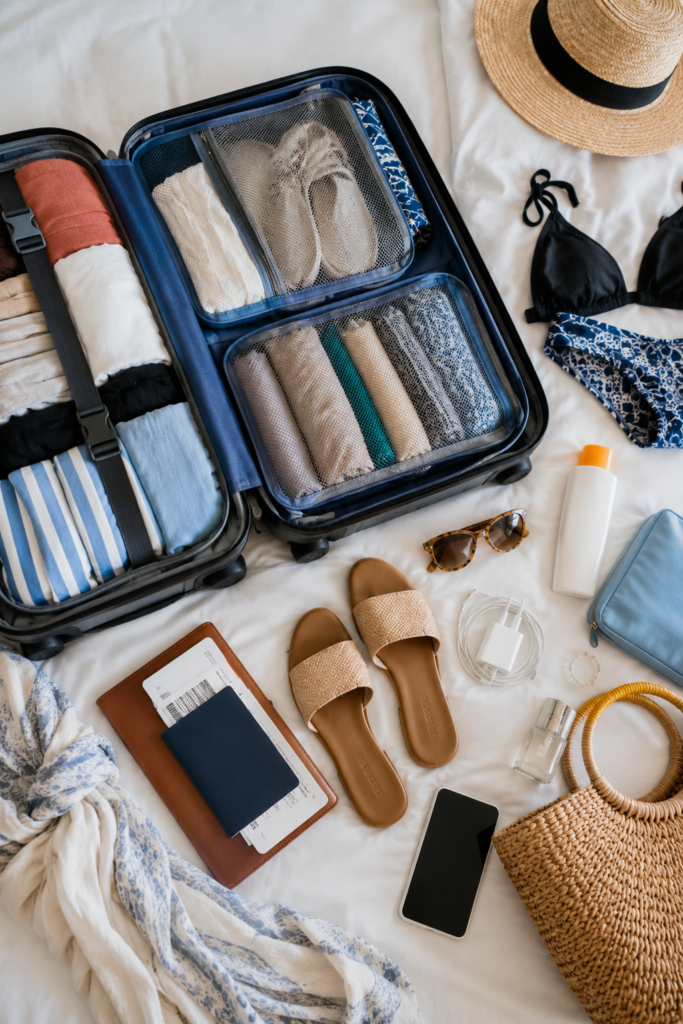
Cooler itineraries need a different approach. For Alaska or other cold, wet routes, thin layers work better than one heavy coat. Add a light rain jacket, warmer socks, sturdy walking shoes, and binoculars for wildlife spotting. You want clothing that adjusts easily when conditions change.
Excursions often shape your packing more than the ship does. Water tours may need water shoes and quick-dry shorts. Church visits may require covered shoulders and knees. Adventure outings often require sneakers or other closed-toe shoes.
Looking for a cruise package? I tried Expedia.com and was impressed.
Know what not to pack before you zip the suitcase
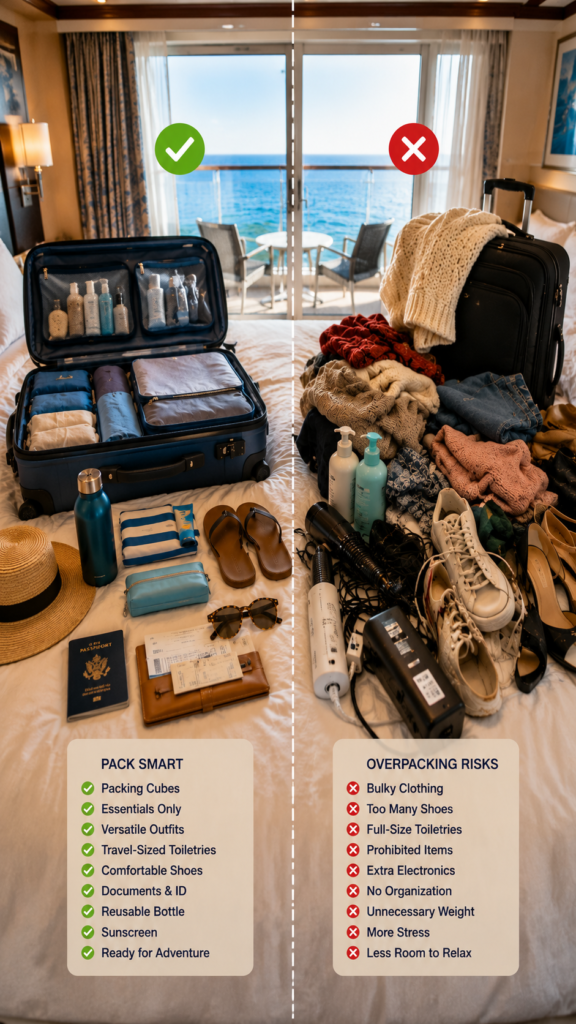
Overpacking usually starts with “just in case” thinking. It ends with a heavy suitcase, a crowded cabin, and clothes you never touch.
A few common mistakes show up again and again. Too many shoes. Bulky formalwear for one dinner. Expensive jewelry that adds risk without adding much value. Large bottles of products that the ship already provides.
If you wouldn’t use it at least twice on this trip, it probably doesn’t need the space.
Cruise style has also become more relaxed. Today, many travelers are packing one or two dinner-ready outfits instead of full formal wardrobes. That approach saves room and usually fits the dress code just fine.
💡 Did You Know?
The average cruiser wears only about half the clothing they pack. Most travelers discover that comfortable daytime clothes, a few dinner outfits, and practical excursion gear cover nearly every situation onboard. Packing lighter not only saves space but can make your entire cruise vacation feel less stressful.
Build a Small Packing List That Covers the Whole Cruise
Most cruisers don’t need a huge packing list. They need a small one that covers the full trip without leaving gaps, ensuring you’re prepared for your stateroom. Think in simple categories: documents, clothes, shoes, toiletries, health items, and a few extras that solve common problems.
Versatility matters more than volume. A light button-down can work for dinner, travel day, and a breezy deck walk. One neutral pair of sandals can cover more ground than three trendy pairs that only match one outfit.
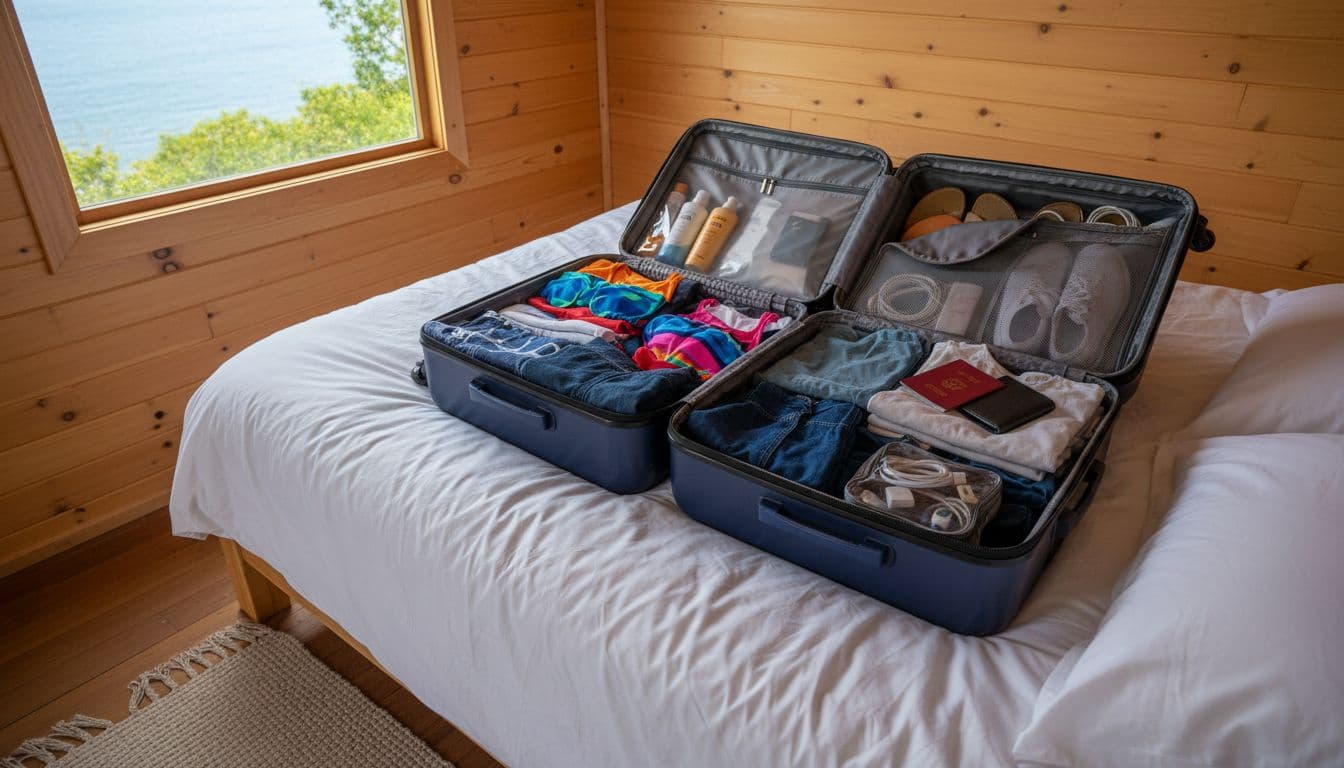 Cruise wardrobes are also less formal than many people expect. Most ships still have nicer dining spaces, but that doesn’t mean tuxes and cocktail gowns are standard attire. For many sailings, neat, mix-and-match outfits are enough.
What to Pack vs. What to Skip
Navigating the balance between necessity and excess is key to keeping your cabin comfortable. Use this quick reference to refine your luggage before you finalize your packing list.
| What to Pack | What to Skip |
|---|---|
| Versatile, mix-and-match layers | Bulky sweaters or heavy coats |
| 3-4 pairs of comfortable shoes | Too many single-use trendy pairs |
| Travel-sized toiletries | Full-sized shampoo and body wash |
| Compression packing cubes | Loose items that create clutter |
| Cruise-safe multi-USB chargers | Surge-protected power strips |
| Wrinkle-release spray | Travel irons or steamers |
The must-have items every cruiser should pack first
Before you think about outfits, pack the things that can ruin a trip if they go missing. These items should go in your carry-on bag, not your checked luggage:
- Passport or other required ID, plus cruise documents
- Wallet, payment card, and travel insurance details
- Prescription medication, with copies of prescriptions if needed
- Phone, portable charger, and a portable power bank
- House keys, eyewear, and any small valuables
- Printed or saved copies of important documents
Medication is the big one. Keep it with you, always. The same goes for documents, electronics, and anything difficult to replace in a port city or at sea.
A small first-aid setup is also useful. You don’t need a full pharmacy. A few bandages, pain relievers, allergy tablets, antacids, and motion sickness remedies like sea bands usually provide natural relief for common issues.
The easiest way to choose clothes, shoes, and toiletries
Keep the clothing plan simple. Pack daytime basics, sleepwear, one light layer, workout or excursion wear if you will use it, and a few outfits that look good at dinner. If pieces can mix together, you need fewer of them.
Shoes are where many bags get too heavy. For most cruises, four categories are enough: flip-flops or sandals, sneakers, water shoes if an excursion calls for them, and one nicer pair for evenings. If a shoe only works with one outfit, it may not deserve the space.
Toiletries should be compact and practical. A hanging toiletry bag is helpful in small bathrooms because it provides instant storage. An over-the-door shoe organizer offers extra storage in tight quarters. A pill organizer takes up less space than several bottles. Wrinkle-release spray is helpful because cruise cabins usually don’t allow irons, and clothes often need a quick refresh after travel.
Use Smart Packing Tricks to Save Space in a Cruise Ship Cabin
Cruise cabins can feel tidy or chaotic with the same amount of stuff. The difference is usually organization. A few small packing habits make a compact room much easier to live in for several days.
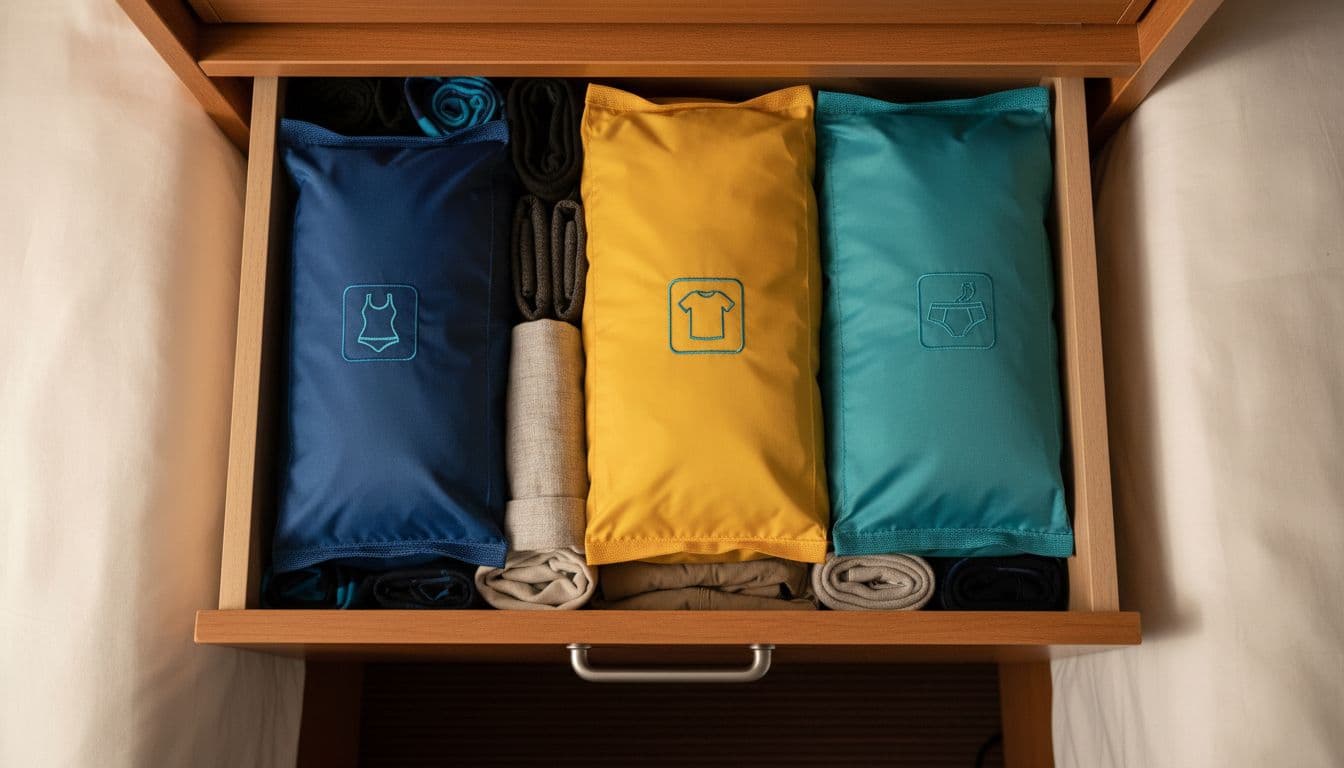
Compression packing cubes are one of the better updates in recent years. They help you group clothes by category, by outfit type, or by day. They also make unpacking faster because you can move a cube into a drawer and know what is inside without digging through the whole suitcase.
Why compression cubes and a hanging bag make a big difference
Packing cubes work because they reduce visual clutter. Swimwear stays with swimwear. Underwear stays separate. Evening clothes don’t get mixed with casual items. That makes mornings easier, and it keeps the cabin from looking messy by day two.
A hanging washbag does something similar in the bathroom. Counter space is limited, and shared cabins make that more obvious. When toiletries can hang behind a door or from a hook, you free up room right away. A travel clothesline is also handy for drying swimwear or other gear.
Families often notice this first. One small organizer can keep sunscreen, hair items, medicines, and toothbrushes from spreading across every surface.
Simple cabin hacks that keep clutter under control
Once you get to the room, put suitcases under the bed if they fit. That clears floor space fast. Bring a lightweight laundry bag so dirty clothes don’t pile into corners or get mixed with clean items.
Zip-top bags are also more useful than they sound. They help with wet swimwear, sunscreen leaks, small snacks, or electronics during water-heavy shore days. A tiny nightlight is another simple fix, especially in dark interior cabins or for families sharing one room.
For charging, choose a cruise-safe multi-USB charger, an outlet adapter, or another approved power option. Skip regular surge-protected strips. Most stateroom walls are metal magnetic walls, allowing the use of magnetic hooks, but don’t rely on them everywhere. Newer cabins sometimes have different surfaces and better built-in storage, so flexible organizers are usually the safer bet.
Pack a Day One Bag So You Can Enjoy the Ship Right Away
What to keep in your cruise packing list for embarkation day
Pack for the first half of the day, not the full trip. A good embarkation bag—a key part of any smart cruise packing list—usually includes:
- Swimsuit, sunscreen, sunglasses, and flip-flops
- Travel documents, wallet, medication, and lanyards for keycards
- Phone, charger, and power bank
- House keys and a small amount of cash
- A change of clothes if you flew in that day
How your day bag also helps on port days
The same bag can work well once the cruise gets going. For many people, it becomes the go-to bag for shore excursions, pool time, and casual walks around port.
Keep it light, but useful. A reusable water bottle, bug spray, a few first-aid basics, and a waterproof phone pouch (or a fanny pack or dry bag for water-based activities) can all earn their place. Resealable bags work too if you want a cheap way to protect your phone, cards, or dry clothes.
Leave room for the day to change. That extra space can hold a towel clip, a souvenir, a wet shirt, or a light layer when the weather turns.
The How To Pack Smart Wrap Up
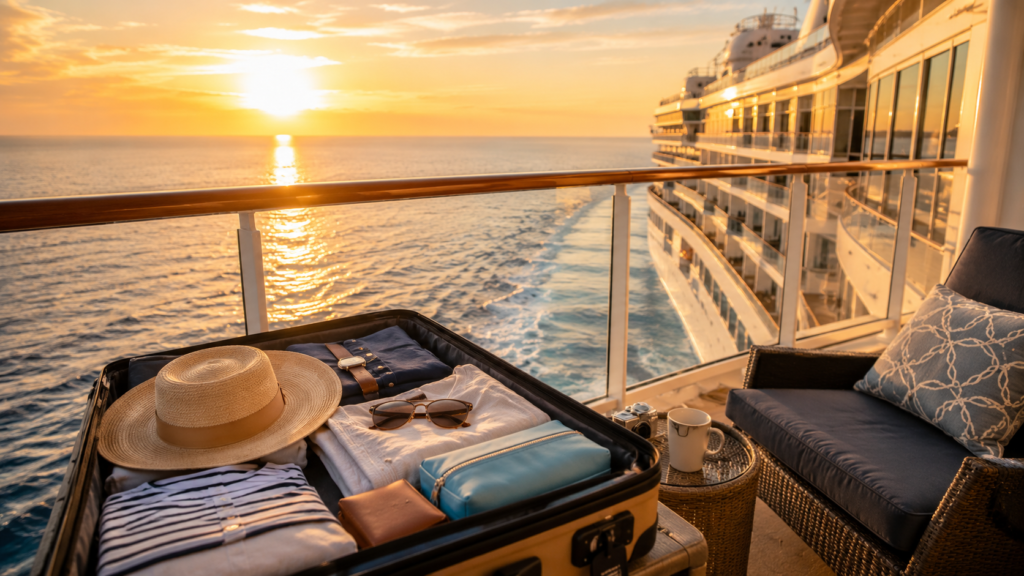
A well-planned cruise packing list works best when it is not padded. Small cabins, delayed luggage, and a mix of daily activities all reward a lighter, more thoughtful approach. By relying on a comprehensive cruise packing list, you ensure that you prioritize the items that truly matter for your voyage.
Focus on versatile clothes, a solid carry-on, your health and travel essentials, a small amount of laundry detergent for quick sink-washes, a reusable bag for any last-minute shopping at the final port, and a few compact tools that keep your stateroom organized. Your optimized cruise packing list is the ultimate key to a stress-free trip. That is usually enough.
The goal isn’t to pack for every possible problem. It is to pack well enough that the trip feels easy. When your bag is organized using your cruise packing list, and your basics are where they should be, you spend less time searching and more time enjoying the ship, the sea, and each port along the way. Your perfect cruise packing list will set the stage for an unforgettable vacation.
Cruise Packing List FAQs
What should I pack in my cruise carry-on bag?
Pack your passport or ID, cruise documents, wallet, medications, phone, charger, power bank, swimsuit, sunscreen, sunglasses, flip-flops, and a change of clothes. This lets you enjoy the ship right away if your checked luggage is delayed.
How do I choose the right things to pack for my cruise destination?
Start with the itinerary, weather, and excursions. A Caribbean cruise may need swimsuits, sandals, sunscreen, and breathable clothing, while an Alaska cruise may require layers, rain gear, warm socks, and sturdy walking shoes. Match your packing list to what you will actually do at each port.
How many pairs of shoes should I bring on a cruise?
Most cruisers only need three or four pairs: sandals or flip-flops, comfortable walking shoes, water shoes if needed, and one nicer pair for dinner. Shoes take up a lot of space, so avoid pairs that only work with one outfit.
What should I not pack for a cruise?
Skip irons, steamers, surge-protected power strips, bulky full-size toiletries, excessive shoes, expensive jewelry, and clothes you will only wear once. Always check your cruise line’s prohibited items list before packing.
Are packing cubes worth it for a cruise?
Yes. Packing cubes help keep clothes organized in small cruise cabins and make unpacking easier. Compression cubes are especially useful because they save space and keep outfits, swimwear, and undergarments separated.
How do I avoid overpacking for a cruise?
Pack mix-and-match clothing, limit shoes, use travel-sized toiletries, and choose items you can wear more than once. If something does not match your destination, excursions, or dinner plans, it probably does not need to come.