

A solo adventure travel packing list has to assume you are the only backup you get. When you travel with other people, gear spreads out. One person carries the first aid kit, another carries the adapter, someone always has a spare phone charger buried in a side pocket. Traveling solo, every one of those items either lives in your bag or doesn’t exist for the trip. There’s no splitting weight and no borrowing what you forgot.
That changes how you choose gear. Instead of packing for comfort or convenience, you’re packing for self-sufficiency within a strict weight limit, because you’re also the one carrying it up every flight of stairs and across every cobblestone street.
Three Rules for Packing Solo
Keep your bag simple, useful, and easy to manage on your own.
Why Packing Alone Changes the Rules
A group trip can absorb a few bad packing decisions. Someone else has the sunscreen, someone else has a backup battery. Solo, a gap in your kit is just a gap, and you’ll feel it at the worst possible moment: a dead phone in an unfamiliar city, a missing adapter the night before an early flight.
The fix isn’t packing more. It’s packing fewer things that each do more, and building the list around a hard ceiling rather than a wish list.
Affiliate Disclosure
Some links on PreTravelCheck are affiliate links. If you buy through them, we may earn a small commission at no extra cost to you. As an Amazon Associate, we earn from qualifying purchases. Thanks for supporting PreTravelCheck.
The One-Bag Approach: Choosing a Pack You Can Carry All Day
One bag, carried on your own back, for the whole trip. That’s the ceiling. A 35 to 45 liter backpack is enough for most multi-destination active trips if you pack with discipline, and it keeps you out of checked baggage lines and off the mercy of airline handlers.
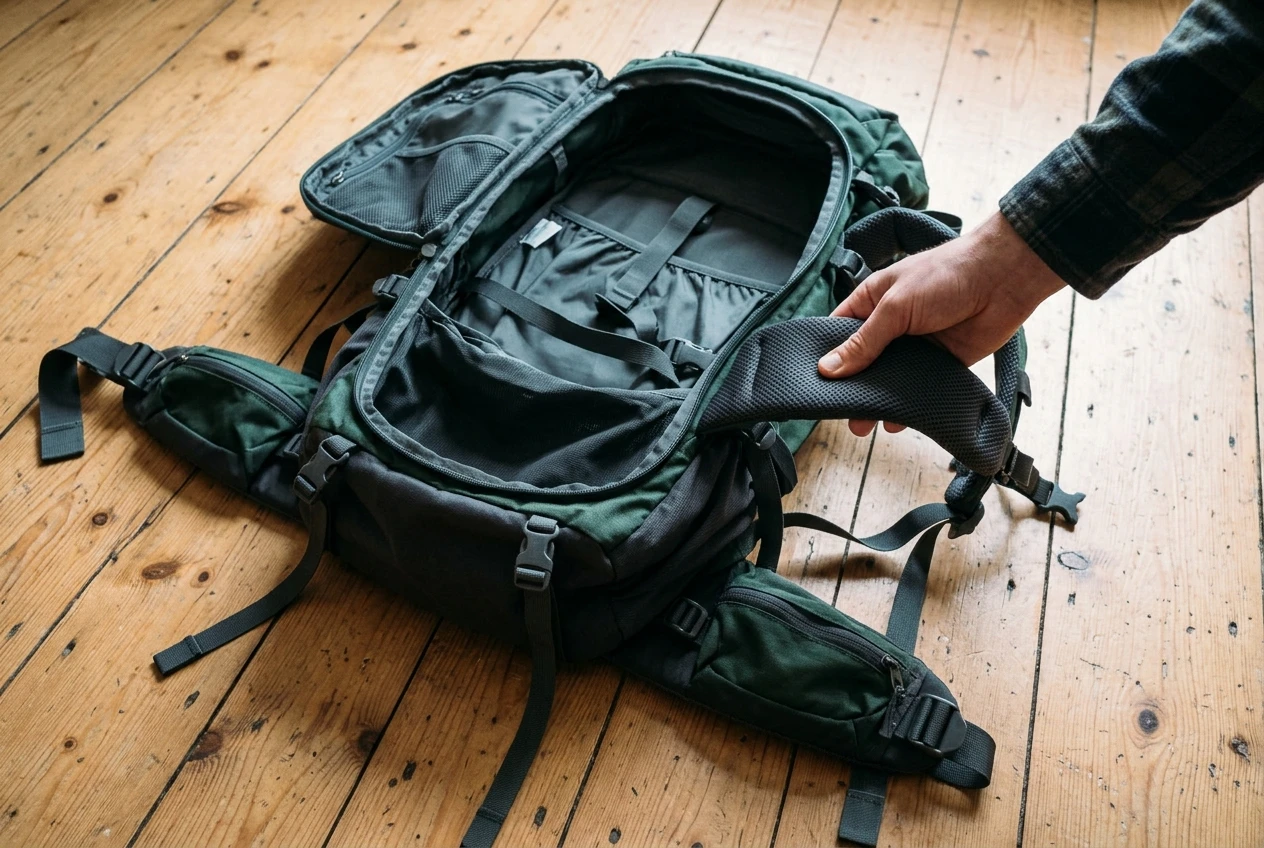
Look for a pack with a hip belt that actually transfers weight off your shoulders, a front-loading design so you’re not digging to the bottom for a charging cable, and compression straps to keep the load stable when it’s half empty. Test it loaded, not empty, before you commit. Weight that feels fine standing in a shop feels different after three hours of walking.
Clothing That Covers Three Climates Without Tripling Your Load
Multi-destination trips often cross climates: a mountain pass, a coastal town, a humid city. Pack for layering rather than for each destination separately.
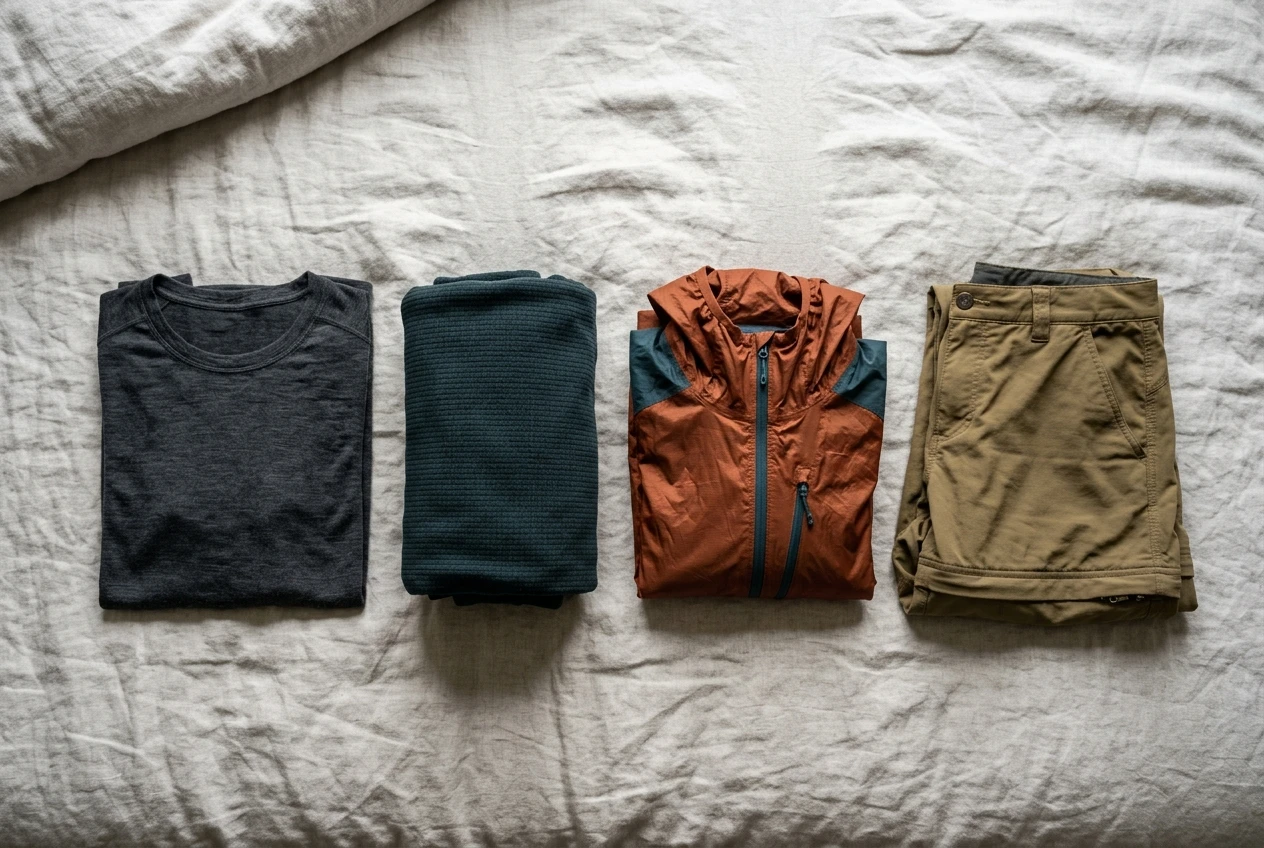
Build Your Clothing Kit in Layers
Pack for changing conditions instead of bringing a separate outfit for every stop.
Merino wool items cost more but earn their place by going longer between washes, which matters more solo than it ever did in a group.
Gear That Does Two Jobs So You Can Leave the Rest Behind
Every item earns its spot by doing double duty. A sarong works as a towel, a blanket, a makeshift curtain for privacy, or sun cover. A headlamp replaces a flashlight and frees both hands for setting up camp or digging through your bag in the dark. A buff works as a hat, scarf, dust mask, or eye mask on an overnight bus.
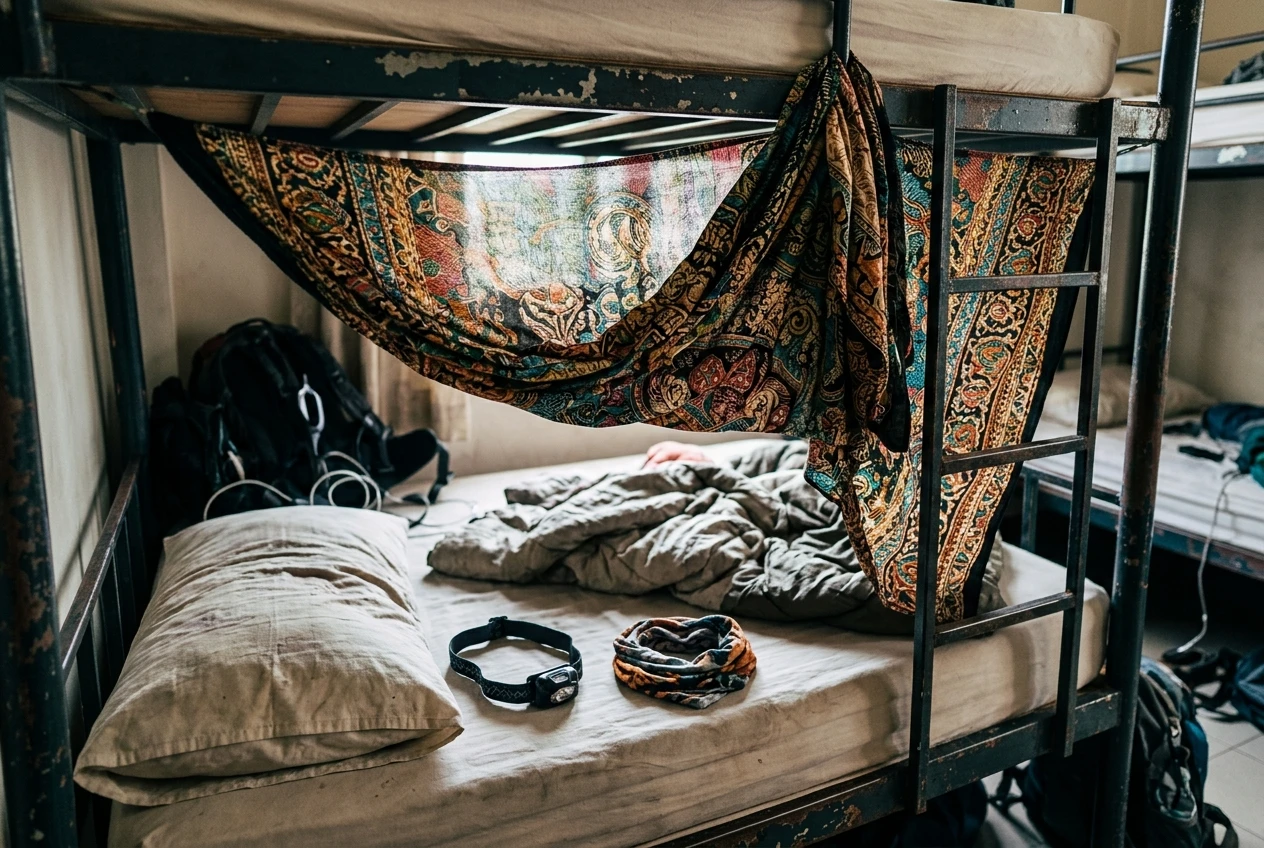
Before packing anything, ask what second job it can do. If the answer is none, it’s a candidate to leave behind.
Tech and Safety Items a Solo Traveler Shouldn’t Skip
Four Essentials to Cover Yourself
Keep your phone powered, and carry basic health supplies and a check-in plan.
Solo travelers rely on their phone for more than photos: navigation, translation, emergency contact, bookings. Protect that dependency.
- A universal power adapter, not a multi-destination’s worth of country-specific ones
- A power bank rated for at least one full phone charge, more if you’ll have long travel days without outlets
- A basic first aid kit: blister plasters, pain relief, antiseptic wipes, any personal medication
- A way to share your location with someone back home, even just a standing check-in time
None of this is heavy. All of it matters more when there’s no one else to notice if something’s wrong.
A Toiletry and Health Kit That Fits in One Small Pouch
Solid toiletries save weight and dodge liquid limits: a shampoo bar, solid sunscreen stick, solid deodorant. Add a small tube of toothpaste, a travel toothbrush, any prescription medication in its original packaging, and a few sachets of rehydration salts for rough travel days. If it fits in a quart-sized pouch with room to spare, you’re on target.
What to Buy There Instead of Packing It
Some things aren’t worth the weight home. Bulky toiletries, a basic umbrella, snacks, even a second pair of shoes if local prices are reasonable, can often be bought on arrival for less than the hassle of carrying them. Leaving room in your bag for this also leaves room for souvenirs without going over your limit on the way home.
If Your Trip Includes Camping, Check This First
One Bag Does Not Mean a Complete Camping Kit
If your trip includes camping, plan separately for shelter, a sleeping system, and cooking gear. Check what your route and campsite require before you go.
If part of your solo trip includes camping, check the Ultimate Camping Checklist For Beginners before you pack, so you know exactly what this list leaves out and what to add.
Solo Adventure Travel Packing FAQ
What size backpack is best for solo adventure travel?
A 35 to 45-liter backpack can work well for a one-bag trip. Choose a size based on your trip length, climate, activities, and how often you can do laundry.
How many clothes should I pack?
Pack clothes you can layer and reuse. Plan around your laundry options, bring a few versatile bottoms, and choose clothing that suits the weather and activities.
What safety items should I bring?
Consider a power bank, a basic first aid kit, personal medication, and a check-in plan with someone you trust. Adjust your supplies to your destination and activities.
Should I pack all my toiletries?
Pack the personal-care items you need right away. You can often buy basic toiletries after you arrive, which may save room in your bag.
Can I bring camping gear in a one-bag setup?
It depends on your gear and trip. A tent, sleeping system, and cooking gear can take up substantial space, so plan your camping equipment separately and check what your route requires.