

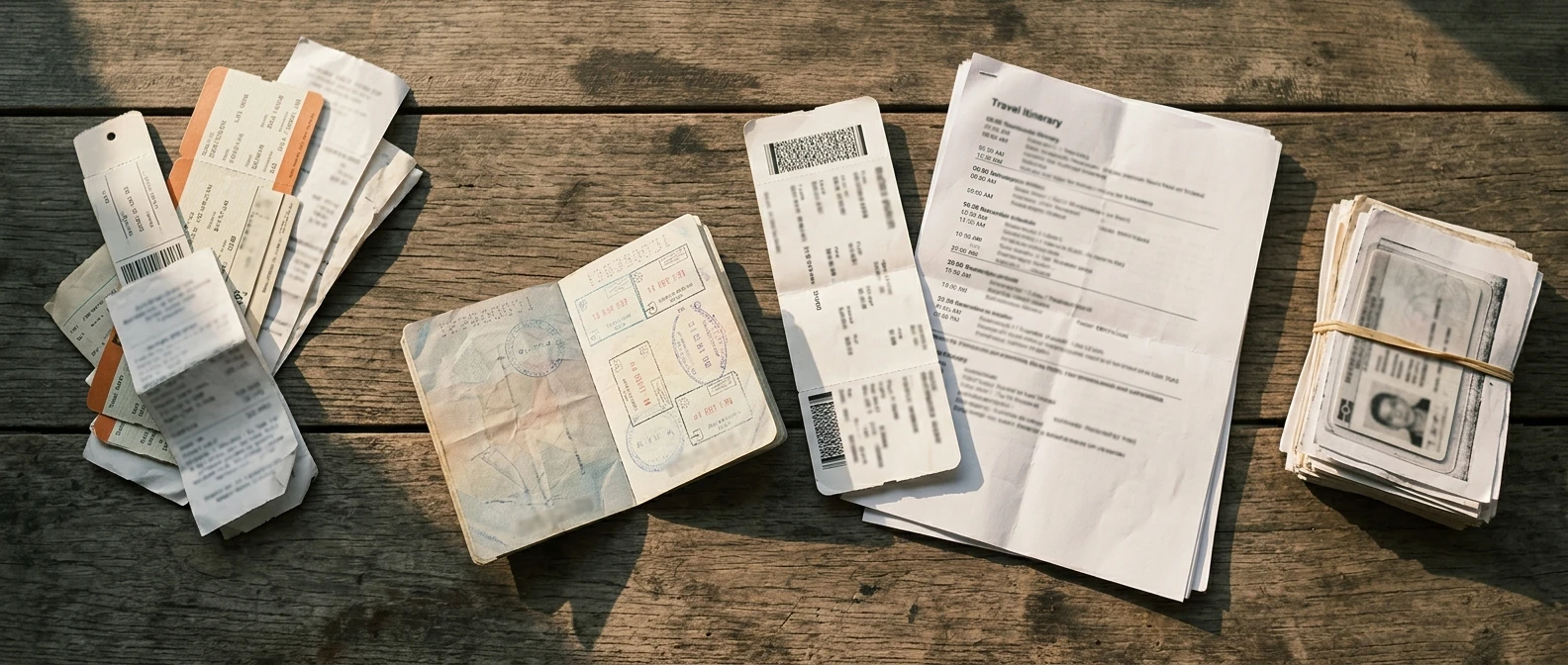
Crossing an international border changes the packing equation in ways that a beach list or a ski list never touches. It doesn’t matter if you’re headed to a resort in the Turkish Riviera or backpacking through Southeast Asia: the moment you leave your home country, you’re dealing with a different plug shape, a different currency, a customs officer who has rules about your prescription bottles, and a passport that has to work correctly or the trip doesn’t happen at all. This list covers that layer first, the one that applies no matter where you’re going, before you move on to the specifics of your actual destination.
The documents you cannot wing
Your passport needs to be valid for at least six months past your return date. Many countries enforce this rule at check-in or at their own border, and an airline gate agent who catches it will not let you board, no matter how far in advance you booked the flight.
Check the passport-validity requirements for your destination and any transit countries. Some require six months of validity beyond entry or departure, while others use different rules. Confirm the requirements that apply to your nationality before you travel.
If you’ve been denied a visa before or you’re unsure why an application might get flagged, it’s worth reading through common causes of visa rejection so you know what reviewers are actually checking for.
Beyond the passport and visa, build a small document kit:
- Printed copies of your passport photo page, visa approval, and travel insurance policy
- Digital copies stored in cloud storage and on your phone, separate from the physical documents
- Your itinerary with confirmation numbers for flights and the first night or two of lodging
- Emergency contact information, including the nearest embassy or consulate for your home country at your destination
Keep the physical copies in a different bag from your passport itself. If your daypack gets lost or your wallet gets stolen, you still have a way to prove who you are and get a replacement passport issued faster.
Packing for electricity and connectivity you haven’t tested yet
Outlets and voltage are not the same everywhere, and assuming they are is one of the most common first-trip mistakes. A universal travel adapter that covers multiple plug types is worth the small amount of luggage space it takes, especially if your trip crosses more than one country with different standards.
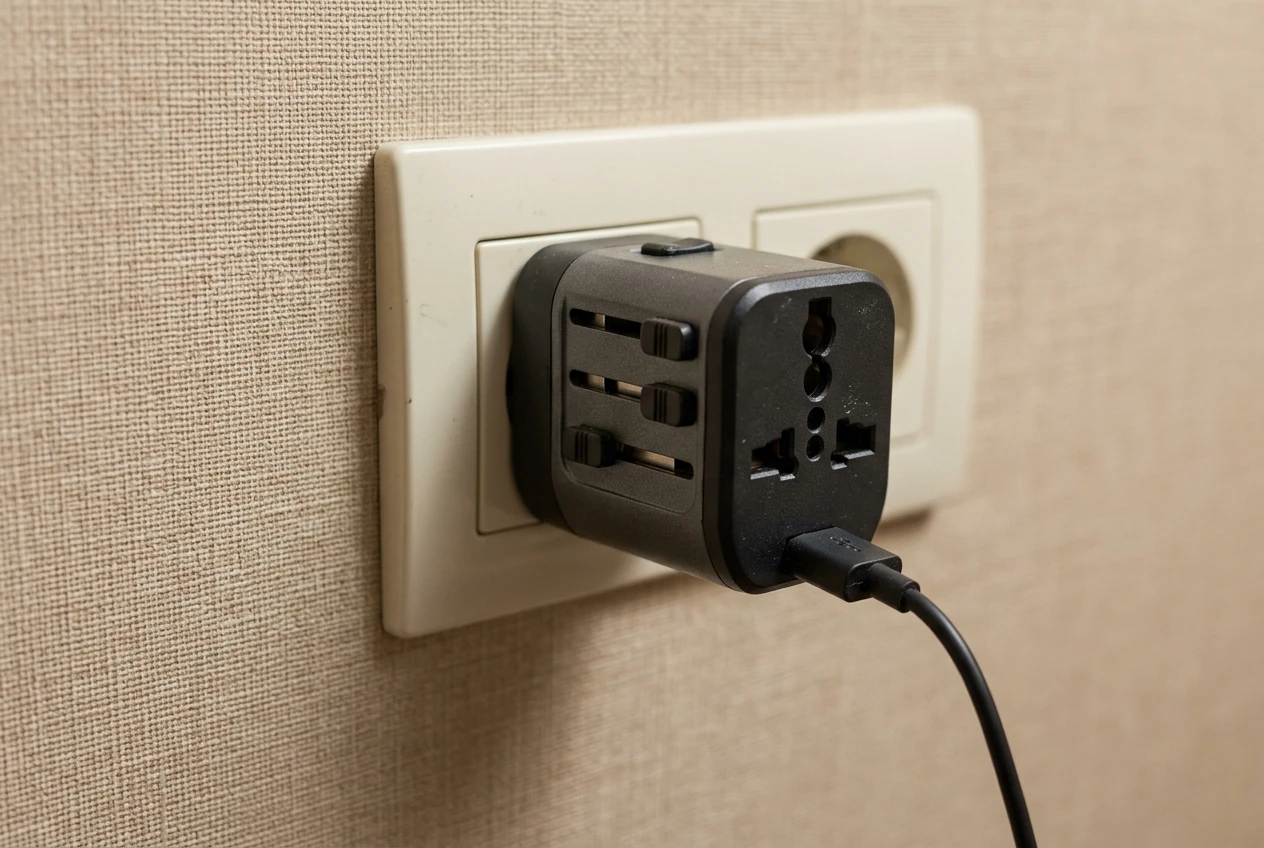
Check the voltage rating on each device before you plug it in. Most phone chargers and laptop chargers are built for international voltage ranges and will say so on the brick itself, usually printed in small text near the input specs. Hair dryers, straighteners, and other heating appliances are the ones that cause problems, because many are only rated for one voltage range and will burn out or, worse, start smoking if you plug them into the wrong one. If you rely on one of these, it’s often simpler to buy a cheap one at your destination than to bring a voltage converter.
For connectivity, decide before you land whether you’re getting a local SIM, an eSIM, or sticking with international roaming through your home carrier. eSIMs have made this easier since you can often buy and activate one before you even leave, so you land with data already working instead of searching for a SIM shop at the airport. Download offline maps for your destination city ahead of time regardless of which option you choose, since connectivity gaps happen even with a working plan.
A portable charger earns its weight on travel days that involve long flights, layovers, or a lot of time using your phone for navigation and translation apps. Pack it in your carry-on, not checked luggage, since most airlines restrict spare lithium batteries from checked bags entirely.
Money moves: cards, cash, and currency for more than one country
Call your bank and credit card companies before you leave to let them know which countries you’re visiting and when. A charge from a city you’ve never used your card in before is exactly the kind of activity that gets flagged and frozen, and finding that out at a restaurant counter is worse than finding it out at home.
Bring at least two payment methods that aren’t linked to the same account. If one card gets lost, blocked, or simply doesn’t work at a particular terminal, you have a backup that isn’t tied to the same bank. A travel-friendly card with low or no foreign transaction fees saves real money over a multi-week trip, and it’s worth setting one up before you go if you don’t already have one.
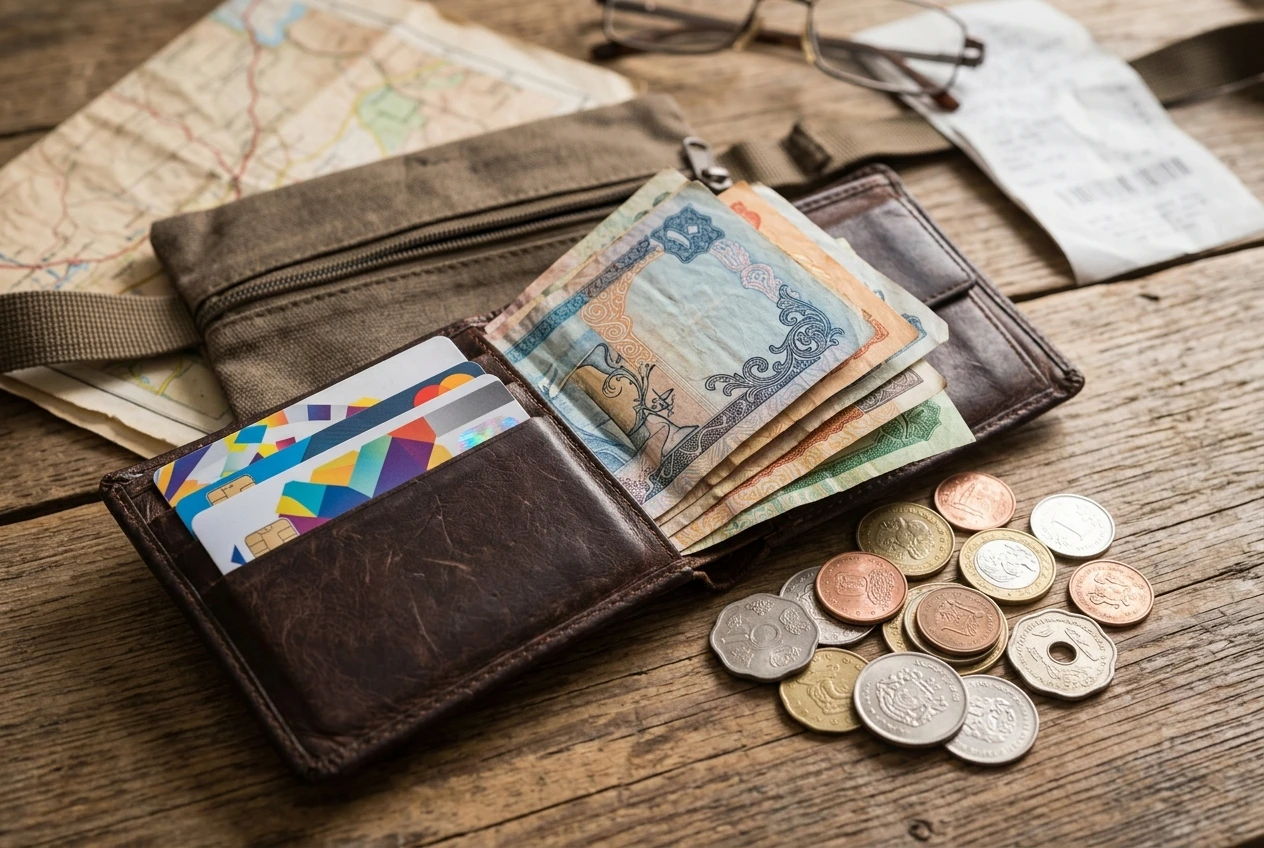
Carry a small amount of local currency for your arrival, enough to cover a taxi, a meal, or a tip before you’ve found an ATM. Withdrawing from ATMs at your destination typically gets you a better exchange rate than exchanging cash at an airport kiosk. Having some cash on hand removes the pressure to find a machine the second you land.
If your trip covers multiple countries, note which ones use a shared currency and which don’t, so you’re not carrying a wallet full of currency you can’t use again. A money belt or a hidden pouch worn under clothing is worth considering for carrying backup cash and a spare card, separate from your primary wallet.
Medications and toiletries that clear customs without a problem
Pack all medications in their original, labeled containers, not in a weekly pill organizer. Customs officers and airport security in many countries want to see the prescription label matching the name on your passport, and an unlabeled bag of pills can hold up your entire trip through a checkpoint.
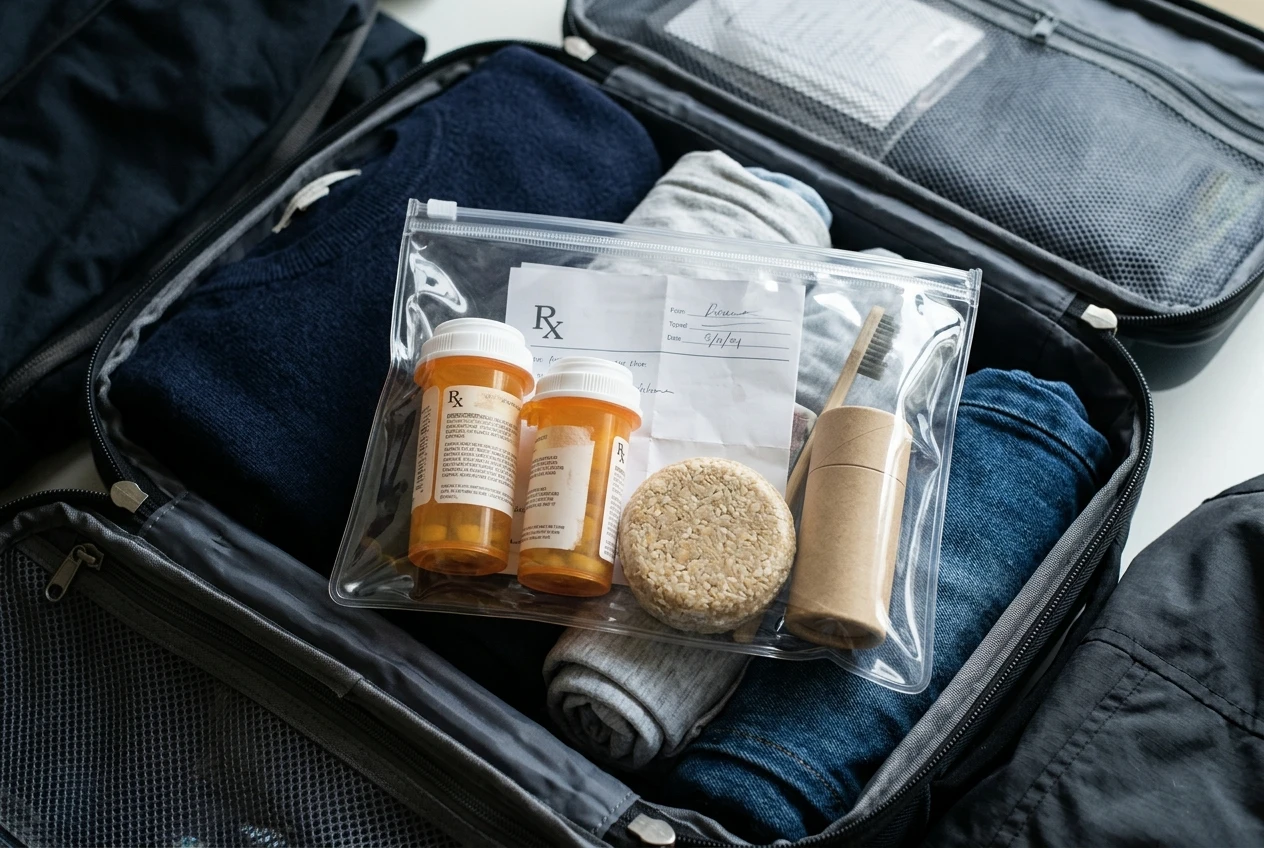
Bring a copy of your prescription, ideally with the generic drug name included, since brand names vary by country and a doctor’s note referencing only a brand name can cause confusion. Some countries restrict or ban medications that are common over-the-counter products at home, including certain cold medicines and strong painkillers, so it’s worth checking your destination’s specific restrictions before you pack anything beyond the basics.
Pack medication in your carry-on rather than checked luggage. If your checked bag is delayed or lost, you don’t want to be without something you need daily. Liquid medications over the usual carry-on limit are typically allowed with documentation. Don’t leave a needed liquid medication behind out of concern over the size restriction.
For toiletries, check the liquid restrictions for your departure country and any connecting flights, since rules differ slightly by country and region. Solid alternatives like shampoo bars and solid deodorant sidestep the liquid limit question entirely and tend to hold up better across multiple flights anyway.
Dressing for a culture and climate you haven’t seen yet
Climate research for your destination should go beyond the general season and into the actual weather pattern for the specific weeks you’re traveling, since “winter” means something very different in Bangkok than it does in Reykjavik. Layering gives you more flexibility than packing for a single expected temperature, especially if your trip includes both outdoor time and air-conditioned indoor spaces that run cold.
Cultural dress norms matter more in some destinations than others, and it’s worth knowing before you pack rather than discovering at the door of a religious site that your shoulders or knees need to be covered. A lightweight scarf or shawl works as both a practical layer and a quick cover-up when a specific site requires it. Researching this ahead of time also helps you avoid clothing that reads as inappropriate or disrespectful in a culture different from your own, which isn’t always obvious from photos alone.
Comfortable, broken-in walking shoes matter more on international trips than almost any other packing decision, since you’ll likely be on your feet more than usual navigating unfamiliar cities. If you’re bringing more than one pair, packing shoes without ruining your clothes is worth a look, since shoes are often the item that does the most damage to everything else in a suitcase.
Building a carry-on that survives lost checked luggage
Checked luggage gets delayed or lost more often on international routes than domestic ones, particularly on itineraries with tight connections or multiple airlines involved. A carry-on packed with the assumption that your checked bag might not show up for a day or two changes what goes in it.
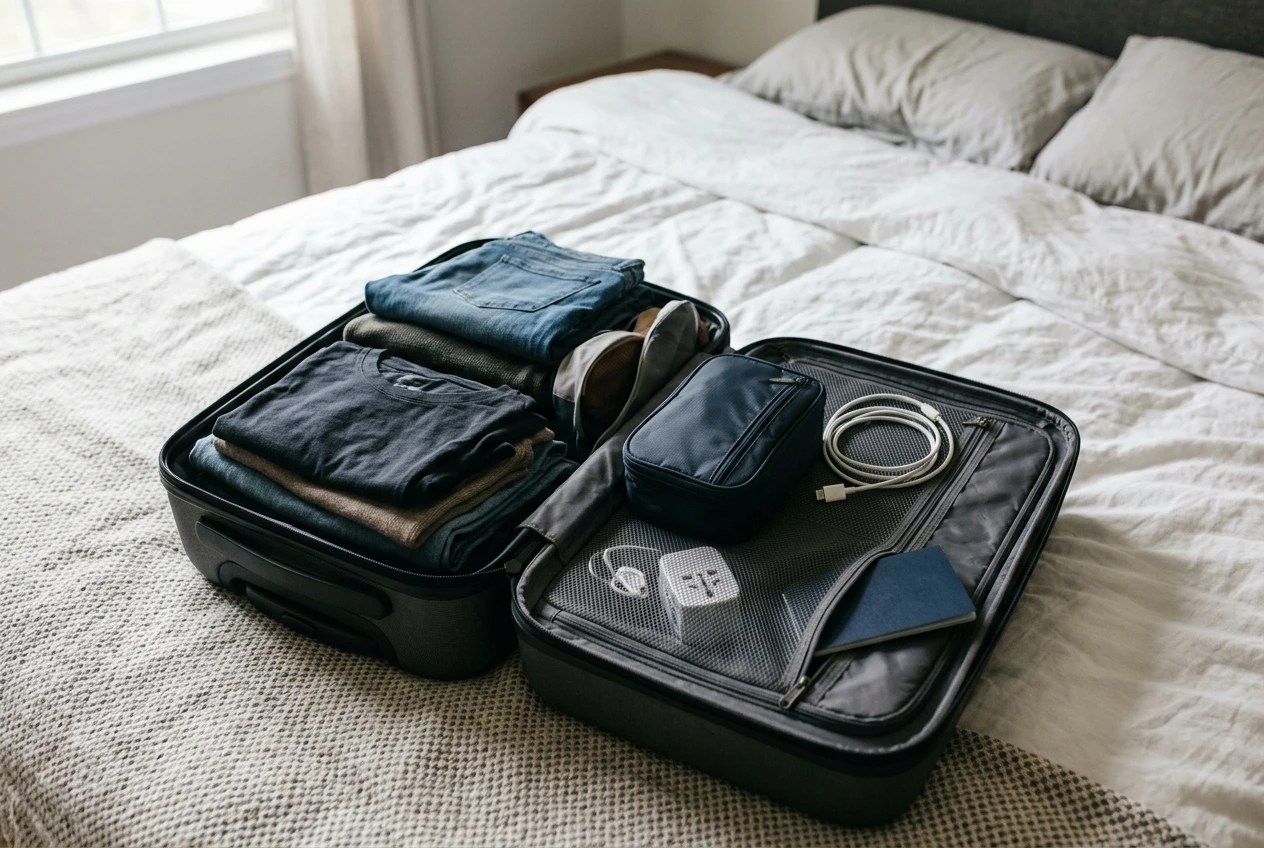
At minimum, your carry-on should hold:
- Your passport, visa documents, and the document copies mentioned earlier
- All medications and a basic toiletry kit
- One full change of clothes, including underwear
- Chargers, adapter, and portable battery
- Any valuables or electronics you wouldn’t want in checked luggage anyway
This isn’t about packing your entire trip into a carry-on, since checked luggage still has its place for anything bulky or not needed immediately. It’s about making sure that if your checked bag doesn’t arrive with you, you can function for the first day or two without it. If you haven’t rethought your approach to packing light in general, the overpacked suitcase that changed how one traveler packs gets into why a lighter, more organized bag makes every one of these cross-border logistics easier to manage.
Matching this list to your actual trip type
Everything above applies whether you’re heading to a ski resort, a beach, or a solo backpacking route through several countries. What it doesn’t cover is the gear specific to that trip: the layers for cold weather, the dry bag for a coastal itinerary, the lightweight pack for multi-day hiking between hostels.
Once the international basics above are packed, match the rest of your list to your actual trip at Find the Right Packing Checklist for Your Next Trip.