
Heading out on a first camping trip brings a mix of excitement and a fair amount of uncertainty about what to bring. Gathering the right gear can feel overwhelming if you have never done it before, and it is easy to leave out something small that turns into a bigger problem once you are at the campsite. A solid checklist covers the obvious items and the little things that are easy to overlook until you need them. This guide walks through the basics, the food and comfort items, the clothing layers, and the campsite decisions that make the biggest difference for someone camping for the first time.
Basic Camping Gear Beginners Always Need
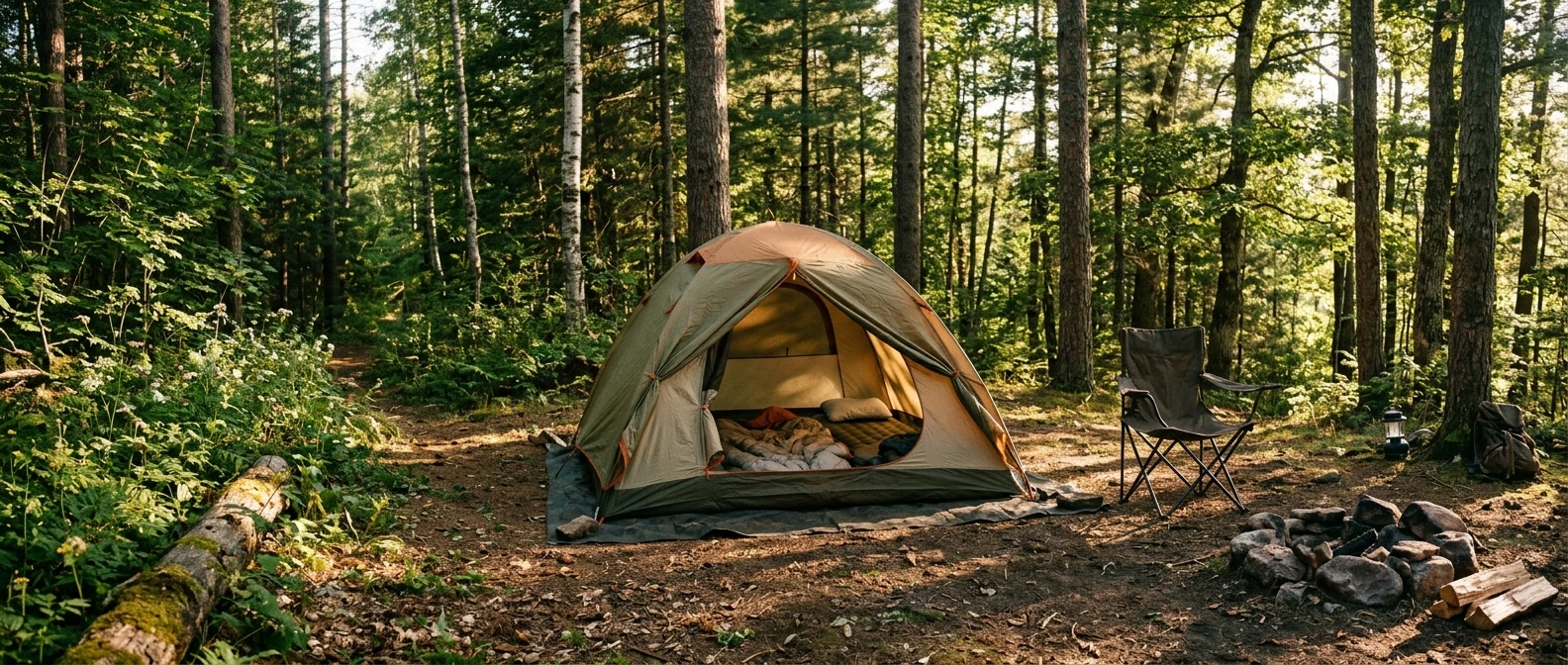
The core gear stays pretty much the same no matter where you are headed or how long you plan to camp. Most people do not need anything fancy; they need gear that works without much fuss so they can relax instead of worrying about the weather or whether a borrowed sleeping bag will hold up overnight. These are the items that belong on every beginner’s list:
Tent and ground cloth: Choose a tent that is easy to set up and matches your group size. A ground cloth under the tent keeps you dry and protects the tent floor; even a basic tarp works.Sleeping bag: Match the bag to the season, and look for a temperature rating lower than the lowest nighttime temperature you expect. A bag rated too warm for the conditions will leave you cold well before morning.
Sleeping pad or air mattress: This adds comfort and insulation. Many beginners assume a pad is unnecessary in summer, but the ground pulls heat away from your body faster than most people expect.
Camping pillow: A rolled-up jacket works in a pinch, but a small camping pillow makes a noticeable difference in sleep quality.
Headlamp or flashlight: Pack extra batteries. A headlamp is especially useful for anyone who needs both hands free after dark.
Camping chairs: Sitting on a log works, but a folding chair is a lot more comfortable around the campfire for an entire evening.
Affiliate Disclosure
Some links on PreTravelCheck are affiliate links. If you buy through them, we may earn a small commission at no extra cost to you. As an Amazon Associate, we earn from qualifying purchases. Thanks for supporting PreTravelCheck.
Cooking Supplies and Food Essentials
Cooking outdoors is one of the better parts of camping, but it is easy to forget small items if you have never cooked over a fire or a camp stove before. Keeping this gear together in a dedicated storage bin saves time on future trips since nothing has to be regathered from scratch. Here is what typically belongs on the list:
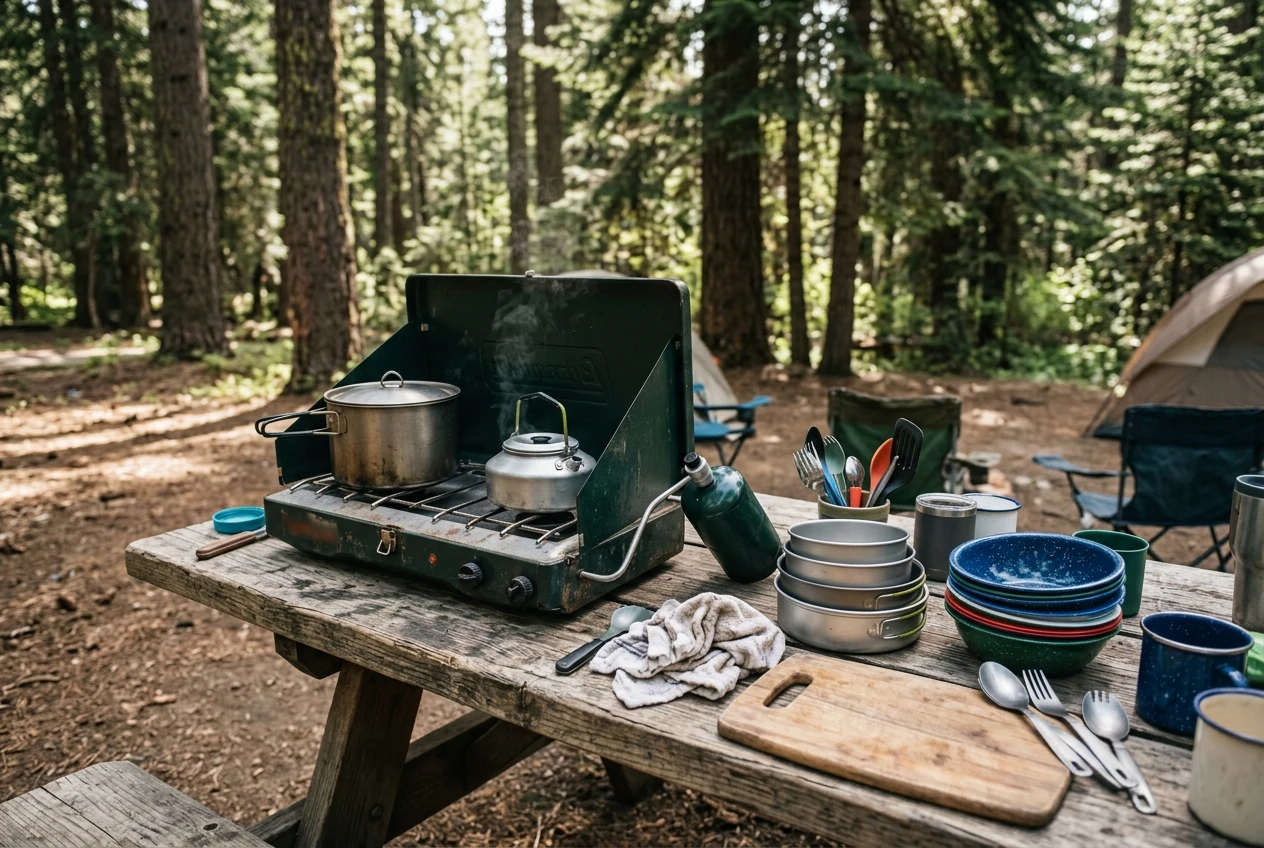
Portable stove or grill: Not every campsite allows open fires or has a fire pit, so a propane or butane stove is worth packing as a backup or primary cooking method.
Fuel: Bring enough fuel canisters to cover every meal. Running out partway through breakfast is a frustrating way to start the day.
Cookware: A pot, a pan, and a kettle if hot drinks matter to you. Nesting cookware sets save space in a pack or car.
Utensils: A spatula, a large spoon, and eating utensils for everyone. A sharp pocket knife or multitool earns its spot too.
Dishes: Sturdy bowls, plates, and cups that stack or nest well.
Food storage: Sealable containers or zip bags keep food fresh and keep animals out of it.
Biodegradable soap and sponge: A small basin or collapsible bucket makes cleanup much easier.
Cooler and ice packs: Essential for perishable food. Block ice generally lasts longer than cubed ice.
Trash bags: Many campsites follow a pack it in, pack it out rule, so bring more bags than you think you need.
Reusable water bottles or a jug: Even at sites with water access, keeping a filled bottle at the tent saves a trip at night.
Packing for Safety, Cleanliness, and Comfort
Small annoyances, bug bites, scrapes, or being too cold at night, can turn into real frustrations if you are not prepared for them. These items keep those issues from derailing a trip:
First aid kit: Stock it with bandages, antiseptic wipes, tweezers for splinters, and basic allergy or headache medication.
Insect repellent and sunscreen: Apply early and reapply through the day. Sunburn and bug bites tend to show up faster outdoors than people expect
Toiletries: Toothbrush, toothpaste, wipes, biodegradable soap, and toilet paper, since campground bathrooms do not always have it stocked.
Quick-dry towel: Useful for showers where available, or after swimming.
Personal medications: Do not count on a nearby store carrying a specific prescription or allergy medication.
Hand sanitizer: Useful before meals and after using the bathroom.
Wet wipes: Good for cleaning sticky hands, faces, or feet without needing a sink.
Clothing and Weather Preparation
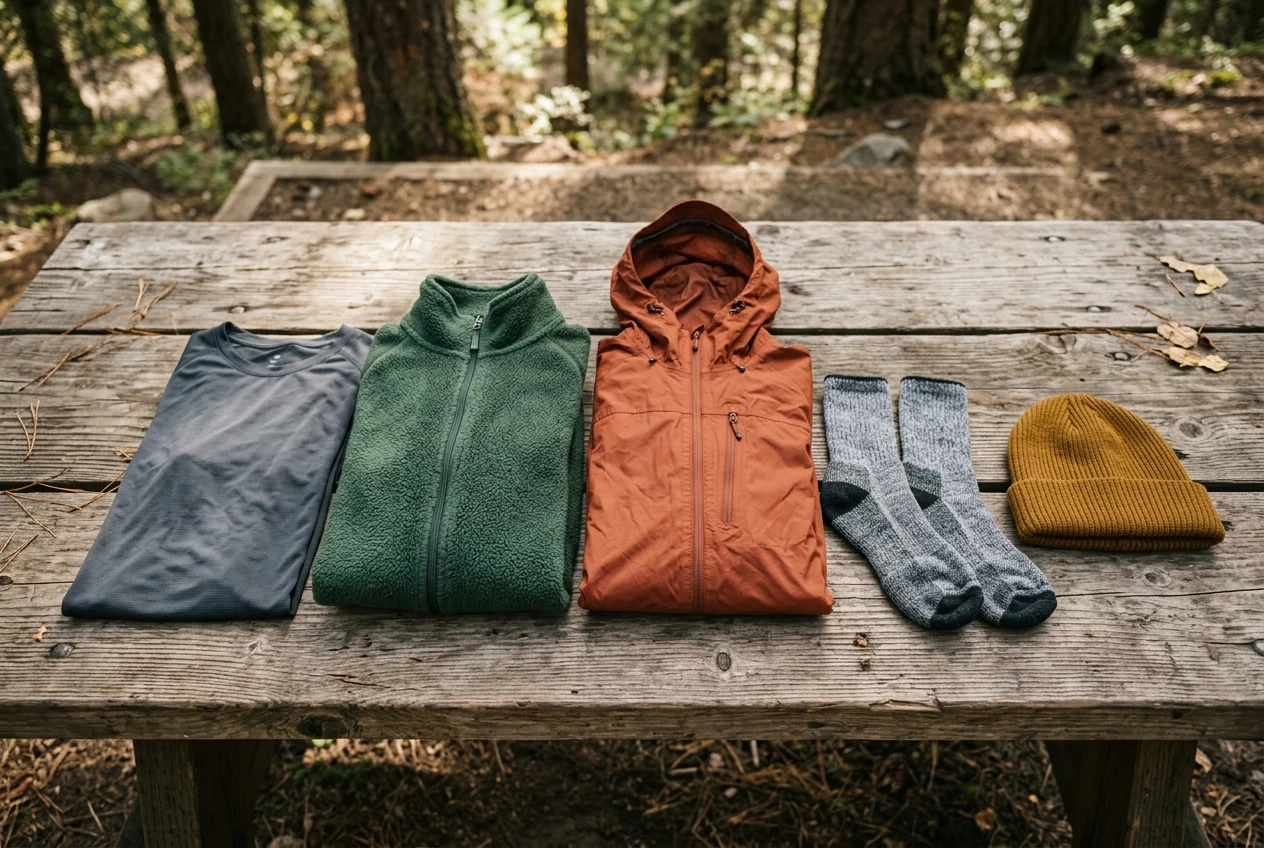
Layers matter more in camping than almost anywhere else, since temperatures can swing widely between afternoon and night in the same location. Laying out the full set of layers before packing helps catch gaps before you are stuck without something:
Base layer: Moisture-wicking shirts and long underwear keep sweat off your skin instead of letting it sit and cool you down.
Insulation layer: A fleece or a light puffer jacket covers most conditions.
Waterproof or rain layer: A packable rain jacket is worth bringing even when the forecast calls for sun, since mountain and forest weather can shift fast.
Extra socks and underwear: Pack at least one more pair than you think you will need.
Comfortable shoes: Hiking boots for trails, plus sandals or sneakers for walking around camp.
Hat and gloves: Nights can get cold even in summer, especially at higher elevations.
Tips for Choosing the Right Campsite and Planning Ahead
Where you set up a tent makes a bigger difference to the trip than most first-time campers expect. A beautiful spot can turn out to be too close to a noisy group or downwind from an overflowing bathroom, so a little research before booking goes a long way.
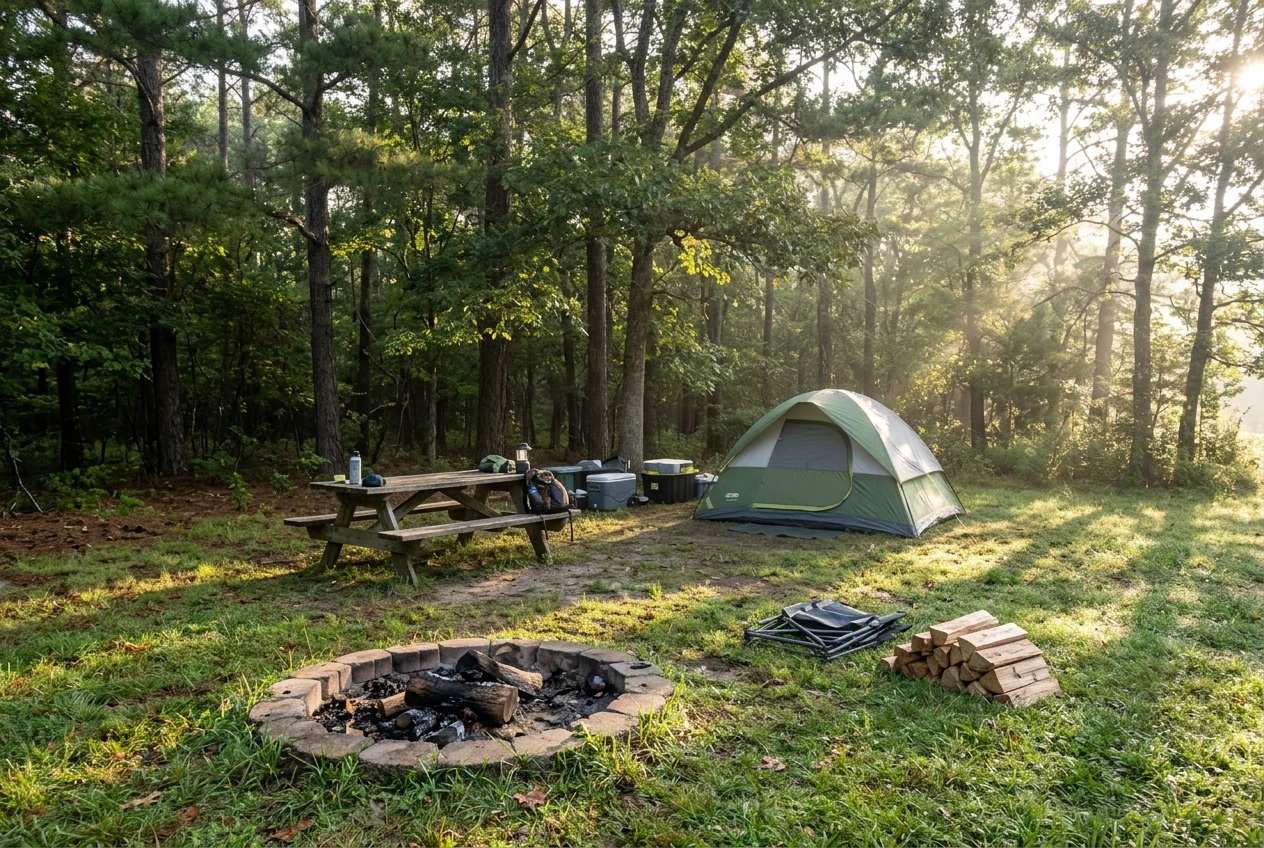
Read reviews before booking or picking a site. The most scenic spots often fill up fast, while some lesser-known campgrounds are quieter and just as nice.
Check whether the site has shade, a fire ring, picnic tables, and water access, and whether it gets direct morning sun, which can turn a tent into a sauna by mid-morning.
Arrive early when possible so you are not setting up camp in the dark.
Pitching a tent and finding level ground is far easier in daylight.
Have a backup plan.
Weather or site conditions sometimes call for a change of location, especially in areas prone to flooding or high winds.
If this is your first trip planning gear around a specific style of travel rather than a general outdoor trip, The Solo Adventure Traveler’s Gear Checklist covers how to pack light for trips where you are relying only on yourself.
What Surprises Beginners (and How to Handle Them)
No checklist covers absolutely everything. Something unexpected tends to come up on almost every trip: gear left behind, an unplanned encounter with wildlife, or a neighboring campsite playing music well past when the campground quiets down. A few of the most common surprises, and ways to handle them, are worth planning for ahead of time.
Weather swings: Even a clear forecast can change quickly, so a packable poncho and an extra tarp are worth the small amount of space they take up. Layers make it easier to adjust if it turns unexpectedly hot or cold.
Forgetting gear: A written checklist kept on your phone and in your gear bin catches most of what would otherwise get left behind.
Noisy neighbors: Earplugs help, and a quick walk to a quieter section of the campground is an option if the site is not full.
Wildlife encounters: Secure food in a vehicle or a bear box where one is provided. Raccoons and other animals are persistent around anything that smells like food.
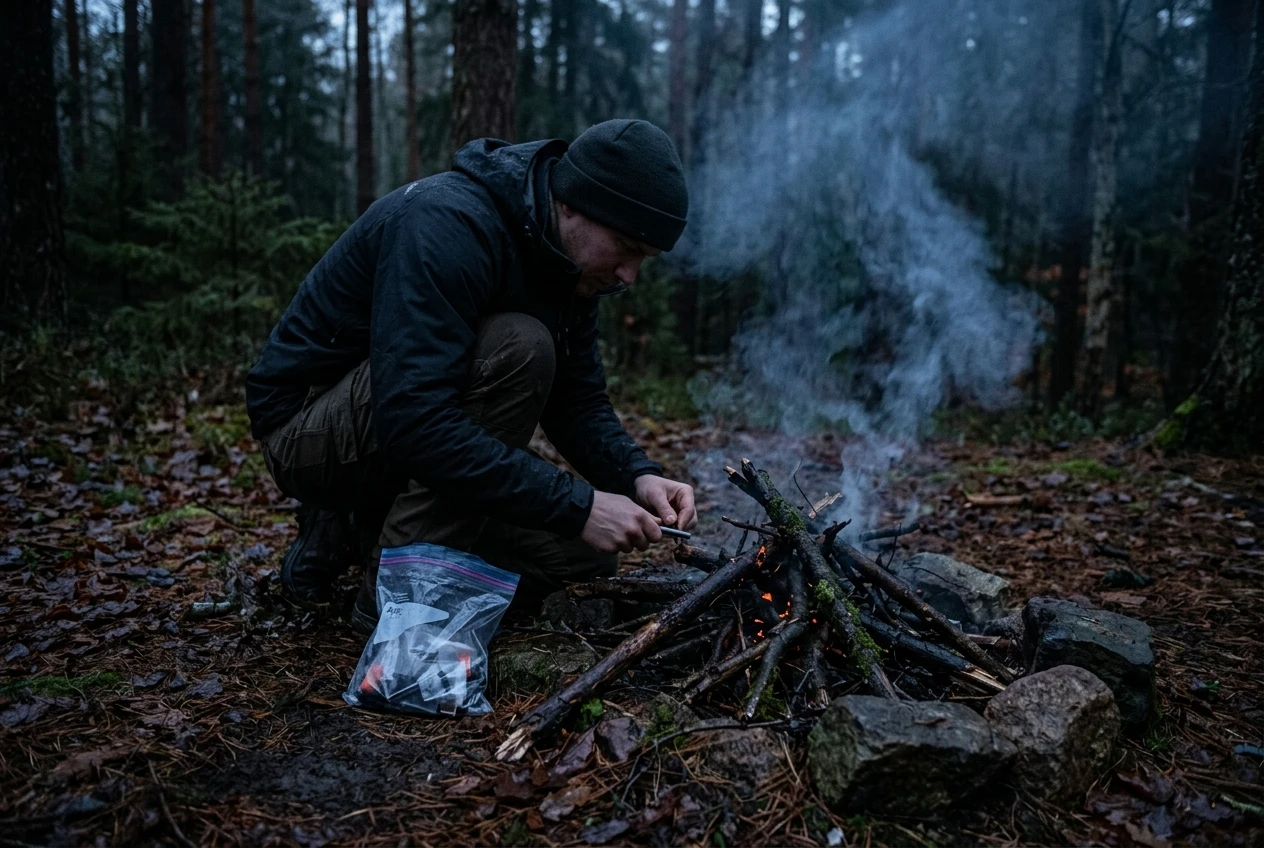
Campfire struggles: Damp wood is common after rain. A few fire starters kept in a zip bag make the difference between a working fire and a long, frustrating evening.
Camping FAQ For Beginners
Question: How do I make sure my first camping trip isn’t a disaster? Answer: Stick to the basics on your checklist, double-check essentials before leaving, and keep meals simple. A campsite with amenities like bathrooms takes some of the stress out of a first trip. If you feel nervous about it, bringing along someone with camping experience helps.
Question: Are there any simple meal ideas for newbies? Answer: For breakfast, oatmeal, granola, or bagels work well and need little prep. For dinner, sausages, pre-made chili, or foil packet meals heat up quickly on a camp stove. S’mores are a reliable way to boost morale in the evening, and snacks like nuts, dried fruit, and crackers cover energy needs through the day.
Question: Do I need to reserve campsites in advance? Answer: Often, yes, especially in national parks or during busy months. Reservation rules vary; some sites open bookings months ahead, while others run first-come, first-served. Weekends and holidays fill fastest, so plan ahead whenever possible to get the spot you want.
Question: What should I do if it rains or storms during my trip? Answer: Pack rain gear for everyone, including lightweight jackets and waterproof shoes. A tarp or two can cover a tent or kitchen area if needed. If storms are in the forecast, check whether your site sits at a higher point to avoid water pooling under the tent, and keep electronics and important items in dry bags or zip-close bags.
Question: Can I go camping without any experience? Answer: Yes. Starting at a managed campground with bathrooms and nearby water access makes the learning curve easier. A beginner’s guide and a checklist cover most of what matters, and there is no need to aim for a perfect first trip. Every camper started without experience and built it up trip by trip.
Getting the Most Out of Your First Camping Trip
Packing for camping is less about getting everything exactly right and more about having what you need to handle whatever comes up. Keeping notes on what you wished you had packed, or what you could have left at home, makes the next checklist better than the last one. Setting up camp and cooking outdoors becomes more familiar with each trip, and forgetting something small rarely ruins the experience. A well-built checklist gets better every time it is used.